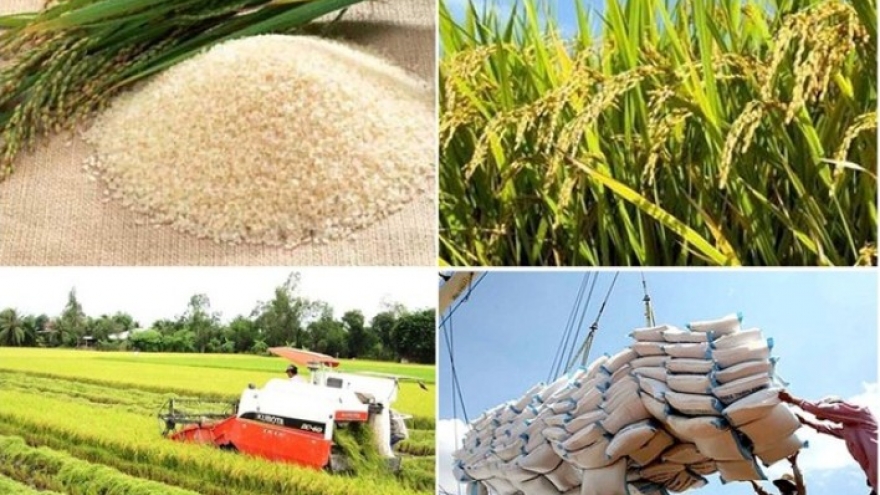
Vietnam seeks to boost rice production and exports, ensure market stability

VOV.VN - The Ministry of Industry and Trade (MoIT) has issued a directive to strengthen measures for promoting rice production and exports in the new context, while ensuring domestic market stability and food security.
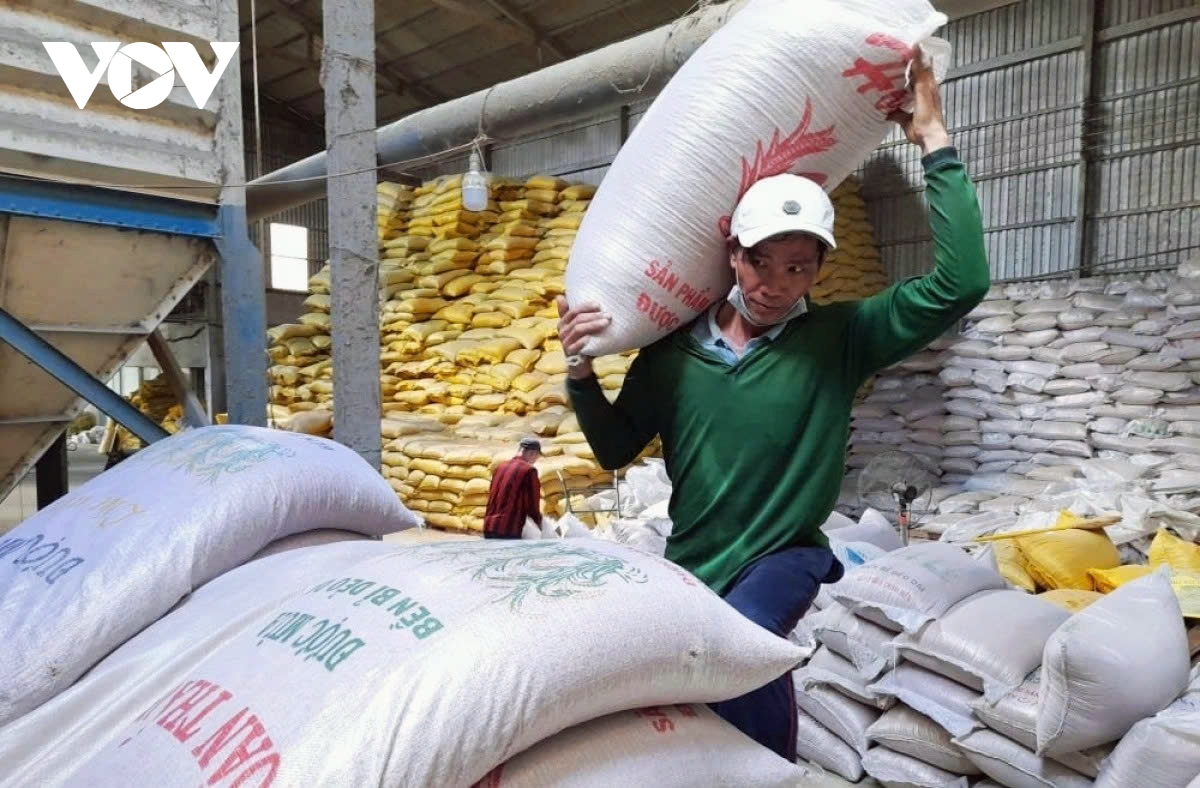
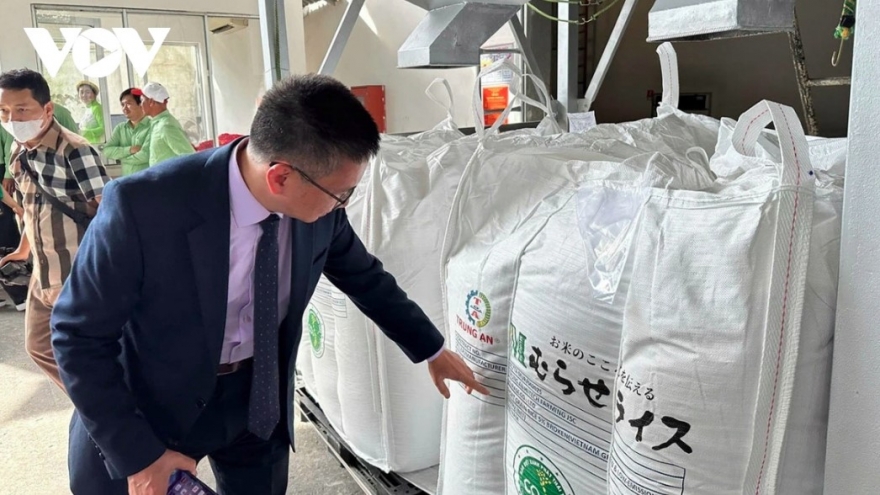
The directive dated March 19, 2026 comes amid increasingly volatile conditions in both domestic and global rice markets. Although Vietnam is one of the world’s leading rice exporters, export performance in 2026 showed a sharp decline in both volume and value. Statistics show last year saw Vietnamese businesses ship 7.85 million tonnes of rice abroad for US$4.02 billion, down 12.7% in volume and 29.4% in value compared to 2024. In the first two months of 2026, businesses exported nearly 1.3 million tonnes for US$595 million, up 3.5% in volume but down 12% in value.
This trend was partly driven by oversupply and weakening demand in several traditional markets, along with falling export prices that have intensified competitive pressure from other major suppliers.
In addition, demand instability in key importing markets has posed further challenges. The Philippines, historically one of Vietnam’s largest rice importers, has at times prolonged import suspensions, creating caution among traders and affecting order flows.
Meanwhile, geopolitical tensions in the Middle East have raised concerns over transport routes and trade disruptions, adding further uncertainty to export activities. These developments highlight the need for more proactive and flexible policy responses to maintain export momentum and ensure market balance.
Given the context, the MoIT directive emphasises the need for more flexible and effective export management, ensuring domestic market stability while enhancing transparency and fairness in rice production, trade and export activities, with the aim of building a more sustainable rice sector.
The directive implements the Prime Minister’s guidance under Dispatch No. 21 on rice production and consumption management, reaffirming that export activities must be closely aligned with food security and domestic supply stability.
Accordingly, the MoIT requires its affiliated units, provincial Departments of Industry and Trade, the Vietnam Food Association and rice exporters to strictly follow government directives and coordinate closely in implementing synchronised solutions nationwide.
Under the directive, the Multilateral Trade Policy Department is tasked with incorporating rice into the roadmap of the “FTA ecosystem” programme supporting enterprises in leveraging free trade agreements (FTAs) in early 2026. It will also promote negotiations with the European Union and the United Kingdom to revise the list of fragrant rice eligible for preferential tariffs under the EU-vietnam free trade agreement (EVFTA) and UK-Vietnam free trade agreement (UKVFTA), as well as making use of additional tariff quotas committed by the UK under the Comprehensive and Progressive Agreement for Trans-Pacific Partnership (CPTPP) to expand export opportunities.
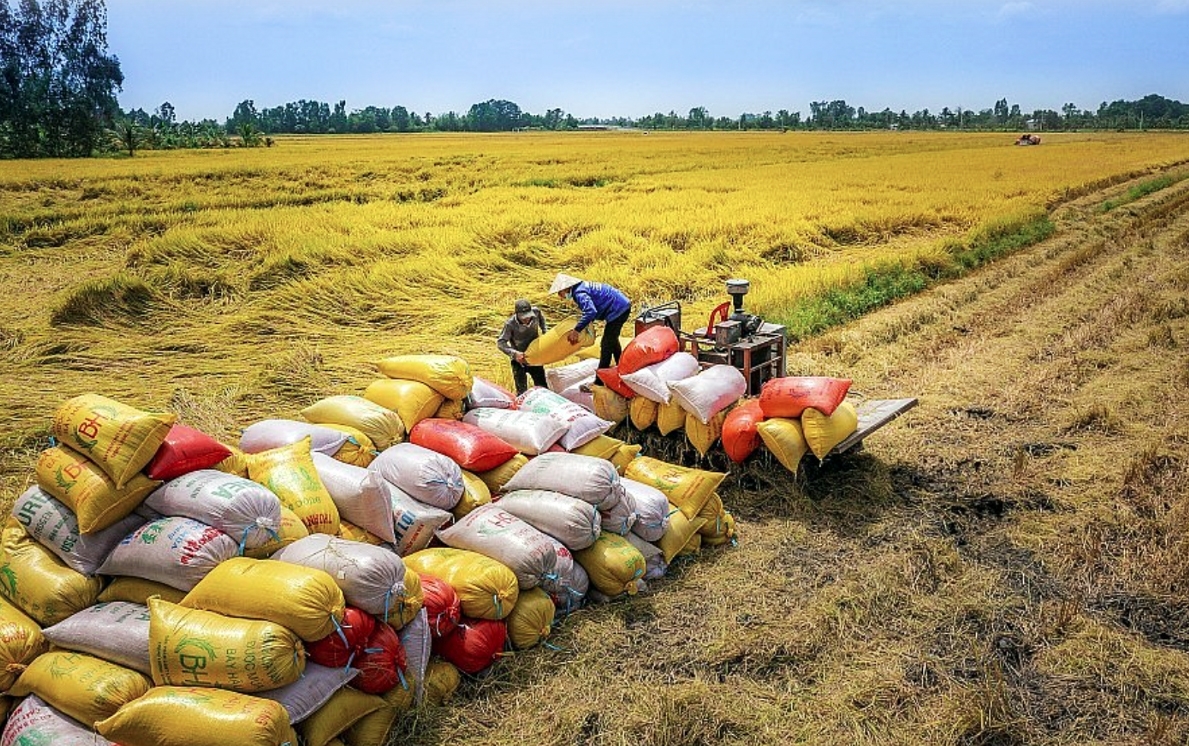
The Department of Foreign Market Development is assigned to direct Vietnam’s trade offices abroad to closely monitor and promptly update changes in rice import policies in host countries. These offices are also responsible for providing market intelligence, issuing risk warnings, particularly regarding transport routes and trade disruptions amid geopolitical tensions, and supporting businesses in handling emerging issues.
In parallel, reviewing and promoting the signing of memoranda of understanding on rice trade with potential partners is identified as an important measure to expand markets, especially those with strong growth potential.
The Trade Promotion Agency is tasked with enhancing the promotion and branding of Vietnamese rice to domestic and international distributors. Trade promotion programmes will be implemented through both in-person and digital platforms, leveraging technology and digital transformation to maintain traditional markets while expanding into new ones, particularly within FTA partner markets.
The Import-Export Department will continue to act as the lead agency for implementing Vietnam’s Rice Export Market Development Strategy to 2030, closely monitoring supply-demand dynamics and policy changes among major exporting and importing countries to ensure timely and effective policy responses.
The directive also underscores the importance of market diversification, reducing dependence on traditional markets while expanding into niche segments and high-quality rice markets in the European Union, the United States, the Republic of Korea and North America.
Domestically, the Agency for Domestic Market Surveillance and Development will monitor supply, demand and price movements, propose measures to stabilise the market, and strengthen inspections to address violations related to quality, origin and trade fraud.
In addition, the MoIT will organise inter-agency inspection teams to supervise procurement, stockpiling and export activities, ensuring compliance with regulations and contributing to a more transparent and well-functioning market.
Rice exporters are required to strictly comply with regulations on procurement, reserves and product quality, proactively monitor market developments, adjust business strategies and strengthen risk management to ensure long-term efficiency and sustainability.
Vietnamese fragrant rice gains ground in EU market
VOV.VN - Exports of Vietnamese fragrant rice continue to receive certification for export to the European Union (EU), showing that Vietnamese rice is strengthening its presence in one of the world’s most demanding markets.