
Rice industry urged to restructure as Philippines cut imports

VOV.VN - As the Philippines has decided to slash rice imports during Vietnam’s peak harvest season, mounting domestic pressure is forcing the rice industry to speed up restructuring, improve quality, and diversify export markets to maintain growth.
According to the Vietnam Food Association (VFA), the Philippines will cap rice imports at about 150,000 tonnes per month in March and April 2026, well below the previous average of roughly 400,000 tonnes.
The move is aimed at protecting Filipino farmers during the country’s main harvest season and forms part of Manila’s broader 2026 supply management strategy to balance domestic production with food security needs.
The policy adjustment comes as Vietnam’s 2025–2026 winter-spring crop in the Mekong Delta enters peak harvest, raising concerns over downward pressure on domestic paddy prices due to rising supply and potentially softer export demand.
However, export data for early 2026 indicates continued momentum. In January, Vietnam exported an estimated 600,000 tonnes of rice worth US$370 million, up 12.4% in volume and 16.9% in value year on year. The average export price reached US$616.6 per tonne, a 4% increase compared to the same period in 2025.
Data from Vietnam Customs shows that the Philippines imported 331,770 tonnes of rice from Vietnam worth US$147.4 million in January, accounting for 50.93% of total export volume and 47.7% of total export value for the month, underscoring its continued role as Vietnam’s largest market despite pending policy adjustments.
Beyond the Philippines, other buyers such as Indonesia, Malaysia and several African nations have increased imports of Vietnamese rice. In 2025, shipments to Ghana climbed 21.3%, while Ivory Coast posted a sharp 67.5% increase. Bangladesh stood out with a 125-fold surge in imports, signaling meaningful strides in diversifying markets and reducing dependence on a single buyer.
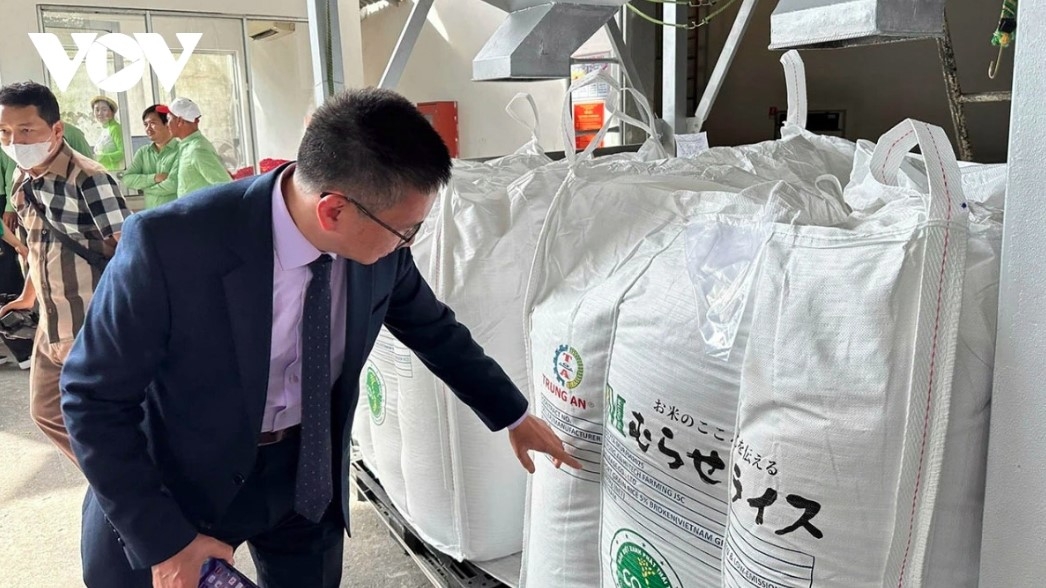
Le Thanh Tung, vice president of the Vietnam Rice Industry Association, stressed that exporters must closely monitor global demand, particularly in traditional markets such as the Philippines, while meeting increasingly stringent standards and maintaining competitiveness in both price and quality.
Tung pointed out that the industry must take an objective look at whether Vietnamese rice fully meets market requirements and move swiftly to remove lingering bottlenecks, noting that the current value chain remains far from sustainability.
The government has bene rolling out a one-million-hectare high-quality, low-emission rice project tied to green growth goals, aimed at standardising production, ensuring consistent yields, cutting unnecessary costs, improving fertiliser efficiency and strengthening linkages between production and consumption.
At the same time, expanding low-emission cultivation practices is expected to strengthen the Vietnamese rice brand, particularly among cooperatives and exporters. To compete in high-standard markets, the industry must prove strict food safety compliance, consistent quality, competitive pricing, stable supply and environmentally sustainable production – the criteria closely scrutinised by buyers in Japan, Singapore and Canada, especially for specialty rice varieties.
Tung revealed that the association is recommending the implementation of linkages in rice production and consumption according to the Government’s 1 million-hectare rice project.
While the Philippines’ import reduction presents short-term challenges, analysts view it as an opportunity for Vietnam to accelerate restructuring toward higher-quality, greener and more sustainable rice production, leveraging trade agreements and expanding market access to maintain its position in global food supply chains.
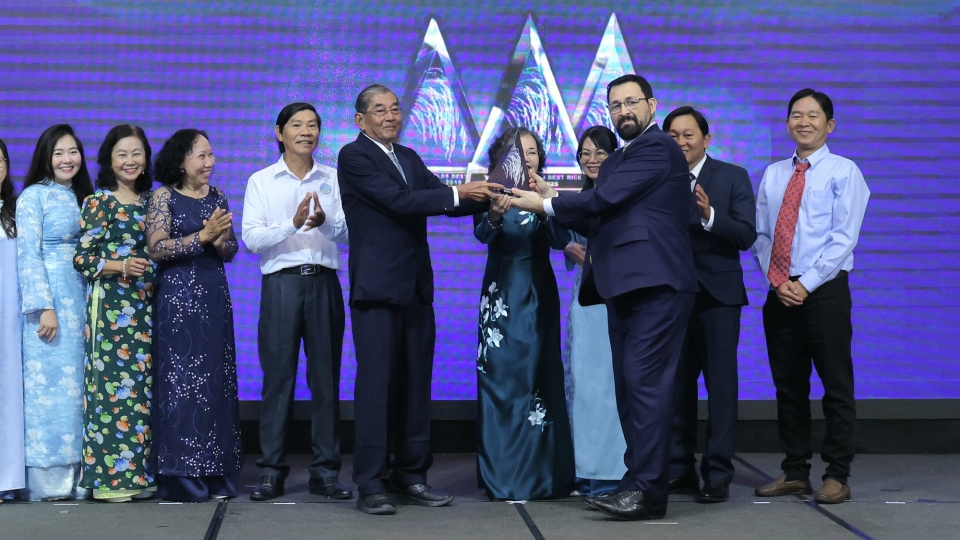
ST25 rice honoured with “World’s Best Rice” Award for third time
VOV.VN - The Rice Trader (TRT), the organiser of the International Rice Summit and the World’s Best Rice Award, has presented the 2025 “World’s Best Rice” title to ST25 rice, a high-quality Vietnamese rice variety developed by agronomist Ho Quang Cua.

