


Double-digit growth ambition hinges on efficient capital, institutional reform

VOV.VN - Vietnam’s ambition to achieve double-digit economic growth will depend not only on mobilising more capital, but also on allocating resources more efficiently, boosting productivity and removing institutional bottlenecks, National Assembly deputies said during a plenary debate on October 30.
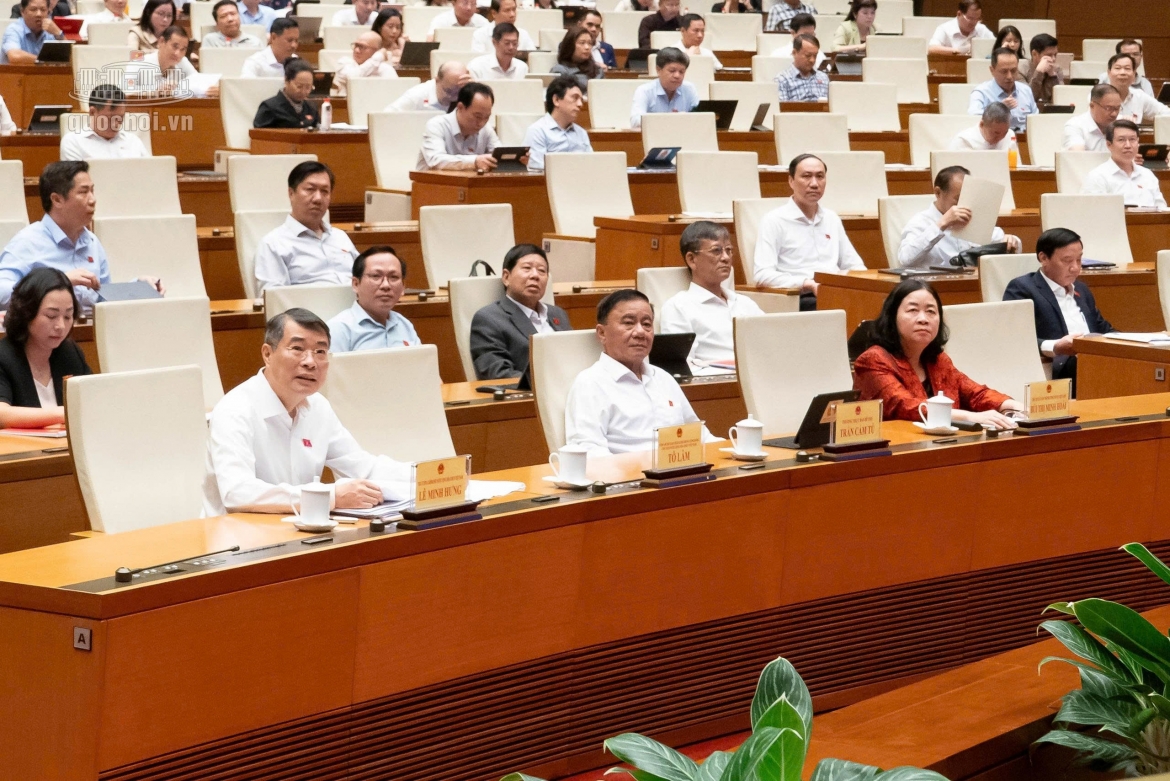
Lawmakers viewed GDP growth of more than 9% in the first nine months of the year as a positive result amid global uncertainty, reflecting concerted efforts by the Party, National Assembly, Government and wider society. However, sustaining this momentum will require investment to translate into higher productivity, greater added value and tangible benefits for the population.
Nguyen Tuan Anh, a deputy representing Can Tho, cautioned against imposing uniform growth targets on localities without accounting for their available resources and capacity to absorb investment.
Alongside gross regional domestic product (GRDP), he proposed assessing localities’ broader contributions to national priorities, including food security and environmental protection, without altering official GRDP figures or compromising statistical integrity.
Tran Thi Hong Thanh, a deputy representing Ninh Binh province, emphasised the need to quantify the contributions of individual growth drivers, industries and localities. She also advocated developing growth and inflation scenarios that account for fluctuations in energy prices, interest rates and international trade.
Economic expansion, she argued, must stay within safe limits so that short-term pressures do not erode the Government’s room for manoeuvre in subsequent years.
More efficient capital allocation to drive productivity
A central challenge emerging from the debate was how to channel existing financial resources into productive, long-term investment.
Le Hoang Anh, a deputy from Gia Lai province, highlighted the need for deeper capital markets to meet the economy’s long-term financing requirements. Citing figures on household deposits, gold holdings and corporate bonds, he pointed to a mismatch between the financial resources available in the economy and the funding reaching productive businesses.
The problem, in his assessment, lies not simply in the availability of capital, but in the lack of effective channels connecting savings with production and investment. Long-term financing, he added, ultimately depends on sustained confidence in the legal system.
Improving access to finance for businesses, particularly small and medium-sized enterprises (SMEs), is therefore crucial to converting available resources into economic output and jobs.
Tran Quoc Tuan, a deputy from Vinh Long province, advocated more effective credit support for smaller businesses. Measures could include expanding credit guarantee schemes and allowing lenders to take account of cash flows, contracts and orders when assessing loan applications.
The objective, he explained, should be to direct lending towards businesses with viable production plans, ensuring that credit generates tangible returns in the form of goods, employment and revenue rather than simply increasing borrowing.
Technology and innovation also featured prominently in discussions about the foundations of long-term growth. Ha Duc Minh, a deputy representing Lao Cai province, proposed stronger tax and credit incentives for companies investing in research and development (R&D), alongside greater support for fundamental science, key engineering capabilities and strategic technologies.
He also advocated controlled pilot schemes for breakthrough technologies and innovative research projects, including those involving higher risks. Such initiatives would need appropriate mechanisms for managing and accepting risks in scientific and technological development.
Agriculture offers another potential source of technology-driven productivity gains. Nguyen Thi Lan, a deputy from Hanoi, highlighted synthetic biology as a means of developing biological proteins, enzymes, vaccines and alternatives to harmful chemicals.
Her proposals included establishing a regulatory sandbox for new agricultural biological products, easing constraints on university spin-off companies and training highly skilled specialists to advance the technology.
Taken together, these proposals point to a broader shift in Vietnam’s growth strategy that investment must be accompanied by stronger technological capabilities and more productive use of capital, knowledge and human resources.
Institutional reform must be matched by implementation capacity
Effective institutions and the ability to implement policy are equally important to sustaining economic momentum.
The debate on decentralisation highlighted the need to match the responsibilities assigned to local authorities with the resources and capabilities required to fulfil them.
Nguyen Xuan Nghiem, a deputy from Da Nang city, noted significant differences in administrative capacity across localities, particularly between urban and rural areas and between lowland and mountainous regions. Applying the same decentralisation arrangements everywhere could therefore create difficulties for less well-equipped administrations.
He proposed a phased approach, with responsibilities assigned according to local capacity and provincial authorities empowered to delegate certain tasks to commune-level administrations under appropriate conditions.
Responding to lawmakers, Minister of Home Affairs Nguyen Tien Hai described the two-tier local government system as broadly stable and operational, although the quality of implementation still varies across some localities.
The ministry will continue reviewing the responsibilities transferred to localities, particularly at commune level, to assess whether they are appropriate and supported by sufficient resources, he noted.
Successful decentralisation requires more than the transfer of formal authority. It must also be backed by adequate staffing, funding, data, digital infrastructure, professional guidance and practical implementation tools, alongside clear accountability and effective oversight.
The debate underscored the need to align ambitious growth targets with the institutional and economic foundations required to achieve them. More efficient capital allocation, better access to finance for businesses, investment in research and innovation, and reforms that strengthen implementation capacity all form part of that equation.
For Vietnam, the challenge is no longer simply to mobilise resources, but to ensure they deliver higher productivity, stronger competitiveness and sustainable economic value.
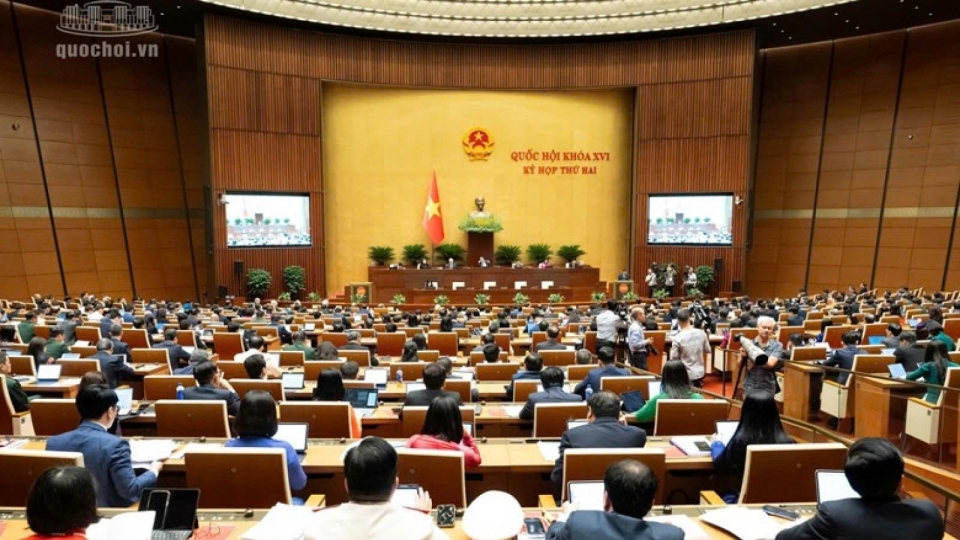
National Assembly to review 2026 socio-economic performance, 2027 targets
VOV.VN - The National Assembly of Vietnam is scheduled to discuss the implementation of the country’s 2026 socio-economic development plan and the proposed plan for 2027 on October 30, alongside the state budget and public investment, as lawmakers review economic performance and consider priorities for the coming year.


