


National Assembly chief stresses macroeconomic stability as Vietnam plans for 2027

VOV.VN - National Assembly President Tran Thanh Man has identified macroeconomic stability as Vietnam’s foremost priority for the remaining months of 2026 and the year ahead, while urging more effective resource allocation, stronger growth drivers and tangible improvements in people’s living standards.
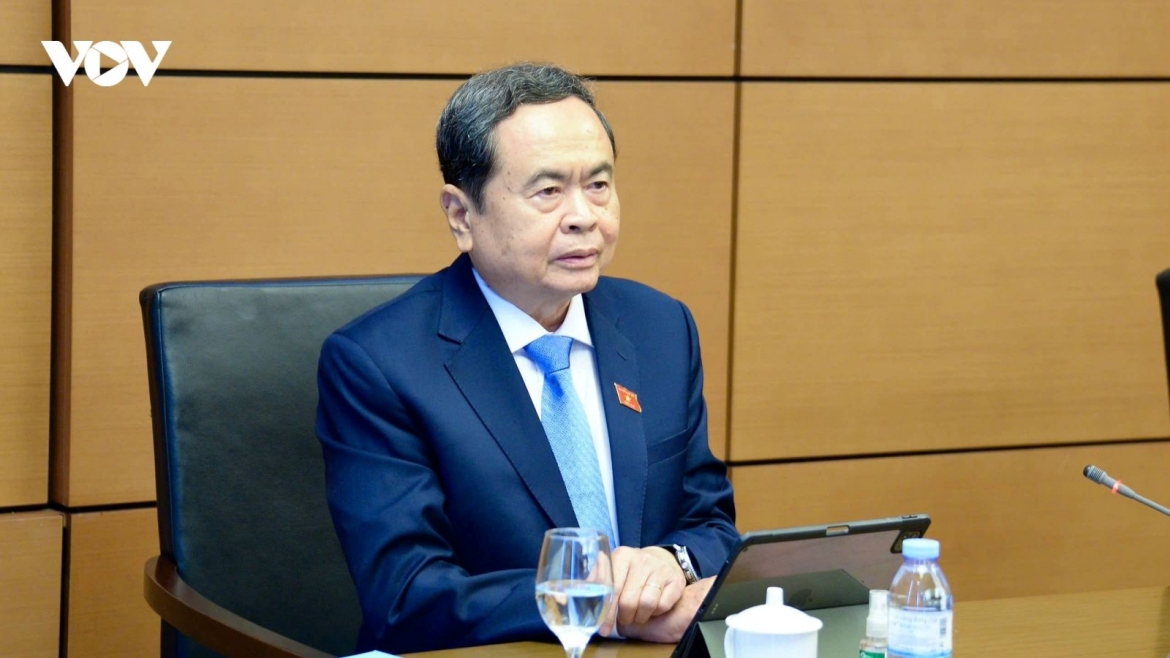
Speaking during group discussions at the National Assembly’s second session on October 18, National Assembly President Man outlined the challenges facing the economy despite encouraging growth in the first nine months of the year. He called for policies that not only sustain economic momentum but also translate available resources into productive capacity and lasting development gains.
Vietnam’s GDP grew by 9.01% in the first nine months of 2026, alongside progress in economic, cultural and social development, national defence, security and external relations. He described the result as a significant achievement, but cautioned that several underlying weaknesses could undermine the sustainability of growth if left unaddressed.
Inflationary pressures remain a major concern, particularly amid volatile global commodity prices. Private investment has yet to make a stronger breakthrough, while businesses and household enterprises continue to face difficulties accessing capital and coping with high borrowing costs, input expenses, logistics and land-related constraints.
Public investment also requires closer scrutiny. Disbursement had reached around 63% of the allocated capital by the time of the discussion; some projects were delayed by procedural bottlenecks, and outstanding advances had yet to be recovered. The top legislator pointed out that mobilising substantial resources is not enough if they fail to generate new productive capacity.
Trade imbalances add to the challenges. Vietnam recorded a trade deficit of approximately US$19.4 billion between Jan. – Sept. 2026, with import structures remaining dependent on certain markets. At the same time, weaknesses in workforce quality, youth employment, access to essential services and domestic technological capabilities continue to constrain the economy’s development potential.
Against this backdrop, maintaining macroeconomic stability must go hand in hand with improving the quality of growth. The National Assembly chief called for more efficient mobilisation and use of resources, a shift towards growth driven by productivity and value creation, investment in strategic infrastructure and energy security, and stronger breakthroughs in science, technology, innovation and digital transformation.
Turning resources into tangible economic gains
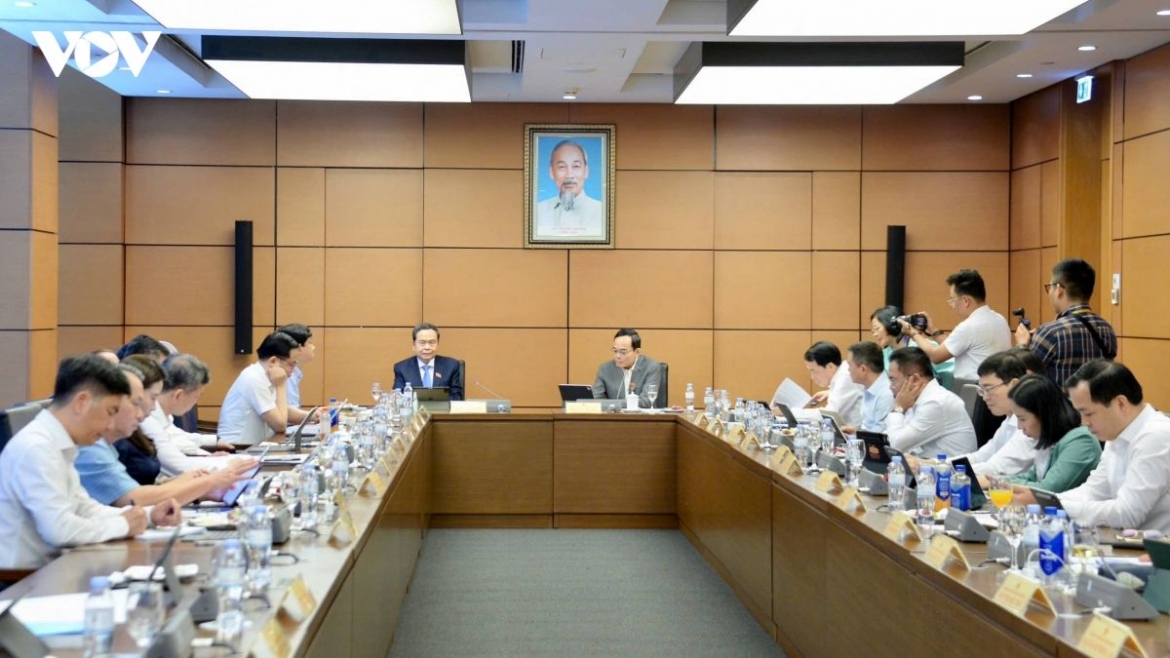
For the 2027 socio-economic development plan to deliver meaningful results, National Assembly President Tran Thanh Man requested a more decisive approach to public investment management. Capital should be allocated and transferred according to actual performance, with additional funding directed towards projects that progress effectively and resources withdrawn from those that repeatedly fail to meet their commitments.
He also stressed the need to link measurable performance indicators to officials’ responsibilities, ensuring that the assessment of public servants reflects concrete outcomes rather than procedural compliance alone.
The effective operation of international financial centre in Ho Chi Minh City and Da Nang is another priority. Although the National Assembly has adopted relevant decisions more than a year earlier, progress on the ground was limited. The top legislator therefore urged the authorities concerned to move from policy commitments to practical implementation.
Administrative accountability must also improve. Officials who evade responsibility or delay decisions should be replaced where necessary, he said, while cautioning that the pressure to meet deadlines must not come at the expense of quality. Careful consideration should not become an excuse for inaction. Leaders and public servants at all levels need to be held accountable for specific tasks, completion dates and measurable results.
Science and technology policy, meanwhile, should focus more closely on practical applications and tangible results. The leader emphasised that each agency and organisation must define clear deliverables, alongside efforts to develop domestic industries and the marine economy.
Preparing for 2027 also requires a careful assessment of the delayed effects of economic shocks in 2026. Man stressed the importance of closely tracking market developments, capital flows and financial balances, banking-system liquidity and exchange rates, alongside ensuring better coordination between fiscal and monetary policies to maintain stability.
Digital transformation is part of this broader effort to improve institutional capacity and productivity. Citing the growing volume of legislative work, National Assembly President Tran Thanh Man noted that the National Assembly had passed 18 laws at its eighth session, 39 at its ninth and 51 at its tenth, all during the 15th legislature. During the first session of the 16th legislature, nine laws were passed in nine days, while a subsequent extraordinary session adopted 15 laws. The current session is expected to consider and pass 39 laws.
The scale and pace of legislative work underline the need for the National Assembly and other public bodies to make more effective use of digital technologies and artificial intelligence. These tools, he said, would deliver results only if used regularly and appropriately in line with practical needs.
Ensuring growth improves people’s lives
The discussions also highlighted the need to measure economic progress by its impact on households and workers, rather than relying solely on headline growth figures.
National Assembly deputy Tran Hoang Ngan welcomed the strong economic performance but noted that the three traditional growth drivers continued to face difficulties. He identified access to investment capital as a key challenge and called for closer coordination between fiscal and monetary policies to contain inflation, safeguard banking-system stability and provide medium- and long-term financing for infrastructure, housing, industrial parks and business activities. He also proposed increasing the charter capital of State-owned commercial banks to strengthen their capacity to provide credit to the economy.
Another deputy, Nguyen Vu Trung, suggested additional indicators to show how the benefits of growth are distributed among the population. Economic targets, he argued, should be linked to specific resources, responsible agencies and deadlines, with greater attention paid to real incomes, stable employment and access to essential services.
Trung cited statistics that average monthly earnings reached VND9.1 million in the first nine months of 2026, up 9.1% year on year, while youth unemployment stood at 8.87%, according to figures cited by Trung. He proposed breaking down employment and income data by region, industry, income group and type of work to identify those benefiting from growth and those still facing hardship.
The 2027 plan should therefore include indicators covering real income after inflation, informal employment, youth unemployment, young people not in education or employment, social insurance coverage and delayed social insurance contributions. Targets in education, healthcare, child protection, youth employment and access to essential services in disadvantaged areas should also be backed by clear funding, staffing and implementation responsibilities.
Together, these proposals highlight the central challenge facing Vietnam as it prepares its 2027 development plan, namely sustaining strong growth while strengthening economic resilience, improving the efficiency of public resources and ensuring that progress translates into better jobs, higher real incomes and improved living standards.
Government links 2027 growth ambitions to productivity and reform
VOV.VN - Vietnam is seeking to translate its ambition for rapid economic growth into tangible development gains in 2027, with the government targeting GDP per capita of US$6,100 while prioritising productivity improvements, institutional reform and more effective use of national resources.


