Diplomacy in a new era to match Vietnam’s stature and global standing

VOV.VN - Vietnam must elevate its diplomacy to a new level commensurate with the country’s historical legacy, cultural identity and growing international standing, Politburo member and Foreign Minister Le Hoai Trung said on February 7.
Renewing diplomatic thinking in a changing global landscape
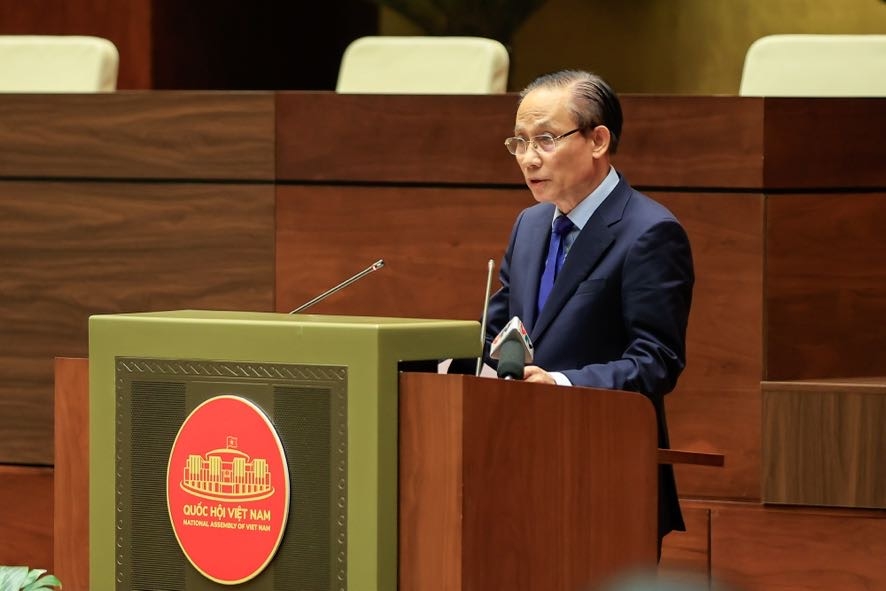
Speaking at a national conference to implement the Resolution of the recent 14th National Party Congress, Trung stressed that diplomacy is an inseparable component of the Party’s overall development strategy for the country. Vietnam’s foreign policy, he said, represents a continuation of the country’s long-standing diplomatic tradition, while also reflecting its enhanced position and capabilities after nearly four decades of reform.
According to the minister, the documents of the 14th Party Congress introduce significant innovations in diplomatic thinking, containing strategic breakthroughs designed to meet the demands of national development in a new era and adapt to rapid, complex and profound changes in regional and global dynamics.
The Congress reaffirmed Vietnam’s consistent foreign policy of independence, self-reliance, peace, friendship, cooperation and development, together with the diversification and multilateralisation of external relations. The supreme objective is safeguarding national interests in accordance with international law and the United Nations Charter, based on equality and mutual benefit.
Vietnam continues to actively contribute to peace, cooperation and development as a reliable partner and a proactive, responsible member of the international community, he affirmed.
Key innovations in foreign policy
The chief diplomat highlighted several major new points in the foreign policy orientation.
First, the Congress set the goal of “developing diplomacy in a new era commensurate with the nation’s historical stature, cultural values and international standing.” While Vietnam’s diplomacy and international integration have achieved notable successes, he said there remains substantial room to further consolidate a favourable external environment for national development.
Second, the Congress emphasised the concepts of “strategic autonomy” and “self-reliance,” rooted in the Party’s guiding ideology and President Ho Chi Minh’s thought. Internal strength, he stressed, plays a decisive role and must be combined with international solidarity and cooperation.
Third, foreign affairs and international integration were identified as “critical and ongoing” tasks. Their critical nature lies in their direct link to the country’s security, survival and prosperity, while their ongoing nature requires continuous, proactive and systematic implementation, involving the entire political system and close coordination among defence, security and diplomacy.
Three major requirements for diplomacy in the new era
In the coming period, Vietnam’s diplomacy must clearly reflect the country’s renewed development aspirations and contribute to achieving the Party’s long-term centennial goals.
First, diplomacy must help maintain a peaceful environment, identify and defuse potential risks early, protect the country from afar, and position Vietnam advantageously in an evolving global order.
Second, diplomacy must play a pioneering role in mobilising external resources for security and development, expanding development space and supporting strategic breakthroughs and major national transformations, including the pursuit of high economic growth following the 14th Party Congress.
Third, diplomacy must further enhance Vietnam’s international standing, prestige and image, while promoting active and responsible participation in addressing regional and global challenges and contributing to a fair, rules-based international order.
Institutionalising policy and building a comprehensive diplomacy
To implement the new diplomatic orientation, the Foreign Minister proposed five key task groups.
These include strengthening awareness across the political system of diplomacy’s critical and ongoing role; accelerating the institutionalisation of the Party Congress’s foreign policy through regulations, laws and coordination mechanisms; building a comprehensive, high-level diplomatic strategy across all pillars, with a focus on economic and technology diplomacy; allocating commensurate resources to develop a modern, professional diplomatic service; and enhancing coordination among ministries, local authorities, enterprises and the public in advancing international integration.
Concluding his remarks, the Foreign Minister expressed confidence that under the leadership of the Party Central Committee, the Politburo and the Secretariat, headed by Party General Secretary To Lam, Vietnam’s diplomacy would continue to make significant contributions to national construction and defence in the new era.
Vietnam seeks to elevate diplomacy with greater autonomy, confidence and pride
VOV.VN - Vietnam is seeking to elevate its foreign policy to better match its growing national stature, emphasising autonomy, confidence, self-reliance, resilience and national pride as it deepens international integration and expands its global role.