PM’s article spotlights economic diplomacy for Vietnam’s prosperity

Prime Minister Pham Minh Chinh has wrote an article, highlighting that economic diplomacy has left a strong mark at many milestones of the country’s development and strategic integration.
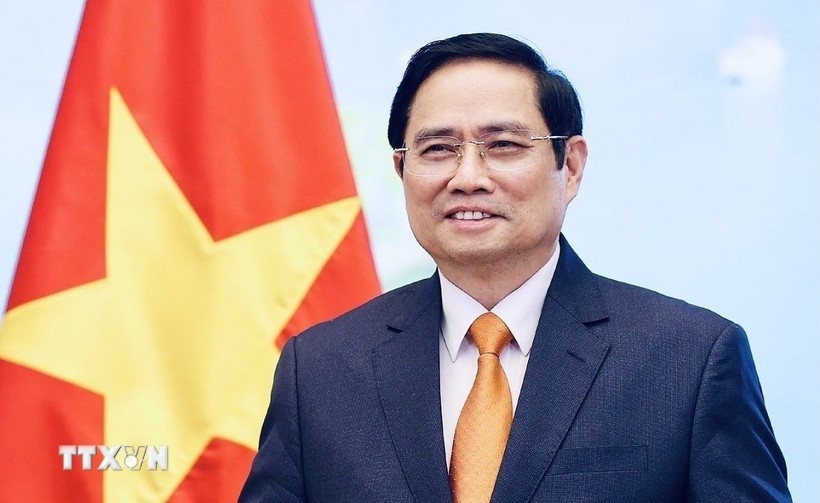
The Vietnam News Agency respectfully introduces a translated article by Prime Minister Pham Minh Chinh, entitled “Economic diplomacy under strong transformation for powerful prosperity of the nation.”
Below is the full text of the article:
ECONOMIC DIPLOMACY UNDER STRONG TRANSFORMATION FOR POWERFUL PROSPERITY OF THE NATION
Pham Minh Chinh,
Politburo member, Prime Minister
Amid nationwide excitement toward the 14th National Party Congress, under the Party's leadership, the Government and all levels, sectors, and localities are actively preparing to resolutely, concertedly, and effectively follow the orientations, tasks, and solutions across all fields in accordance with the Congress’s Resolution; among which economic diplomacy holds particularly important significance, contributing to “leading the way and opening the path”, attracting resources, creating opportunities, and opening up new development space to propel our country toward rapid and sustainable development in the new era.
The year 2025 is a momentous milestone, marking 80 years since our nation regained independence, our people achieved freedom, and 50 years since our country was reunified. Under the leadership of the Party and our beloved President Ho Chi Minh, the Vietnamese nation has created historic miracles. From a country scarcely known on the world map, today Vietnam has achieved stature, potential, position, and an increasingly high international reputation. Entering a new era of development, with steadfast courage, brainpower, compassion, and an aspiration to rise, the entire Vietnamese nation is striving to “hoist the sails” high and firmly steer the oars to bring the Vietnamese ship out into the open sea.
Throughout the flow of history, at every step of the country’s advancement, Vietnamese diplomacy has made great contributions of important significance. From the early days of safeguarding the fledgling independence, fighting for territorial integrity and national reunification, to the journey of breaking out of encirclement and embargo and advancing extensive, comprehensive global integration, Vietnamese diplomacy has always left a profound imprint, making important contributions to “turning danger into opportunity”, “turning difficulty into ease”, “reversing situation”, “transforming status”, and creating the best possible external environment for national development.
In the mid-1970s, after national reunification and the restoration of peace, with strategic vision, sharp thinking, and accurate assessment of the world situation and domestic conditions, our Party early on recognised that economic diplomacy serving national post-war recovery was both necessary and a new direction requiring focused rollout. Since then, economic diplomacy has left a strong mark at many milestones of the country’s development and strategic integration.
Among these, the most notables are: studying global development models and trends to advise the Party and the State on formulating economic development and national renewal policies (the 1980s), breaking the encirclement and embargo, normalising relations with major financial institutions, gradually integrating into the global community, attracting foreign investment and assistance from partners (the 1990s); and “pioneering and opening the way” for the process of global economic integration with many especially important milestones of strategic significance that have transformed the country’s landscape (from 1995 to the present). These are milestones of strategic importance, opening up great development opportunities, connecting and affirming Vietnam’s role and important contributions to the global and regional economy.
The Party and State’s thinking and awareness regarding economic diplomacy have continuously been renewed and refined to keep pace with the rapid changes of the times and meet the country’s new development requirements. In this regard, economic diplomacy has always been identified as a key, regular task in external affairs, a fundamental and central pillar of Vietnamese diplomacy, and an important driving force for rapid and sustainable national development.
From the beginning of the current term till now, over the past five years, the global landscape has been unstable, uncertain, with more unfavourable factors than in the previous period; in which difficulties, challenges, opportunities, and advantages are interwoven, but difficulties and challenges outweigh the rest.
Nevertheless, with high determination, great efforts, and decisive actions by the entire Party, people, and army, our country has achieved many important, proud-worthy, and historically significant accomplishments across all fields. The economy has increasingly demonstrated stronger resilience to external shocks; in 2025, GDP growth reached 8.02%, placing Vietnam among the high-growth countries in the region and the world, especially as macroeconomic stability has been maintained, inflation controlled, and major economic balances ensured.
The size of the economy in 2025 neared US$514 billion, with GDP per capita estimated at US$5,026, placing Vietnam among the group of upper-middle-income countries. Traditional growth drivers have all performed effectively; Vietnam ranks among the world’s top 15 developing countries in attracting foreign investment and among the top 20 countries globally in terms of trade volume.
New growth engines have made many important advances; in which the growth rate of the digital economy and the ICT industry has outpaced GDP growth; our country leads the group of nations with similar income levels in the Global Innovation Index rankings; and initial important, strategic, and breakthrough progress has been achieved in several key technological fields such as artificial intelligence, high-speed railways, semiconductors, nuclear energy, the quality workforce upskilling.
Cultural and social sectors have further flourished; environmental protection has received greater attention; social welfare has been ensured; and the material and spiritual life of citizens has kept improving. National defence-security capacity has been consolidated and strengthened; independence, sovereignty, and territorial integrity have been firmly safeguarded; and social safety and order have been maintained.
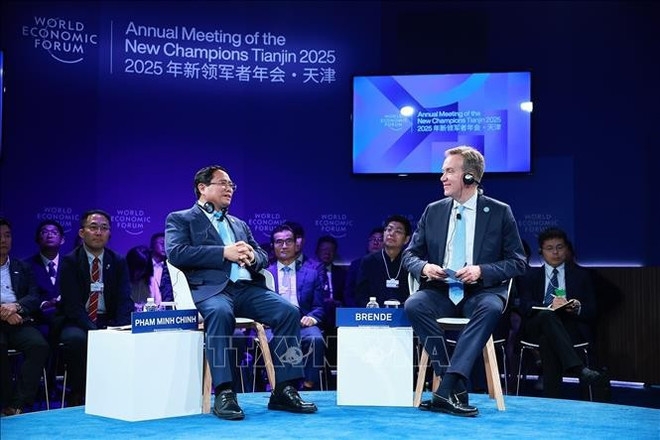
In particular, external relations and global integration have been bright spots amid a world landscape fraught with difficulties; in which economic diplomacy has achieved many impressive results. Technology diplomacy has been promoted, contributing to breakthroughs in science and technology development, innovation, digital transformation, and the building of an independent, self-reliant economy closely linked with deep, substantive, and effective global integration. Vietnam’s international prestige and standing have continued to rise in the global economy, politics, and human civilisation.
To date, Vietnam has signed and joined 17 free trade agreements (FTAs), forged diplomatic relations with 194 countries, including all members of the United Nations; established comprehensive partnership frameworks or higher with 42 countries, including 17 G20 members; and comprehensive strategic partnerships with all five permanent members of the United Nations Security Council.
Vietnam has undertaken many important multilateral responsibilities, such as being re-elected to the United Nations Human Rights Council for the 2026–2028 term, hosting the ASEAN Future Forum, the 4th Partnership for Green Growth and the Global Goals 2030 (P4G) Summit, and hosting the signing ceremony of the Convention against Cybercrime, among others.
To achieve the above accomplishments, the diplomatic sector in general and economic diplomacy in particular have made extremely important, practical, and effective contributions.
First, diplomacy has contributed to maintaining a stable and favourable environment and expanding the national development space, deepening economic cooperation, and increasing the intertwining of interests with partners, especially neighbouring countries, major powers, and traditional friends.
Second, it has attracted external resources for national development, expanded and diversified markets, drawn investment, facilitated knowledge and technology transfer, and upheld the strength of the overseas Vietnamese community. In particular, the resolute and rapid launch of “vaccine diplomacy” made a direct and important contribution to the COVID-19 prevention, control and containment, facilitating socio-economic recovery and development.
Third, it has played a pioneering role in stepping up global economic integration and linkage, especially by elevating Vietnam’s participation and contributions in multilateral economic cooperation mechanisms, proactively engaging in the formulation of new international rules and regulations; at the same time, effectively leveraging the network of free trade agreements, turning Vietnam into a regional connectivity hub. Concurrently, economic diplomacy has accompanied and supported localities and enterprises in conducting external economic activities and global economic integration, delivering important and practical benefits and results.
Entering a new stage of development, amid a world situation forecast to continue evolving in a complex and unpredictable manner, with difficulties and challenges generally outweighing opportunities and favourable conditions, economic diplomacy faces the requirement to undergo a strong transformation in order to accompany the determination to successfully realise the country’s two centennial strategic goals.
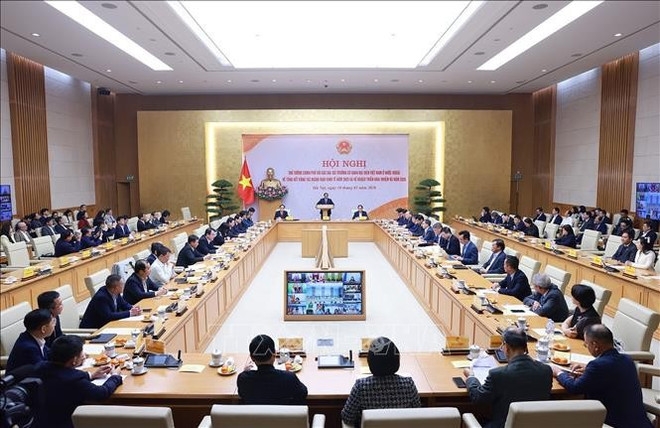
The draft documents of the 14th National Party Congress emphasise the need to “promote comprehensive diplomacy in service of development, with economic diplomacy and technology diplomacy as focal areas.” Accordingly, innovation in economic diplomacy is no longer an option, but has become an objective requirement of reality, an urgent demand, a strategic choice, and one of the top priorities in contributing to the realisation of the nation’s aspiration for a powerful and prosperous development.
In that context, economic diplomacy in the coming period will shoulder three major responsibilities. First, it must contribute to shaping a strategic space for the country to enter an era of strong, civilised and prosperous development. Second, it must bring into play its role as an important driving force in attracting resources, removing bottlenecks and addressing major challenges in order to create breakthroughs in national growth and development, particularly in promoting science and technology, innovation, digital transformation and green transformation. Third, it must contribute to building an independent and self-reliant economy while proactively and actively advancing international integration.
With the motto that “resources stem from thinking and vision; motivation stems from innovation and creativity; strength stems from the people and enterprises,” economic diplomacy and technology diplomacy in the next phase need to thoroughly grasp “three important lessons,” while strongly renewing mindset; updating objectives, scope, target groups and implementation methods in line with the “Five Mores” principle.
Specifically, the "three important lessons" are as follows. First, it must persist in the path of national independence associated with socialism; remain steadfast in pursuing a foreign policy of independence, self-reliance, multilateralisation and diversification, proactive and active international integration, being a friend, a reliable partner and a responsible member of the international community. Second, it needs to be resolute yet flexible, firmly protecting national interests while remaining highly adaptable in implementation to achieve set objectives. Third, it should have a firm and in-depth grasp of the situation, and to provide timely, flexible, appropriate and effective policy advice.
The “five mores” approach are: first, it must be more strategic and agile in thinking to promptly identify new trends, proactively seize opportunities and enhance the adaptability of the economy.
Second, it needs to be more focused and targeted in building objectives and solutions, closely aligned with national development goals in each period.
Third, it is necessary to further expand and deepen overall relations with partners as well as cooperation in each field, particularly in science and technology, innovation and digital transformation.
Fourth, it should be more decisive and creative in implementation, ensuring clear task assignment and substantive effectiveness in the spirit of “six clarities: clear person, clear task, clear responsibility, clear authority, clear timeline and clear results.”
Fifth, it must be more proactive and responsible in participating and contributing to international economic cooperation mechanisms and forums, as well as international and regional issues of strategic importance, in line with national requirements, capacities and conditions, especially in global economic governance.
Above all, foreign affairs, particularly economic diplomacy, must bring into full play the spirit of “loyalty and dedication,” “confidence and creativity,” “mettle and flexibility,” “negotiation and persuasion,” “top effectiveness,” and “the Fatherland above all.” With far-sighted vision, deep thinking and bold action, valuing time, intellect and timely decisiveness, the diplomatic sector must continue to serve as a pioneering and core force in bringing new opportunities, new momentum and new external resources for rapid and sustainable national development, while enhancing Vietnam’s prestige and position in the international arena.
Entering a new stage of development, external work in general and economic diplomacy in particular must focus on thoroughly grasping and effectively implementing the Resolution of the 14th National Party Congress, as well as resolutions of the Party, the National Assembly and the Government, especially Politburo Resolution No. 59 on international integration in the new situation.
Priority should be given to promoting cooperation in economy, trade, investment, science and technology, digital transformation, green transformation, energy transition, education and training, healthcare, culture, labour, tourism, environmental protection and climate change response.
Efforts should be made to promote technology transfer in key sectors of the economy such as nuclear energy, high-speed railways and semiconductors, aiming to complete the construction of a semiconductor chip manufacturing plant by the end of 2027.
Solutions should be implemented synchronously to diversify markets, products and supply chains; focus should be placed on tapping and utilising potential markets; promotion and branding of Vietnamese products abroad should be intensified; and negotiations and signing of free trade agreements with countries and regions in the Middle East, Central Asia, Africa and Latin America should be expedited.
Priority support should be given to localities and the business community, especially small and medium-sized enterprises, in economic integration, international cooperation and linkage; active assistance should be provided for enterprises in expanding investment and business operations abroad, participating more deeply in global value chains; and strong efforts should be made to attract investment from major technology groups and Vietnamese experts abroad.
At the same time, the diplomatic sector, together with levels, sectors and localities, should continue to coordinate closely in advising and proposing to competent authorities breakthrough mechanisms, policies and solutions in foreign relations, particularly in strongly promoting economic diplomacy and technology diplomacy, contributing to the successful achievement of the double-digit growth target in 2026 and beyond.
In this overall picture, we must maintain clear awareness, take resolute action and make unceasing efforts to create breakthroughs in science and technology, innovation and the green transition in the digital era. These are the key driving force and the “golden key” that will enable Vietnam to catch up, move alongside and surpass others, achieving rapid and sustainable development, successfully realising the two centennial strategic goals, and striving to become a developed country with high-income by 2045.
In that process, we need to continue to intensify comprehensive reform, focus to remove difficulties and obstacles across sectors, accelerate administrative reforms, and eliminate institutional, infrastructure and human resources constraints so that science and technology, innovation, digital transformation and green transition truly become new drivers and resources, encouraging the entire nation to move forward steadily into a new era.
The achievements of the country after 80 years of construction and development provide an important foundation and a favourable starting point for the nation’s new journey. Under the leadership of the Party, with the spirit of unity, consensus and determination of the entire people, and based on the guiding principle of “creating and maintaining a peaceful and stable environment, pioneering the connection of cooperation, unlocking and attracting development resources, and continuously enhancing national position,” as directed by Party General Secretary To Lam, we have firm confidence that foreign affairs in general and economic diplomacy in particular in the coming period will further uphold fine traditions and build on important achievements already attained. With the spirit of “placing localities, enterprises and people at the centre of service; taking national and ethnic interests as the guiding compass”, the sector will continue to strive to overcome difficulties and challenges and successfully fulfil the missions and tasks entrusted by the Party and the State, thereby contributing to building a solid foundation for rapid and sustainable national development, and bringing prosperity and happiness to the people.
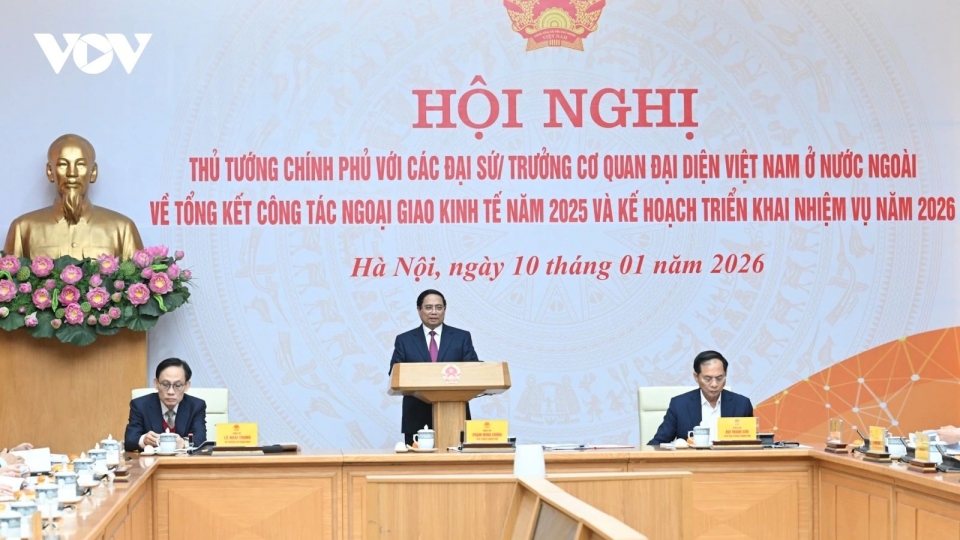
PM outlines economic diplomacy goals for 2026, calls for breakthrough growth
VOV.VN - Prime Minister Pham Minh Chinh chaired an online conference on January 10 with Vietnamese ambassadors and heads of overseas representative missions to review the country’s economic diplomacy in 2025 and set priorities for 2026, emphasising a focus on sincerity, balanced interests, and shared risks.