80 years on: National Assembly highlights democratic legacy, reform drive

VOV.VN - Vietnam will mark the 80th anniversary of its first nationwide parliamentary election on January 6, 2026, celebrating the National Assembly’s role in shaping the country’s democratic institutions and guiding decades of political reform and national construction.
A formal ceremony will be held at the National Assembly Building in Hanoi to commemorate the landmark election on Jan. 6, 1946, which established Vietnam’s first legislature following independence from colonial rule.
From that historic vote to the present day, the National Assembly has evolved through 15 terms, combining institutional continuity with reform to help build a socialist rule-of-law state of the people, by the people and for the people.
Landmark general election
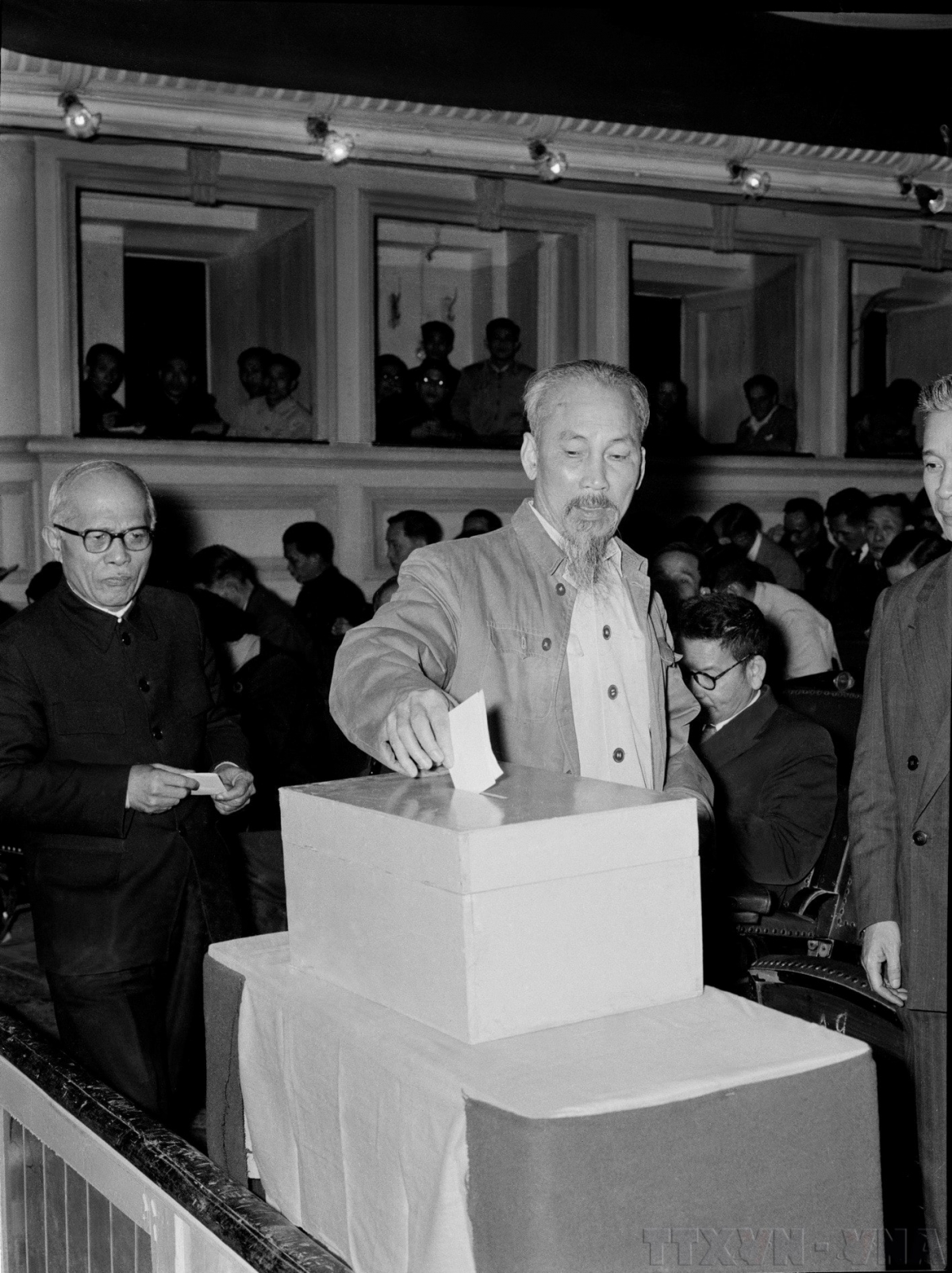
The first general election took place just months after Vietnam declared independence in September 1945, amid severe economic hardship, internal instability and external threats.
At the inaugural meeting of the Provisional Government on September 3, 1945, President Ho Chi Minh identified universal suffrage as an urgent priority, calling for a nationwide election to affirm popular sovereignty.
Despite significant obstacles, more than 90% of eligible voters participated in the January 6, 1946 election, paving the way for the first National Assembly and laying the foundation for Vietnam’s modern state institutions.
The National Assembly’s early legacy included the adoption of the 1946 Constitution, widely regarded as a progressive charter that enshrined fundamental rights and principles of democratic governance.
Legislature through war and reunification
During decades of conflict, the National Assembly continued to operate under extraordinary conditions, supporting the government with critical decisions related to national survival, resistance and reconstruction.
The adoption of the 1959 Constitution institutionalised the Communist Party’s revolutionary line for a new phase, providing a legal framework to mobilise national resources for the struggle to liberate the south and reunify the country. Legislation enacted during this period helped consolidate revolutionary authority in the north while serving as a strong rear base for the front lines.
The historic victory of the Ho Chi Minh Campaign in the Spring of 1975 marked the beginning of a new chapter for Vietnam. Less than a year later, a nationwide general election was held on April 25, 1976, to elect a unified National Assembly, formally completing national reunification at the state level. The sixth National Assembly was tasked with building a unified, peaceful Vietnam on a socialist path.
The 1980 Constitution, adopted during the transitional period toward socialism nationwide, further affirmed the National Assembly’s central role in shaping the country’s development model, consolidating the political system and safeguarding national sovereignty.
Reform era and rule-of-law development
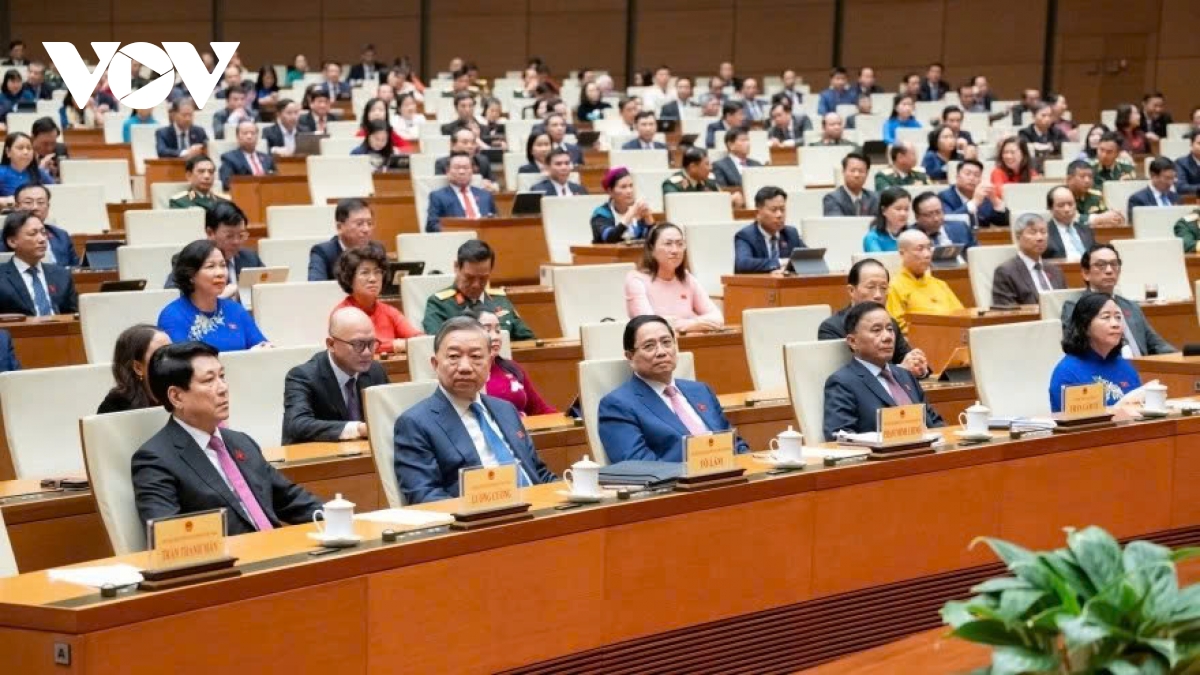
The historic turning point of 1986, marked by the Đổi Mới (Renewal) process initiated and led by the Communist Party, placed the National Assembly before entirely new demands. As the highest organ of state power, the legislature swiftly renewed its constitutional and legislative thinking, working closely with the Government to steer the country out of socio-economic crisis and onto a path of gradual integration and development.
The 1992 Constitution (amended in 2001), and especially the 2013 Constitution (amended in 2025), established a legal framework for a socialist-oriented market economy, more firmly affirming human rights, citizens’ rights, the principle of power control, and the construction of a rule-of-law state. A wide range of laws enacted during this period expanded development space for the economy and society, safeguarded freedom of enterprise, and promoted progress in education, health care, culture and social welfare.
As a result, Vietnam has sustained stable growth, weathered multiple global shocks, steadily improved living standards, and emerged as a regional bright spot.
A defining recent term
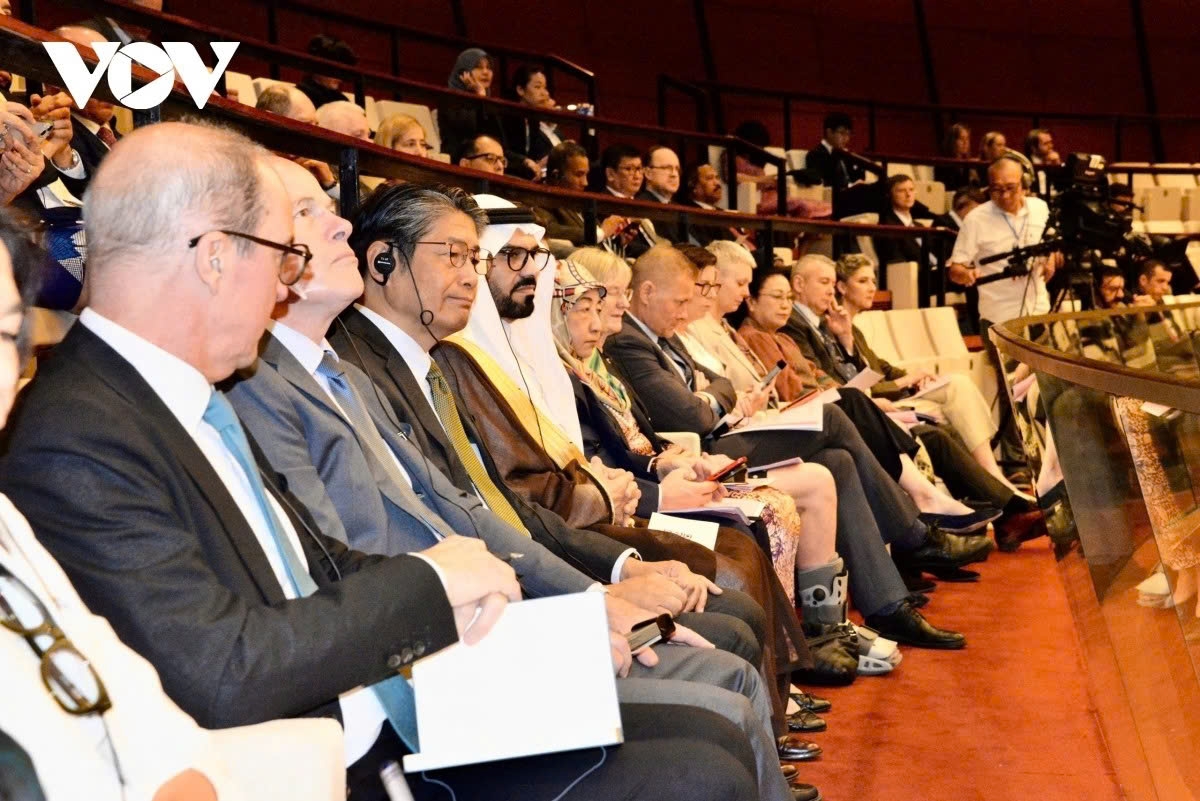
Within this 80-year continuum, the 15th National Assembly stands out as a particularly remarkable term, marked by a record workload in constitutional and legislative affairs amid unprecedented national challenges. Amendments and supplements to several provisions of the 2013 Constitution to enable the two-tier local government model from July 1, 2025, represented a major institutional breakthrough.
Alongside this reform, the legislature enacted a series of key laws in the fields of economy, investment, land administration and corporate governance, as well as resolutions on special mechanisms and policies for major growth engines such as Hanoi, Ho Chi Minh City and Da Nang.
The 15th National Assembly also approved investment decisions for projects of historic scale, laying a solid foundation for the country’s long-term development, while adopting humane policies aimed at sustainable social welfare, with the people placed firmly at the centre and as the ultimate objective.
Opening pathways to a new era
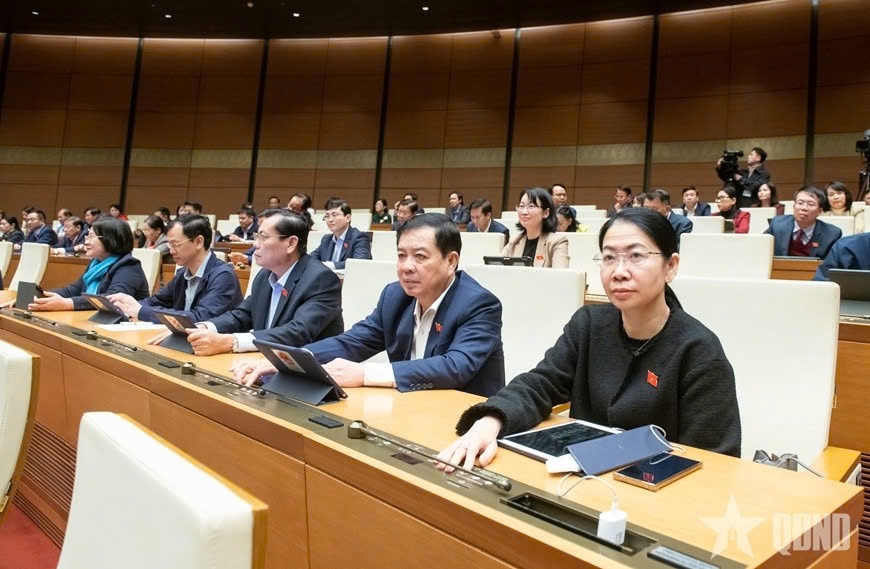
Looking back on 80 years and 15 terms, it can be affirmed that, in every historical context, the National Assembly of Vietnam has remained steadfast in its mission to represent the will and aspirations of the people under the leadership of the Party. Each term has formed a vital link in a continuous process of inheritance and renewal, by upholding tradition and constantly innovating to meet the demands of reality.
As Vietnam prepares for the 14th National Party Congress and elections for the 16th National Assembly and grassroots-level People’s Councils later this year, the legislature is expected to play a decisive role in shaping long-term development strategies.
From the first ballot cast in 1946 to contemporary legislative reforms, the 80-year journey of Vietnam’s National Assembly stands as a vivid testament to the enduring vitality of the country’s revolutionary democracy - a democracy that continues to be nurtured, perfected and directed toward its highest goals: the happiness of the people and the prosperity of the nation.
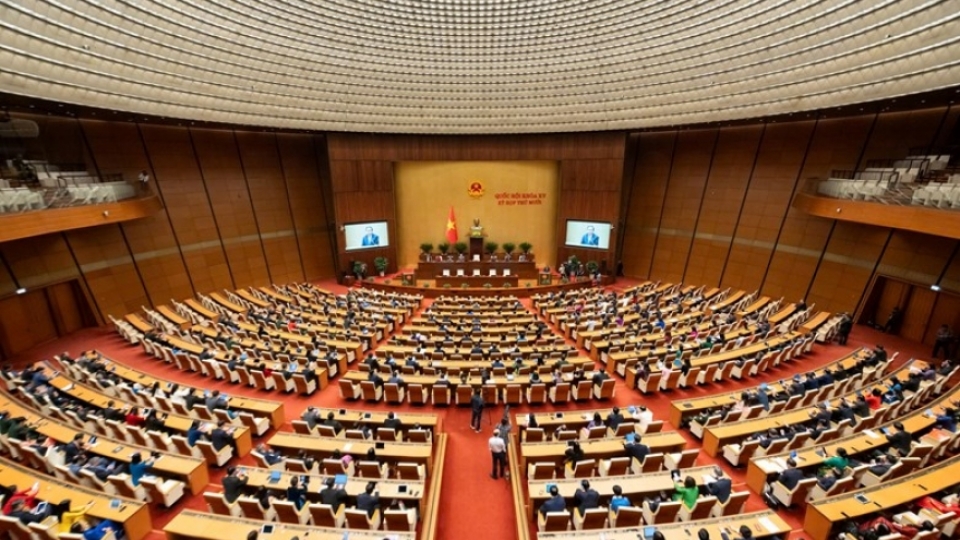
National Assembly leaves distinctive legacy amid profound changes
VOV.VN - Amid profound domestic and global changes requiring timely, flexible and forward-looking decisions, Vietnam’s 15th National Assembly has affirmed its role as the country’s highest representative and state power body during what has been widely described as an exceptional term.