Khmer palm-leaf manuscripts: A living cultural heritage

VOV.VN - Palm-leaf manuscripts of the Khmer people made from the leaves of the buông palm (Corypha) represent a unique cultural heritage that reflects the knowledge, beliefs, and reading traditions of the Khmer community in southern Vietnam.
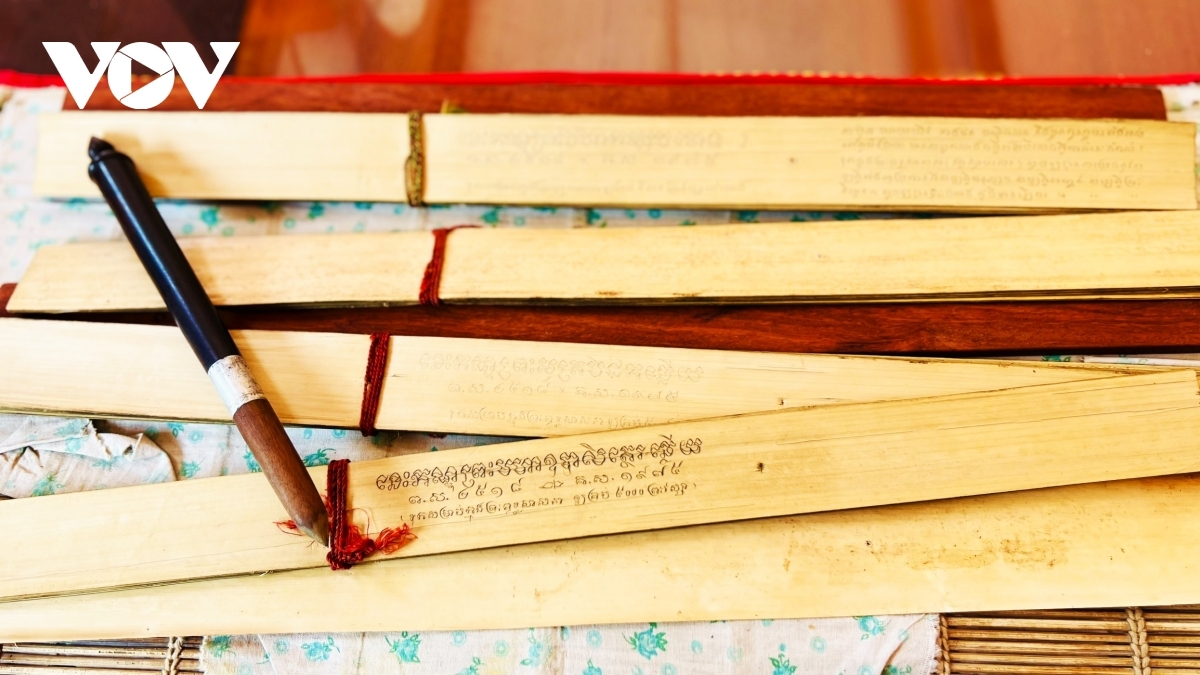
For centuries, these manuscripts have served not only as a means of preserving religious teachings but also as an important record of cultural life, history, and traditional values. Recognising their significance, in 2017 the Ministry of Culture, Sports and Tourism officially inscribed the “Knowledge and techniques of writing on palm leaves of the Khmer people” as a National Intangible Cultural Heritage.
The origins of palm-leaf manuscripts can be traced back to the early development of writing among the Khmer. Before paper became widely available, inscriptions were often carved into stone to record important information. Over time, people discovered that the leaves of the palm tree, known in the Khmer language as T’ran, could be used to write and preserve texts for long periods. This discovery marked an important step in the preservation and transmission of knowledge, allowing generations to record religious teachings, folklore, proverbs, and historical narratives on palm leaves.
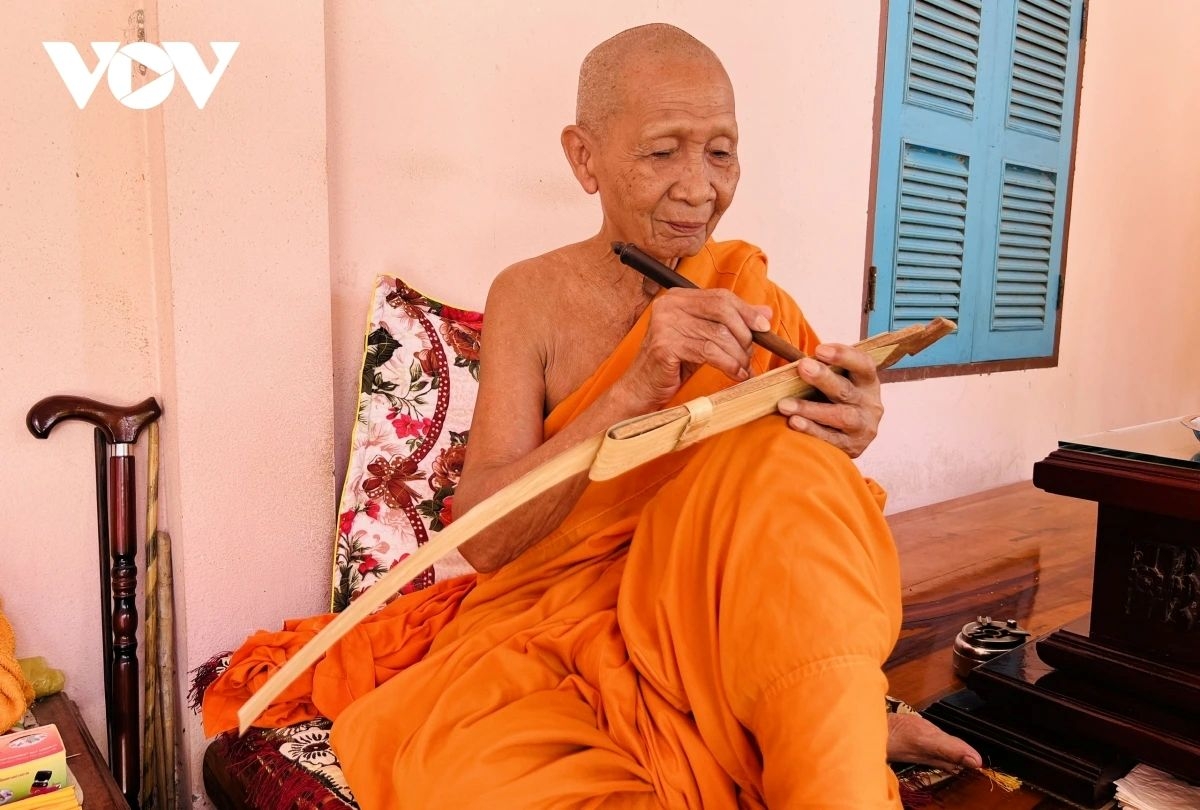
The process of creating a palm-leaf manuscript requires patience, skill, and meticulous craftsmanship. Artisans must first select palm leaves that are neither too young nor too old in order to ensure durability. The leaves then undergo a careful preparation process that includes heating over a fire, drying in sunlight, exposing them to night dew, and pressing them flat to create a smooth writing surface.
Instead of using ink in the conventional sense, writers carve characters directly onto the leaf using a stylus with a sharp metal tip, a tool traditionally known as Dek-cha. This technique, referred to in Khmer as char, literally means “to engrave.”
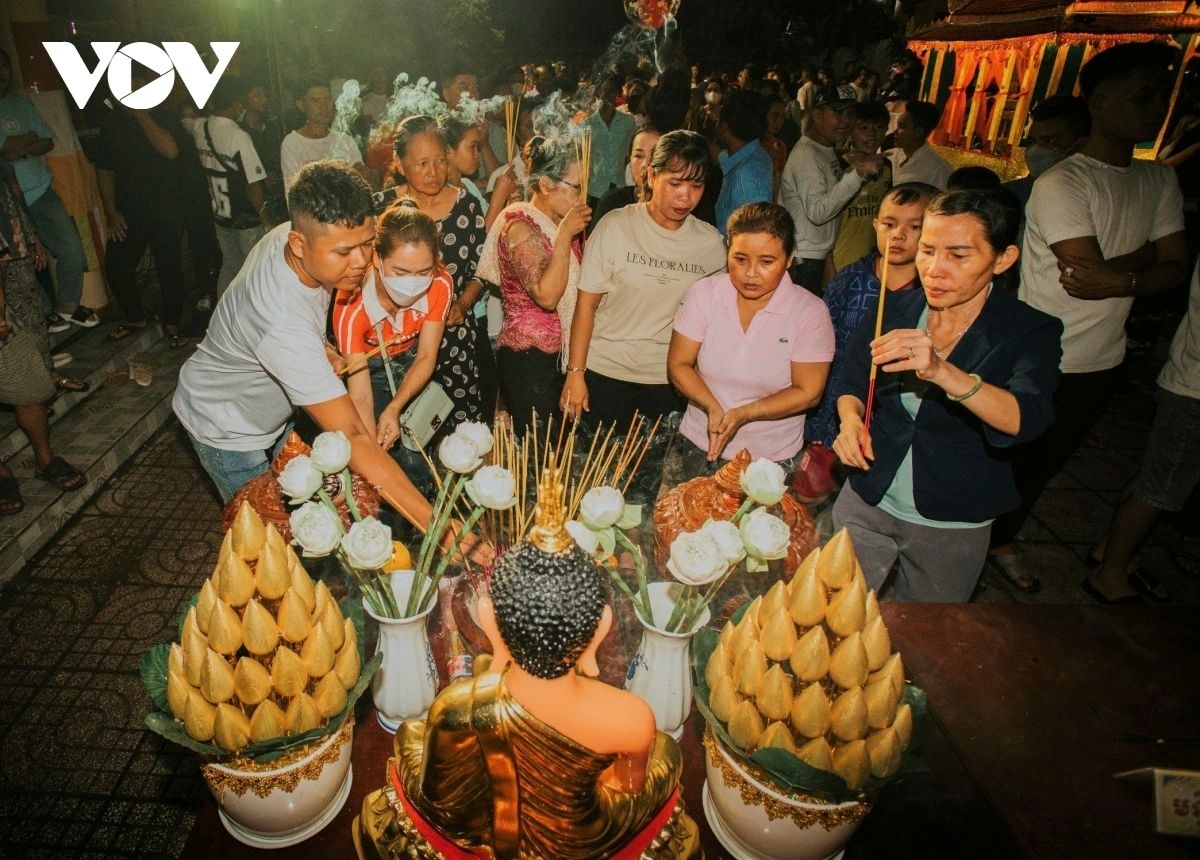
Once the characters are inscribed, a mixture of powdered charcoal and oil is rubbed across the surface so that the engraved letters become visible and easier to read. The finished leaves are then dried again, carefully arranged, and bound together into bundles that form a complete manuscript.
Palm-leaf manuscripts contain a wide range of content that reflects the spiritual and cultural life of the Khmer people. Many texts preserve Buddhist scriptures and sermons, while others recount stories about the life of the Buddha, traditional moral teachings, folklore, and records of festivals and rituals. In addition to religious texts, these manuscripts also document aspects of social life, customs, and community traditions, making them an invaluable source of knowledge about Khmer heritage.
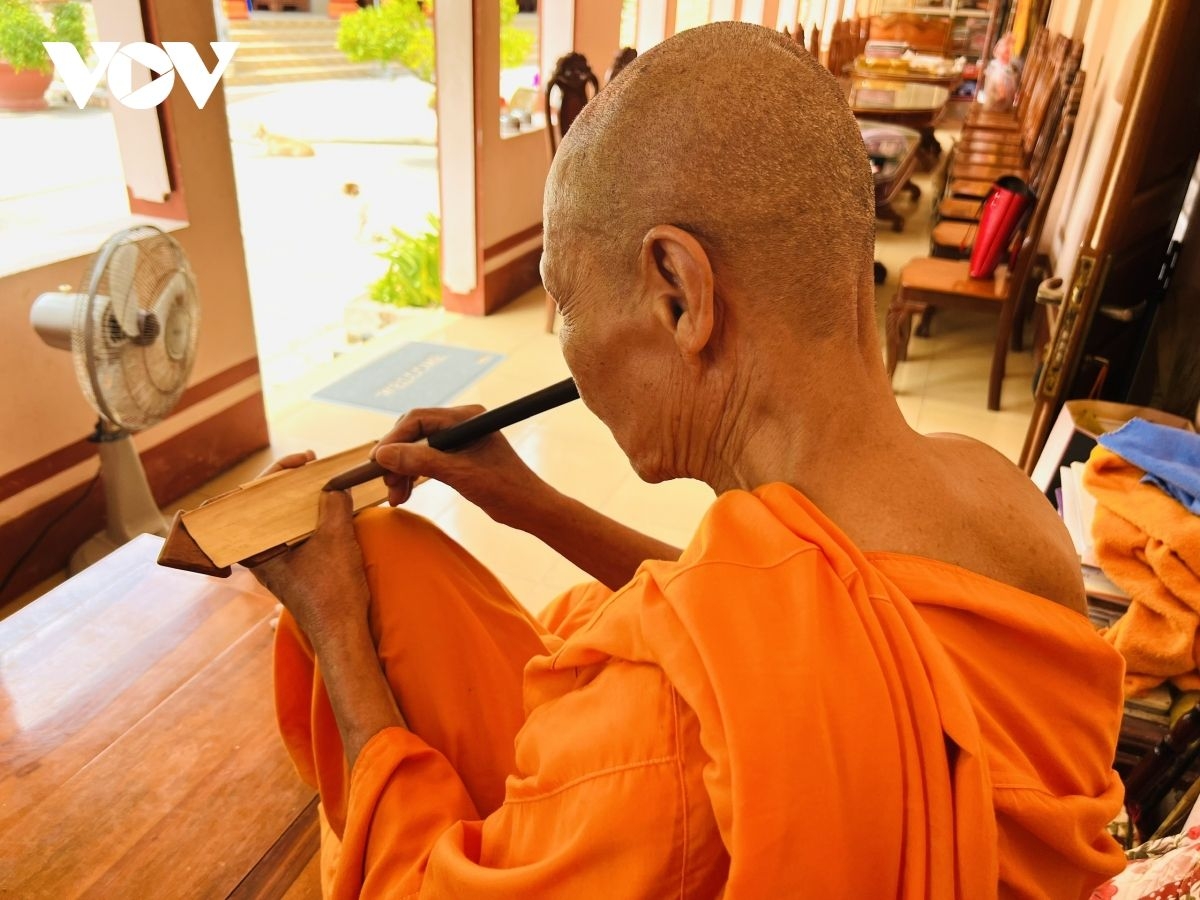
The art of writing on palm leaves is closely associated with Buddhist temples, where monks have traditionally played a key role in preserving and transmitting this knowledge. Mastery of the craft requires not only technical skill but also a deep understanding of Pali and ancient Khmer scripts, as well as familiarity with Buddhist teachings. Today, however, the number of people capable of practicing this intricate technique has become increasingly limited, highlighting the importance of efforts to safeguard the tradition.
Beyond their role as religious texts, palm-leaf manuscripts are considered a treasure of Khmer cultural identity in southern Vietnam. They provide insight into the intellectual life of the community and reflect a long-standing tradition of learning and scholarship. The recognition of palm-leaf writing as a national intangible cultural heritage underscores its importance not only to the Khmer community but also to Vietnam’s broader cultural landscape.
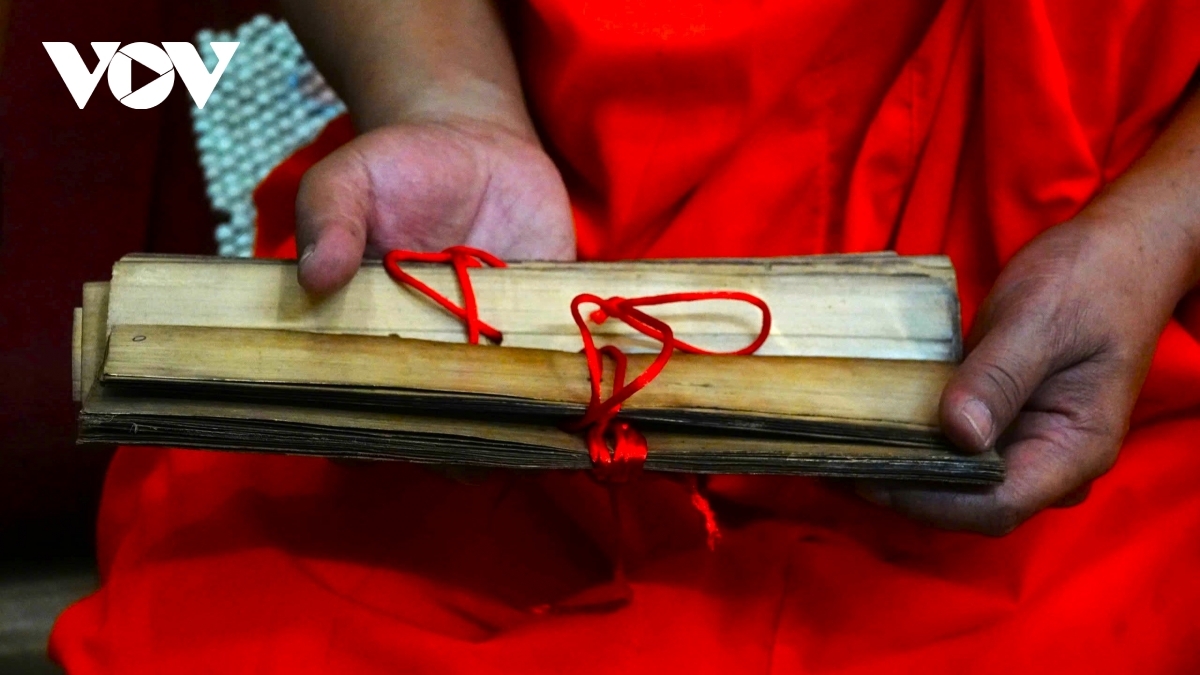
In the modern era, preserving and promoting the heritage of Khmer palm-leaf manuscripts remains essential. These manuscripts are more than historical documents; they represent a living tradition that continues to connect generations with their cultural roots. By safeguarding this heritage, Vietnam contributes to the protection of a unique form of knowledge transmission while enriching the cultural diversity shared with the world.
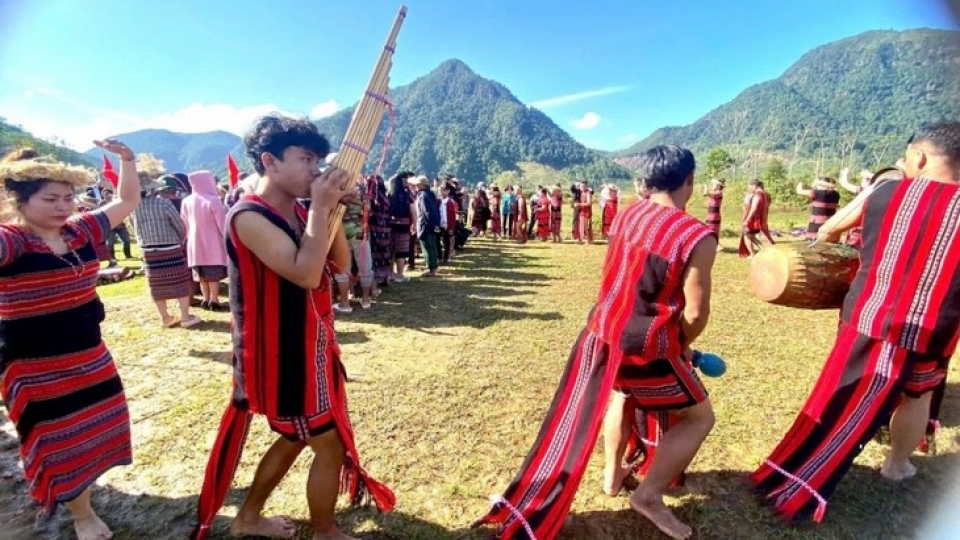
Spring flows with faith in Pa Co Water Deity Ritual
VOV.VN - When spring arrives, Pa Co ethnic communities in mountain villages of Hue city joyfully organize the Water Deity worship ceremony, a long-standing folk belief ritual.