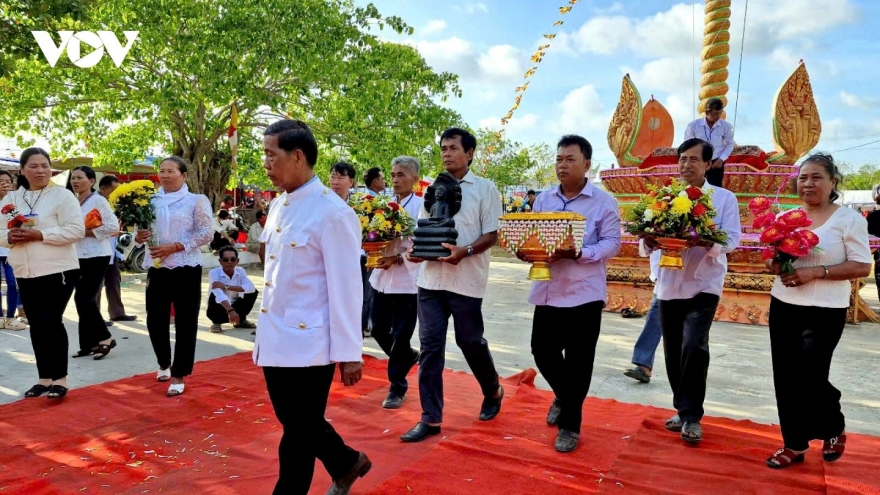
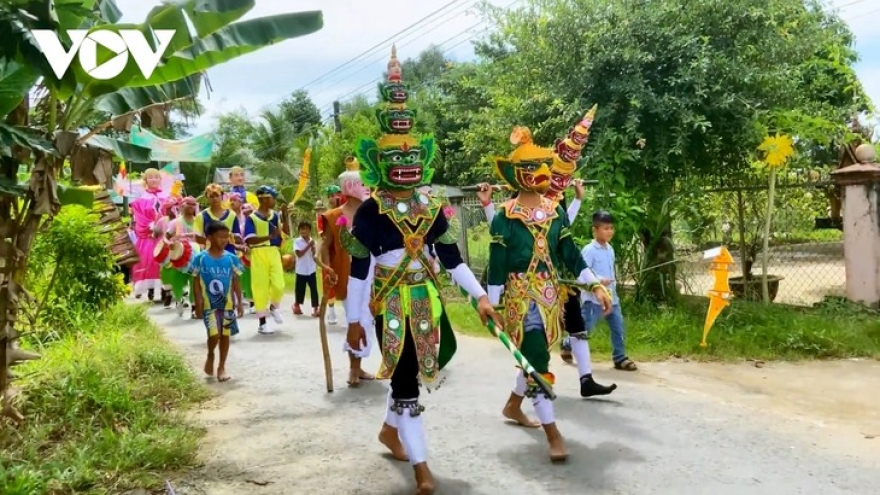
Young Khmer artisans keep cultural traditions alive through craftsmanship

VOV.VN - In Can Tho City, young Khmer artisans are turning traditional craftsmanship into sustainable livelihoods, blending entrepreneurial ambition with a strong commitment to preserving and promoting their community’s cultural heritage.
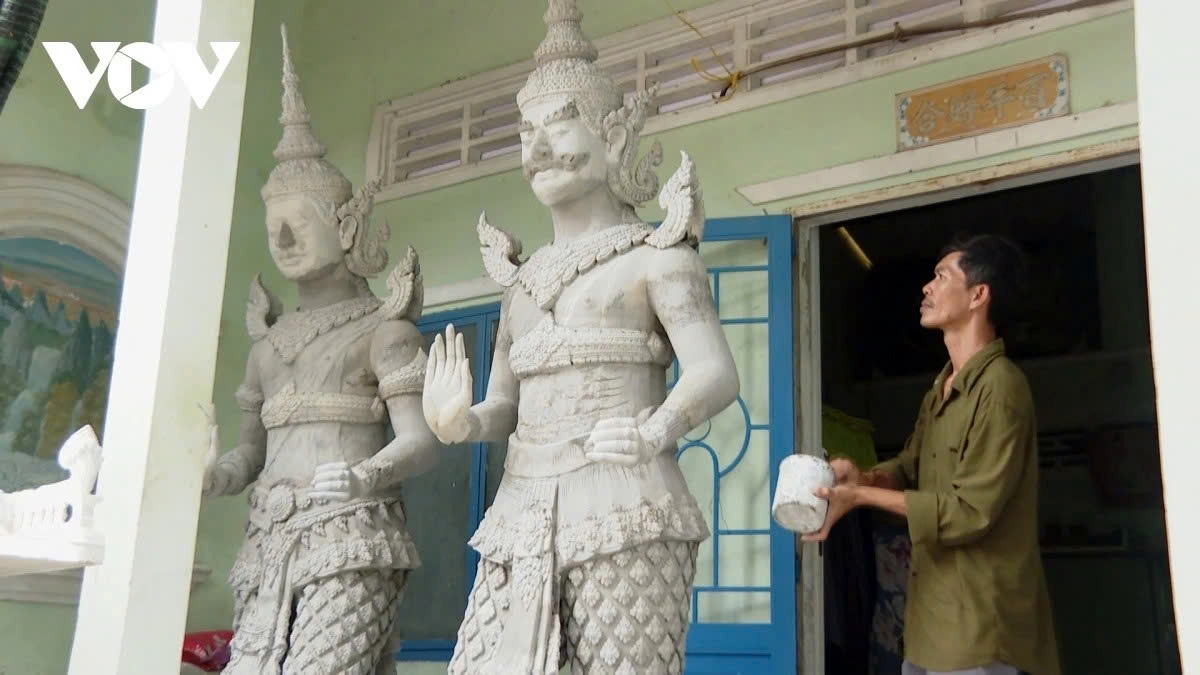
Born and raised in a Khmer family in Gia Hoa commune, Can Tho city, Son Binh Dinh spent many years studying at a Buddhist temple. During that time, he absorbed not only Buddhist teachings but also developed a deep passion for traditional Khmer decorative and sculptural arts. What began as a personal interest gradually became his vocation.
Dinh now specialises in crafting temple altars, pagoda finials and statues of various sizes for pagodas and private clients. Over time, his growing reputation has provided him with a stable income rooted in traditional craftsmanship.
“While studying at the temple, I realised my family did not have the means to support further formal education,” Dinh said. “I believed temples would always need skilled artisans, so I decided to pursue traditional sculptural art. At first, I was self-taught, copying patterns available at the pagoda. Later, senior monks and artisans guided me, and I eventually sought out professional mentors to deepen my skills.”
Like Dinh, Ly Diel also came from a modest background in Thuan Hoa commune, Can Tho. After studying at a temple and completing elementary Pali studies, he finished high school and was admitted to the Ho Chi Minh City University of Fine Arts, majoring in sculpture.
Combining academic training with hands-on experience and a profound understanding of Khmer culture, Diel has created numerous works of artistic and cultural value. Today, he is recognised as a formally trained Khmer sculptor.
“After finishing my studies, I returned to work at the pagoda,” Diel recalled. “Two sculptors once told me that while my work was technically correct, it lacked ‘soul.’ They encouraged me to pursue higher education to truly understand the essence of the craft. Despite financial difficulties, they supported me in the early years. Thanks to that encouragement, I graduated and began my professional career in 2018.”
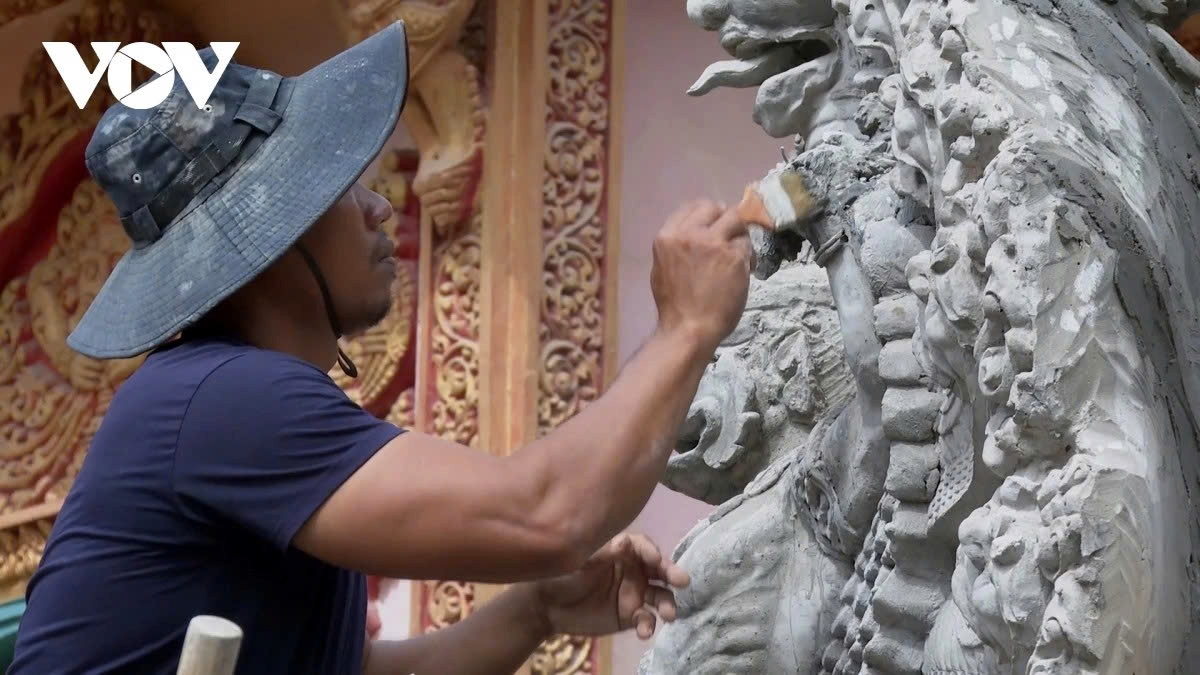
Beyond large-scale sculpture, traditional Khmer crown and classical dance mask craftsmanship is a distinctive art form, reflecting the defined characteristics of each character according to longstanding conventions. As demand for classical dance performances grows during festivals in Khmer communities and pagodas, this craft has created employment opportunities while sustaining artistic passion.
Kim Lieu Duol, from Dai Tam commune, Can Tho city, turned his childhood fascination with masks into a livelihood. In addition to full-sized ceremonial masks, he produces smaller versions that have proven popular among visitors.
“I have loved masks since I was young,” Duol said. “I used to watch traditional dance performances and then try to recreate the masks myself. It started as a passion. Even though my early products were not perfect, elders supported and encouraged me. Today, each mask sells for between VND2-3 million.”
These entrepreneurial stories represent more than individual economic success. Each sculpture, crown and mask crafted by young Khmer artisans carries the imprint of cultural heritage. Through their work, a new generation is not only building sustainable livelihoods but also helping to preserve and promote the distinctive identity of the Khmer community in southern Vietnam.
Khmer ethnic people place high hopes on 14th Party Congress
VOV.VN - As Vietnam prepares for the opening of the 14th National Congress of the Communist Party, members of the Khmer ethnic community and Theravada Buddhist monks in Vinh Long province have expressed strong confidence and expectations for the country’s next development phase.