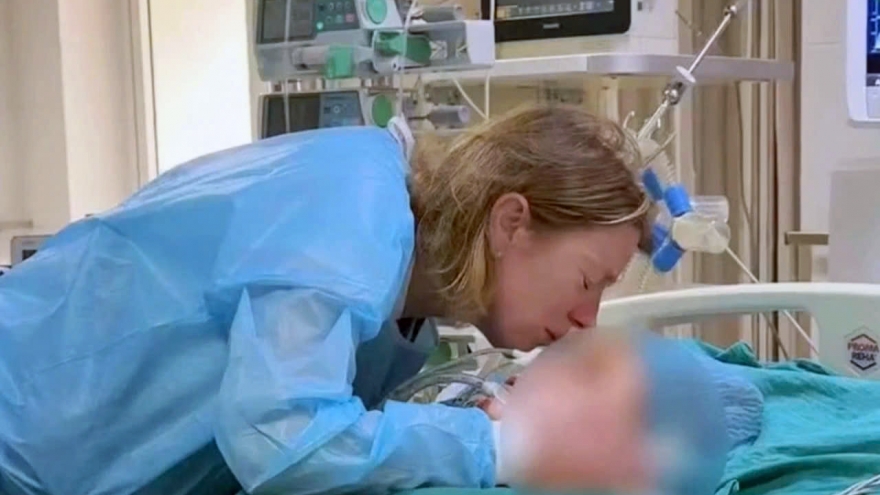
Twins born 13 weeks apart successfully delivered in Vietnam

VOV.VN - Doctors in Hanoi have reported a rare obstetric case in which twins were born 13 weeks apart, marking an unprecedented medical achievement in Vietnam and an extremely uncommon occurrence worldwide.
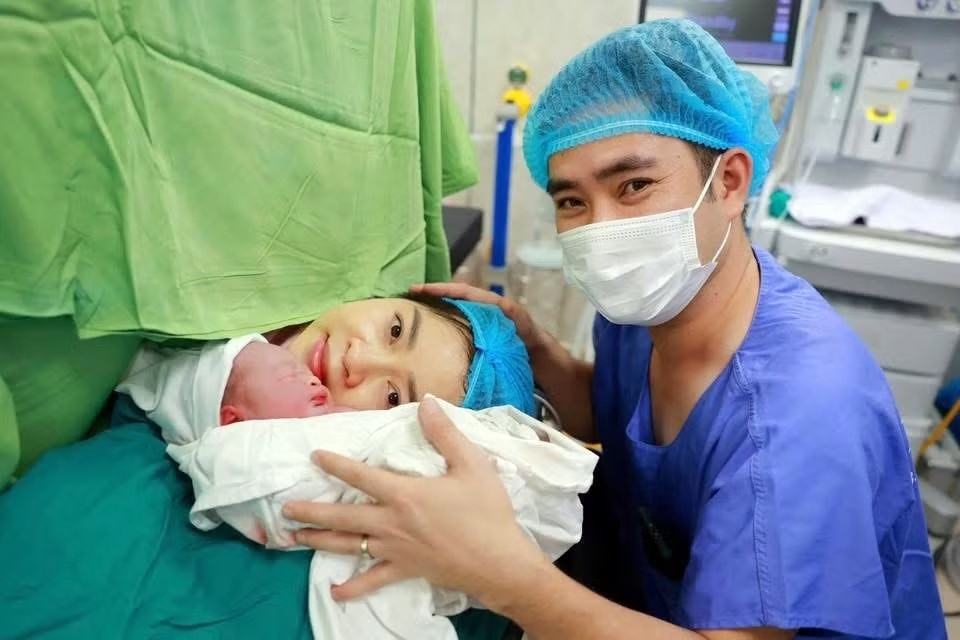
According to Mai Trong Hung, director of Hanoi Obstetrics and Gynecology Hospital, the second baby was delivered on April 15, 13 weeks after the first twin was born.
The parents, aged 36 and 32, had struggled with infertility for five years before conceiving through in vitro fertilization (IVF). The pregnancy, however, was complicated early on due to underlying conditions, including polycystic ovary syndrome and fallopian tube blockage.
At around 20 weeks of gestation, the mother showed signs of preterm labour, with early cervical dilation. By weeks 22–23, her condition had worsened significantly, with the cervix dilated to 2–3 cm and one fetus descending, posing a high risk of miscarriage or extremely premature birth.
Faced with this critical situation, doctors implemented an emergency treatment strategy aimed at prolonging the pregnancy for as long as possible, prioritising the survival of the second fetus.
Despite intensive care, the mother went into labour at 25 weeks and 6 days, delivering the first baby girl on January 20, weighing just 650 grams.
The extremely premature newborn required immediate resuscitation and was transferred to the National Children’s Hospital for specialised care. She has since grown to approximately 1.9 kg and is now able to feed independently, showing stable development.
Following the first delivery, the medical team faced the even greater challenge of maintaining the second pregnancy. With the cervix already dilated and the natural protective barriers weakened, the risk of infection and further labour contractions was extremely high.
Over the next 13 weeks, the patient was placed under strict medical supervision, receiving continuous antibiotic treatment and advanced interventions to prevent infection and suppress uterine contractions. The case required close coordination among obstetrics, neonatology, anesthesia, and infection control specialists.
Doctors also emphasised the critical role of the mother’s resilience throughout the prolonged and physically demanding treatment period.
At 38 weeks of gestation, the second baby, a boy, was delivered via cesarean section in good health, weighing 2.4 kg, with development indicators comparable to a full-term infant.
Medical experts note that in complicated twin pregnancies, gestation is typically maintained only until around 32–34 weeks. Successfully prolonging the second pregnancy to full term after the first twin was delivered is exceptionally rare and has not previously been recorded at the hospital or in Vietnam.
Beyond bringing joy to the family, the case offers valuable insights into managing high-risk pregnancies and may contribute to improved treatment strategies aimed at extending gestation to enhance survival and developmental outcomes for premature infants.
“We hope the approaches used in this case will provide useful data and experience for medical professionals in obstetrics,” said the director ò the hospital.
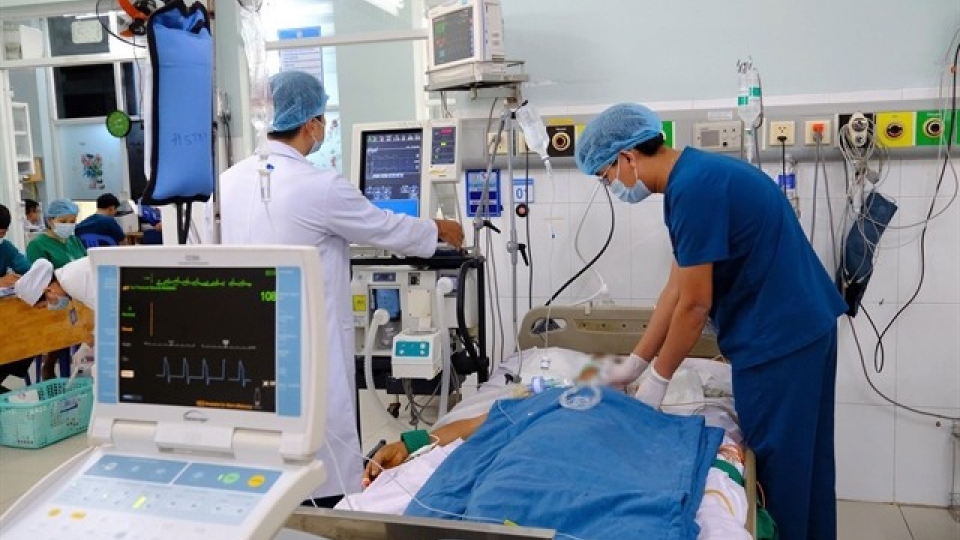
Inter-hospital coordination saves cardiac arrest patients from acute heart attacks
Doctors at Thu Duc General Hospital have successfully treated a series of critically ill patients with acute myocardial infarction, including cases complicated by cardiac arrest and ventricular fibrillation, with both carrying a high risk of death without rapid intervention.