Strong cold surge grips northern Vietnam, triggers widespread impact

VOV.VN - A strong cold surge has swept across the northern and north-central regions of Vietnam, plunging temperatures and triggering widespread rain, strong winds and hazardous conditions.
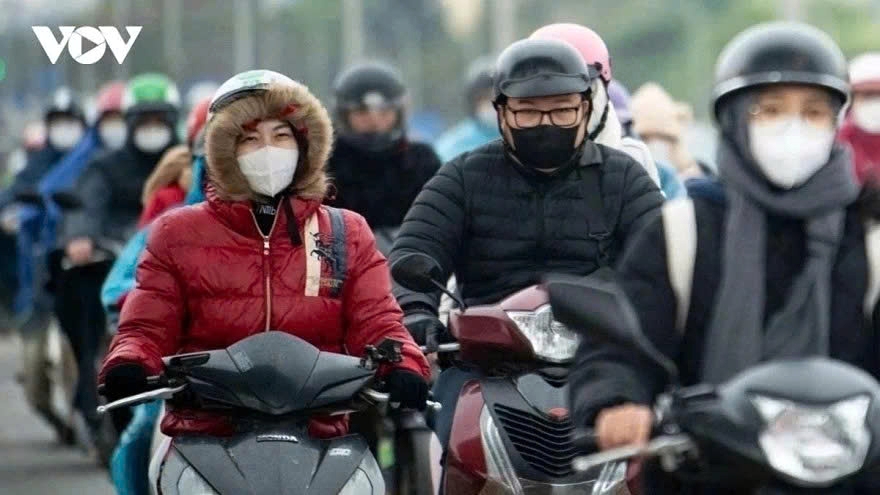
According to the National Centre for Hydro-Meteorological Forecasting, the cold air mass began affecting the northeastern region early on December 25 and quickly expanded to the rest of the northern and north-central regions. Temperatures across the North dropped sharply by 3–5°C within hours.
The cold spell is expected to reach its peak on December 25–26. In the Red River Delta and other lowland areas, minimum temperatures are forecast to range between 12–15°C. Mountainous areas are experiencing colder conditions, with temperatures falling to 10–13°C, while high-altitude locations may drop below 8°C, posing risks of severe cold stress.
The capital of Hanoi saw rain and scattered showers on the morning of December 25, accompanied by cold conditions. Daytime temperatures are expected to fall to 17–19°C, a decrease of up to 8°C compared to the previous day.
The cold air has also interacted with moist air masses, bringing widespread rainfall. On December 25, localities in the northern, north-central and central regions recorded rain and scattered thunderstorms, with the rain expected to ease later in the day. Thunderstorms may be accompanied by lightning, hail and strong gusts.
In the central region, from Ha Tinh to Da Nang, as well as Quang Ngai, Gia Lai, Dak Lak and Khanh Hoa, moderate to heavy rain and thunderstorms are forecast from December 25 to 26. Rainfall totals are expected to range from 30–70 mm, with some areas exceeding 120 mm, raising the risk of flash floods, landslides and localised urban flooding.
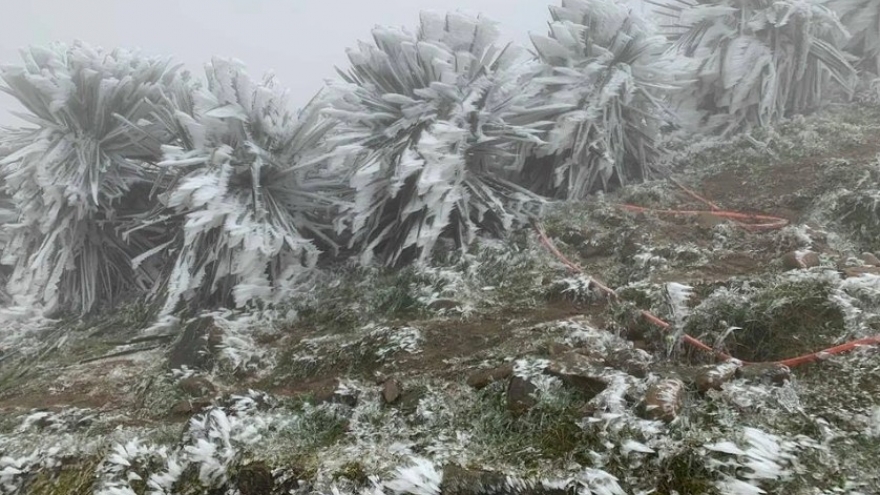
The cold spell is having significant impacts on multiple sectors. Prolonged cold conditions may adversely affect livestock, poultry and winter crops, particularly in mountainous areas where frost-like conditions are possible. Heavy rain in central and southern regions increases the risk of flash floods on small rivers and streams, landslides on steep slopes and inundation in low-lying areas.

Strong winds and severe cold forecast across northern Vietnam
VOV.VN - A cold air mass is currently moving southward and is forecast to affect large parts of Vietnam within the next 24-48 hours, the National Center for Hydro-Meteorological Forecasting reported on December 24.