AI brings both opportunities and challenges to global labour market

VOV.VN - The rapid development of artificial intelligence (AI) is changing the global labour market. While the technology may replace some jobs, it is also creating new opportunities and requiring workers to improve their skills and adaptability.
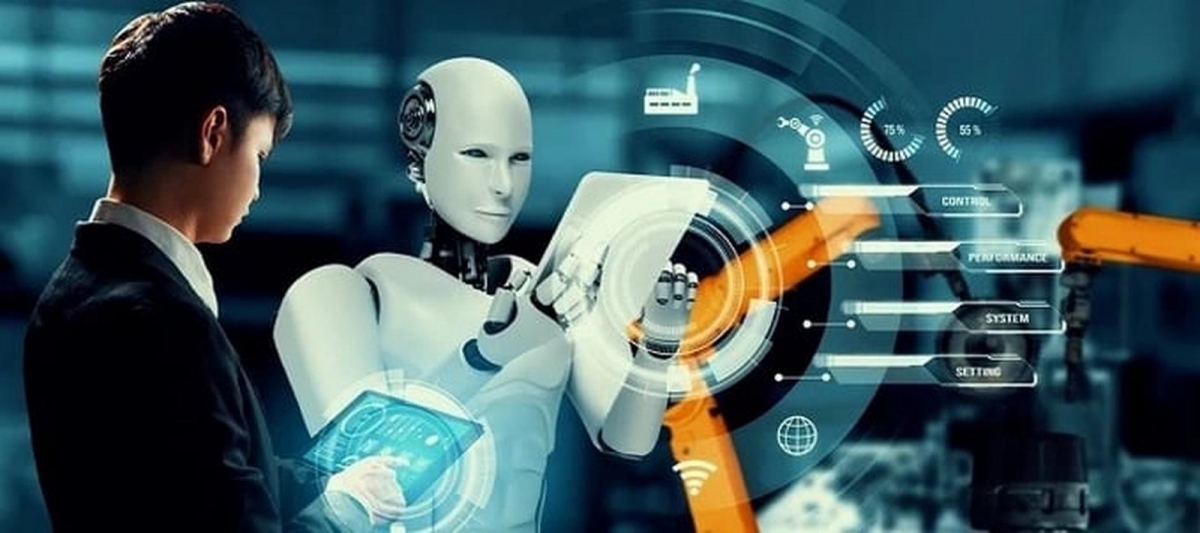
In recent years, AI has increasingly influenced labour markets around the world. With its growing capacity to process data and generate content, the technology is replacing humans in a number of low value-added tasks. As a result, some technology companies have reduced staff in administrative, customer service and communications roles.
At the same time, AI is expected to contribute strongly to economic growth. PwC, a global professional services firm, estimates that AI-related industries could add about US$15.7 trillion to the global economy by 2030, increasing demand for technology workers. By automating repetitive tasks, AI can also help businesses improve productivity and allow employees to focus on more strategic work.
However, the application of AI also brings challenges. Goldman Sachs estimates that about 300 million jobs worldwide could be affected, particularly in office and service sectors. The shift may widen the gap between high-skilled and low-skilled workers and raise concerns about algorithmic bias, ethics and data privacy.
Nguyen Minh Phong, former head of the Economic Research Division at the Hanoi Institute for Socio-Economic Development Studies, said the rapid development of AI is changing not only economic structures but also labour structures and workforce requirements.
According to him, many repetitive tasks, ranging from manual work to some administrative, management and data-processing positions, and even certain programming roles, could face replacement as AI systems continue to develop and combine with automation and robotics.

He also noted that AI could affect how labour is compensated. When businesses use AI systems or robots to replace part of their workforce, labour costs tend to decline, which may affect workers’ bargaining power and income.
Nguyen Minh Phong said the risk of unemployment or rising inequality is real. Some international assessments suggest that 20-
30% of existing jobs could disappear in the near future, although new occupations will also emerge.
To adapt, workers need to actively improve their skills, be ready to retrain, change careers and keep up with technological developments. Attention should also be given to social protection mechanisms such as unemployment insurance and occupational accident insurance to deal with new labour-market risks.
From a policy perspective, he said AI could both eliminate jobs and create opportunities to improve productivity and living standards. Public policies therefore need to take into account both sides of technological change.
Dao Viet Anh, a representative of Microsoft Vietnam, said concerns about being replaced by technology are becoming more common as AI becomes more widely used in the labour market.
Some sectors may face stronger impacts, particularly those related to communications, system management, planning and project implementation. During 2024 and 2025, many companies, especially technology firms, adjusted their operating models and reduced staff as AI tools began taking over part of their work.
Nevertheless, he said AI is currently changing the way people work rather than completely replacing human labour. Many workers are learning to use AI as a tool to improve productivity and even create new income opportunities.
According to Dao Viet Anh, workers need new skills to keep up in the AI era. One important skill is the ability to select and verify information. While AI can provide large volumes of data, not all of it is accurate or relevant.
Information security is also an important issue. Although AI is a useful tool, it can become a “double-edged sword” if users rely on it too heavily or lack the skills to verify information.

Looking forward, Dao Viet Anh said sectors related to data processing, management, planning and strategic decision-making may change considerably as AI systems and data platforms continue to develop. As datasets become more complete, many analytical and information-processing tasks may be automated.
He also noted that Vietnam has launched a number of initiatives to promote the use of AI and help workers adapt to new technologies. Programmes such as the “Digital Literacy for All” initiative and policies encouraging technology start-ups are creating favourable conditions for young people and knowledge workers to access the technology.

FPT’s Akabot AI Agentic Automation solution receives patent in Taiwan (China)
VOV.VN - The Akabot Agentic Automation plaform, developed by Vietnam’s telecom giant FPT, has recently been granted a patent by the Taiwan Intellectual Property Office for the automated solution that separates and classifies input documents using machine learning.