AI use in typhoon forecasting discussed at ESCAP/WMO Typhoon Committee meeting

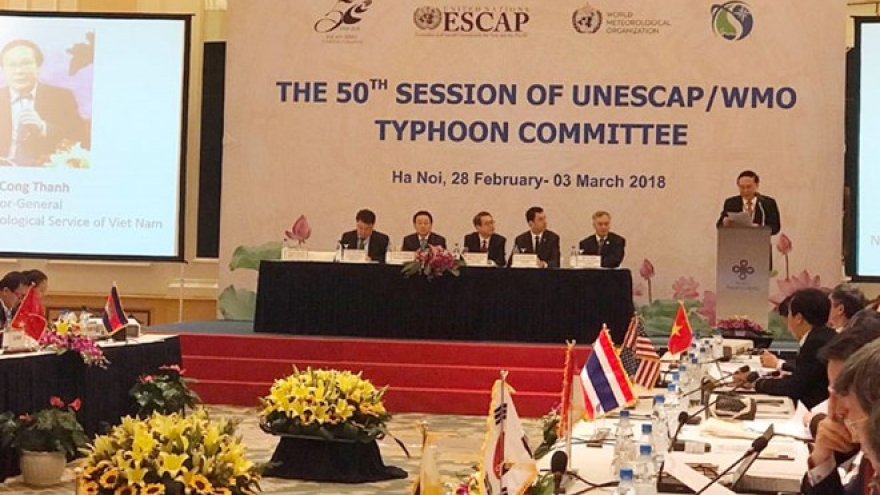
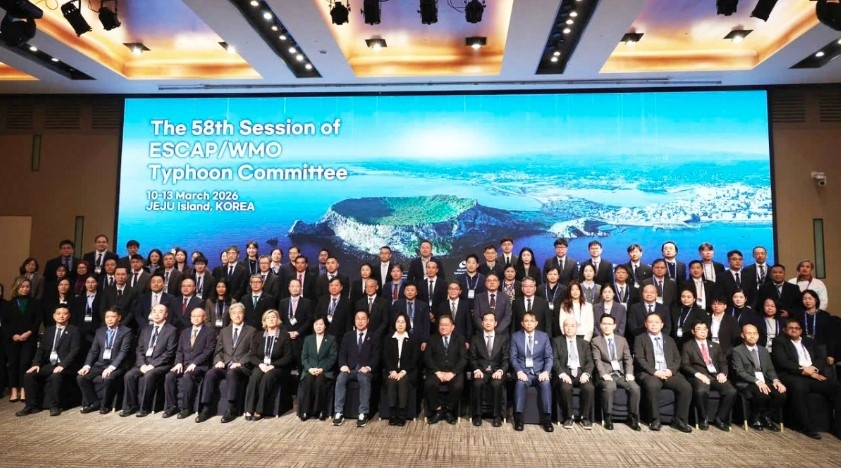
VOV.VN - The application of artificial intelligence in typhoon forecasting and the need for stronger data sharing were discussed at the 58th session of the ESCAP/WMO Typhoon Committee held in Jeju, the Republic of Korea (RoK), from March 10 to 13.
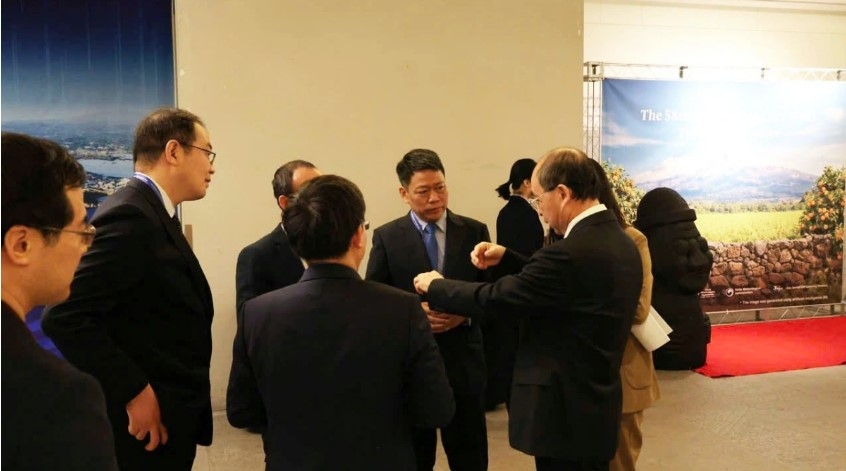
The meeting is an annual cooperation forum for countries in the Asia-Pacific region to strengthen coordination in monitoring, forecasting and reducing risks caused by tropical cyclones, while sharing experience and scientific and technological advances in meteorology, hydrology and disaster risk reduction.
The Vietnamese delegation included Nguyen Thuong Hien, Director General of the Department of Meteorology and Hydrology and Vietnam’s Permanent Representative to the World Meteorological Organization; Mai Van Khiem, Director General of the National Centre for Hydro-Meteorological Forecasting; and Hoang Phuc Lam, Deputy Director General of the same centre.
New technologies in typhoon forecasting
One of the issues receiving considerable attention at the meeting was the use of new technologies in tropical cyclone forecasting, particularly the rapid development of artificial intelligence and methods combining AI with traditional numerical weather prediction models.
Meteorological agencies in the region presented forecasting systems using deep learning, machine learning and big data analysis to make better use of observational data from satellites and radar as well as simulation products generated by weather models.
These technologies have allowed several forecasting centres to develop additional products, including forecasts of typhoon track and intensity, probability forecasts of storm development scenarios, forecasts of heavy rainfall associated with storm circulation and products supporting early disaster warnings.
Early results show that the use of AI can significantly shorten computing and data processing time and, in many cases, improve forecast quality compared with traditional numerical prediction methods, particularly in identifying complex storm structures and patterns within large volumes of data.
Forecasters' crucial role
Alongside these advances, reports at the meeting also noted that AI and other new technologies still face limitations, particularly in cases involving intense storms, changes in storm direction and movement speed, rapid intensification and extreme rainfall events.
Forecast errors in these situations are still considerable, and many AI systems cannot yet fully represent complex physical processes in the atmosphere.
According to assessments of the 2025 typhoon season, AI-based forecasting models (AIWP) recorded track forecast errors of about 60-110 km for 24-48-hour forecasts, rising to about 350-550 km for five-day forecasts.
During the meeting, participants discussed the tropical cyclone situation in the region, reviewed cooperation activities over the past year and considered priorities for the next phase of work. Discussions focused on strengthening forecasting capacity, sharing observational data, applying new technologies in forecasting and improving the effectiveness of early disaster warnings.
Experts stressed that new technologies cannot fully replace the role of forecasters but mainly serve as tools supporting analysis and decision-making. Issuing the final forecast bulletin requires forecasters to integrate and assess multiple sources of information, including numerical models, AI products, observational data and expert analysis.
Practical experience, understanding of climate and terrain characteristics and other local factors, together with the ability to assess the strengths and limitations of different models and forecast products, are important in helping forecasters select appropriate information and improve the reliability of forecasts and warnings for typhoons and related disasters.
Vietnam’s contributions
At the meeting, the Vietnamese delegation proposed strengthening mechanisms for the exchange and sharing of observational data and real-time forecast information among meteorological and hydrological agencies in the region to improve the accuracy of disaster forecasting and warnings.
Vietnam also emphasised the need to expand joint research programmes on tropical cyclones and extreme weather events with the aim of developing modern forecasting models to better support disaster prevention and response.
The delegation also contributed comments on draft resolutions and annual reports of the three working groups on meteorology, hydrology and disaster risk reduction under the Typhoon Committee.
These comments focused on strengthening data sharing, stepping up research cooperation and developing new forecasting technologies, while improving regional coordination in monitoring and warning of typhoons.
These contributions highlight Vietnam’s active role in international cooperation in meteorology and hydrology, helping improve forecasting capacity, early warning and disaster risk reduction in the region.
Vietnam seeks responsible AI use in digital communication
In Vietnam, the legal framework governing artificial intelligence (AI) is being refined to keep pace with the explosive growth of this technology, particularly generative AI.