PM calls for stronger energy, high-tech diplomacy to support growth

VOV.VN - Prime Minister Pham Minh Chinh has called for intensified diplomacy in energy and high technology to unlock new growth opportunities, as Vietnam targets double-digit economic expansion in 2026 and beyond.
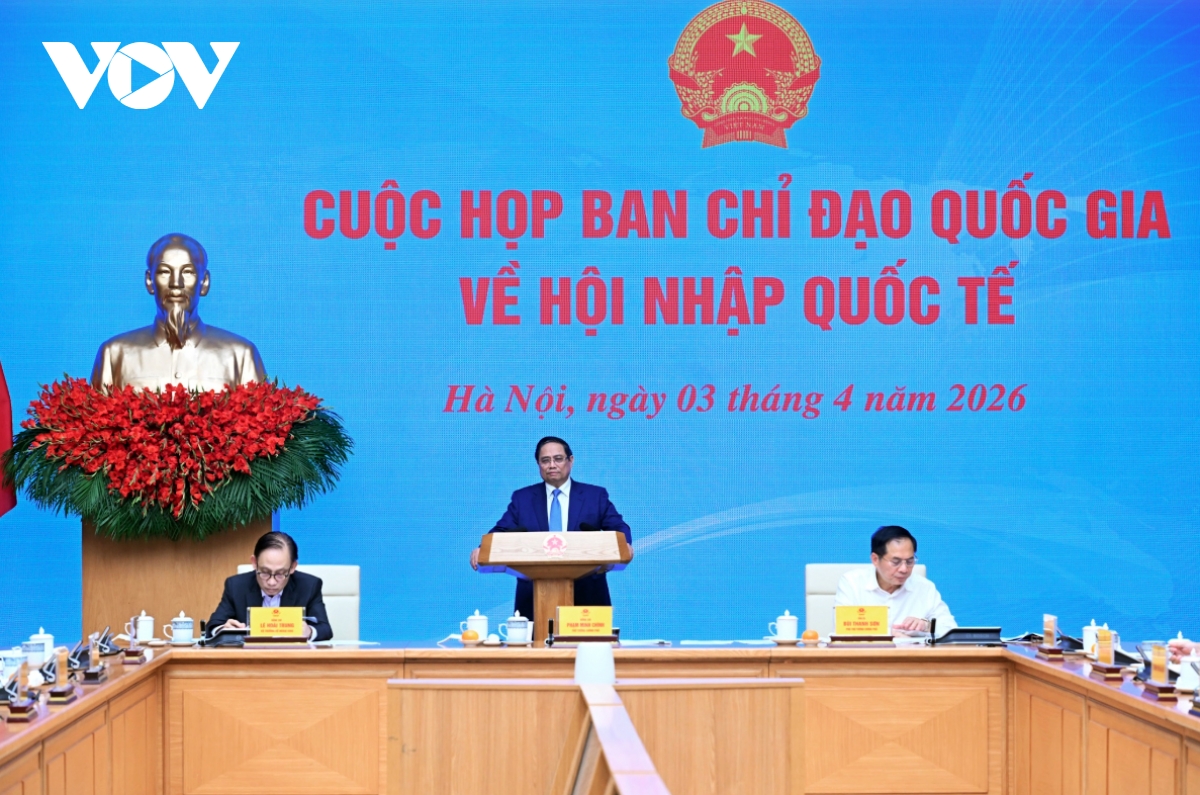
Chairing a meeting of the National Steering Committee on International Integration in Hanoi on April 3, the PM urged ministries and agencies to effectively implement international commitments while stepping up strategic external engagement in key sectors.
He stressed the need for a proactive approach across all fronts, including anticipating risks, maintaining stable international partnerships, adjusting policies in a timely manner, and turning challenges into competitive advantages.
Highlighting the current global context as both a challenge and an opportunity, he called for accelerating economic restructuring towards greater sustainability, independence, and green and energy transitions.
Reaffirming the goal of double-digit growth, the PM said international integration must be placed at the centre of Vietnam’s development strategy, serving as a driver of growth and helping elevate the country’s global standing.
He also underscored the importance of multilateralism, international solidarity, and active participation in global forums to build trust and mobilise resources.
Priority should be given to strengthening ties with neighbouring countries and ASEAN partners, while maintaining balanced and harmonious relations with major powers, he said, adding that expanding and effectively leveraging strategic space will be key to supporting rapid and sustainable development.
The government leader further called for improving the quality of economic integration, diversifying markets, supply chains and products, and attracting high-quality foreign investment with strong technology content and spillover effects.
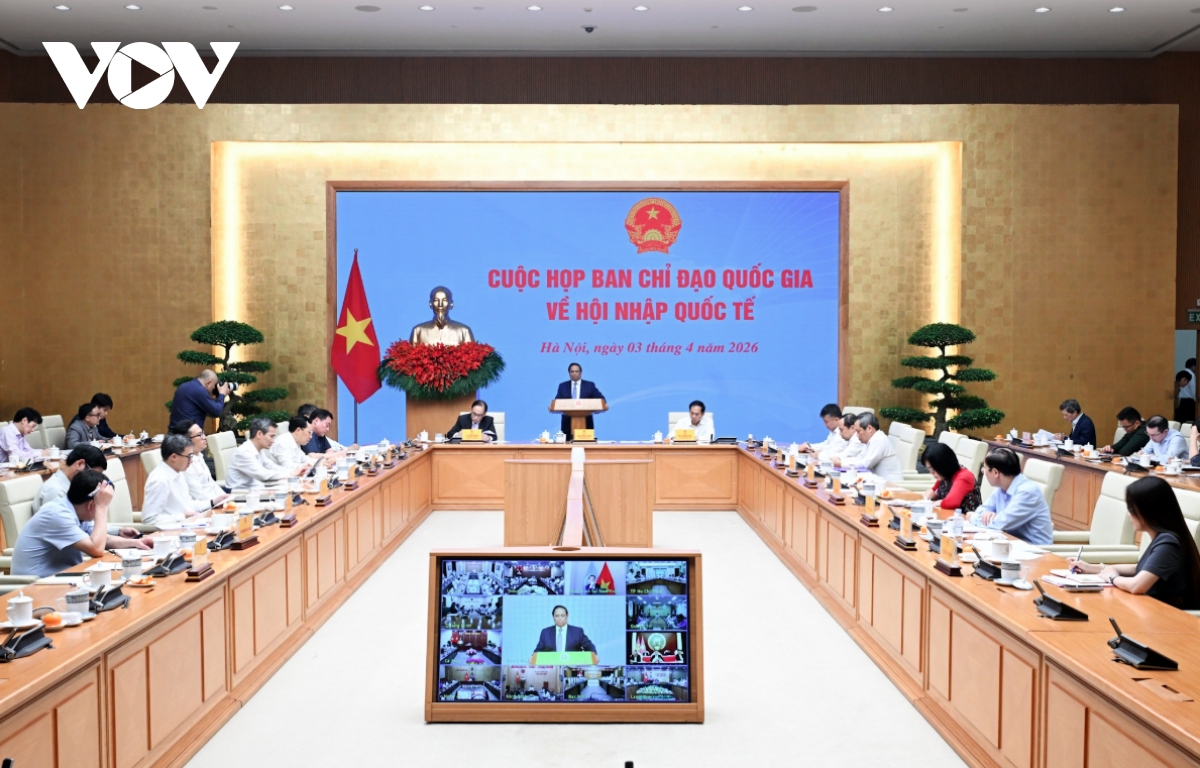
At the meeting, Deputy Prime Minister Bui Thanh Son noted that global developments since the start of the year have become increasingly complex, posing direct challenges to Vietnam’s security and development environment.
As a highly open economy, Vietnam is expected to face more difficulties than advantages in the near term, he said, stressing that timely adaptation and the ability to seize emerging opportunities will be critical to maintaining stability and sustaining growth.
According to the Foreign Ministry, Vietnam continues to benefit from political stability and sound economic policies, which underpin its attractiveness to trade and investment.
External relations and international integration efforts have been carried out proactively and flexibly, helping mitigate external shocks and mobilise resources for national development goals.
Economic diplomacy has been strengthened to support priority areas, including the development of an international financial centre in Ho Chi Minh City and Da Nang, infrastructure investment, digital transformation, science and technology, and energy.
Vietnam has also stepped up high-level engagement to stabilise oil supply amid global market disruptions linked to geopolitical tensions in the Middle East.
At the same time, progress has been made in addressing illegal, unreported and unregulated (IUU) fishing, with positive recognition from European Commission inspectors.
Vietnam aims to develop five globally competitive cities by 2045
VOV.VN - Vietnam has set a goal of developing at least five cities of international standing by 2045, as outlined in the Government’s Resolution 80 issued on April 2.