Party chief calls for stronger discipline, institutional reform, development breakthrough

VOV.VN - Party General Secretary To Lam urged decisive implementation of key Party resolutions at a national conference in Hanoi on April 13, emphasising stronger discipline, institutional reform, resource mobilisation, improved spatial planning, and more effective governance to drive Vietnam’s next growth phase.
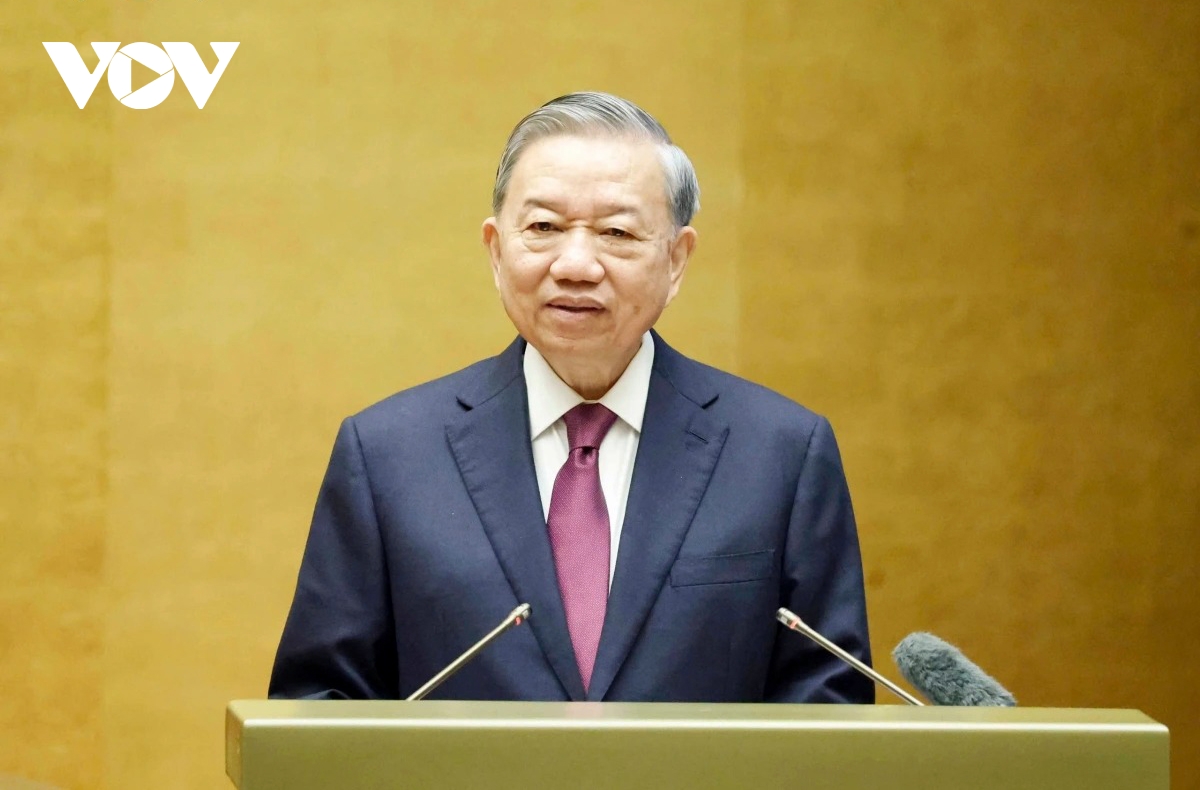
Addressing the conference, the Party chief noted that Vietnam has largely completed the consolidation of its political and administrative apparatus following major political milestones, including the 14th National Party Congress and the election of deputies to the 16th National Assembly and local People’s Councils.
Against the backdrop of rapid and complex global changes, he stressed that the overriding requirement in the current period is practical and results-oriented action. “Our task at present is to act, act correctly, act decisively, and act effectively,” he stated.
Strengthening discipline and ensuring Party unity
A key focus highlighted by the Party General Secretary and State President is the role of Party regulations as the foundational institutional framework ensuring the unified operation of the entire political system.
“Party regulations are the foundational institutional pillar ensuring that the Party operates as a unified bloc within the entire political system,” he affirmed
Accordingly, Party guidelines and policies must be concretised into strict and consistent discipline from the central to grassroots levels.
He warned that weak implementation could lead to arbitrariness, loosened discipline, and lack of unity in action, thereby undermining leadership effectiveness and public trust.
“Each Party committee, organisation, and every cadre and Party member must fully understand and strictly implement Party regulations,” he stressed.
Reforming development thinking, enabling resources
On economic development orientation, the Party chief called for a fundamental shift in development mindset, moving away from overreliance on public investment and state budget resources.
“A fundamental transformation is required, from allocating resources to creating, leading, and activating resources,” he said
The State, he added, should act as an institutional architect, creating an enabling environment for all social resources to be mobilised effectively.
State capital should function as “seed capital” to guide investment flows, particularly toward high value-added sectors, innovation, and strategic infrastructure.
“Financial markets, including capital, credit, and bond markets, must truly become channels for medium- and long-term capital flows into the real economy,” he further noted.
Mobilising resources from the people was also highlighted as a strategic breakthrough, encompassing not only financial capital but also intellectual capacity, skills, labour, and the development aspirations of millions of citizens.
Overcoming fragmented thinking in planning and spatial development
Regarding planning, the top leader called for the elimination of local, sectoral, and short-term thinking.
“Comprehensive development planning must reflect integrated, multi-objective, and long-term thinking,” he emphasised.
Such planning, he added, must ensure inter-regional connectivity, efficient resource allocation, and a coherent national development space.
He warned that fragmented and isolated planning would result in overlaps, conflicts, waste of resources, and disrupted development linkages.
He also highlighted the strategic importance of energy, stating, “Without sufficient, stable, sustainable, and reasonably priced energy, industrialisation and modernisation cannot succeed.”
He further called for an end to investment driven by trends, subjective preferences, or administrative mechanisms, and emphasised the need for a long-term national planning vision.
Unlocking people’s potential as a driving force for growth
Party General Secretary and President To Lam reaffirmed that sustainable growth must be based on the internal strength of society, with people and enterprises at its core.
“Every citizen, every family, every household business, and every enterprise must become a direct contributor to growth,” he said.
According to the top leader, the economy is only truly strong when every “cell” of it is healthy, meaning households and enterprises must have equal opportunities to develop and access resources.
He explained that when grassroots resources are effectively connected with state resources, infrastructure, markets, technology, education, credit, and planning, a strong and sustainable growth foundation will be formed.
He underscored the need to build institutions that enable people to “want to do, dare to do, and be able to do,” thereby transforming aspirations into real economic momentum.
Improving the two-level local government model
On governance, the top leader noted that the two-tier local government model has operated relatively stably after nearly one year of implementation but requires further improvement in effectiveness.
He outlined the guiding principle that “the central level focuses on strategic orientation, institutions, and supervision, while local authorities focus on implementation, with commune-level authorities playing a key role in system performance.”
Accordingly, commune-level authorities must be strengthened in decision-making capacity, resource mobilisation, and oversight functions to enhance governance efficiency and service delivery.
He revealed that a national conference would be held in July to review a one-year implementation of the model.
In conclusion, the Party chief called on the entire political system to act with the highest level of responsibility, decisiveness, and substance in implementing Party resolutions.
He affirmed that only when discipline is strengthened, development thinking is reformed, resources are effectively unlocked, and the administrative system operates smoothly, can Vietnam achieve clear breakthroughs and ensure rapid and sustainable development in the new period.
National conference implements Party Resolution on Party discipline and oversight
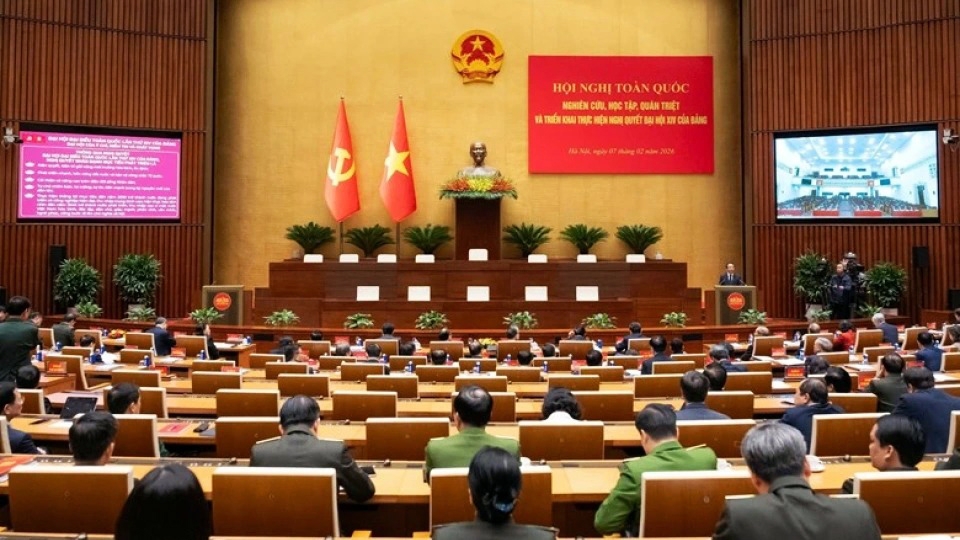
VOV.VN - A national conference to study, disseminate and implement the Resolution of the second plenum of the 14th Party Central Committee which focuses on improving the effectiveness of Party inspection, supervision and discipline opened in Hanoi on April 13.