National conference implements Party Resolution on Party discipline and oversight

VOV.VN - A national conference to study, disseminate and implement the Resolution of the second plenum of the 14th Party Central Committee which focuses on improving the effectiveness of Party inspection, supervision and discipline opened in Hanoi on April 13.
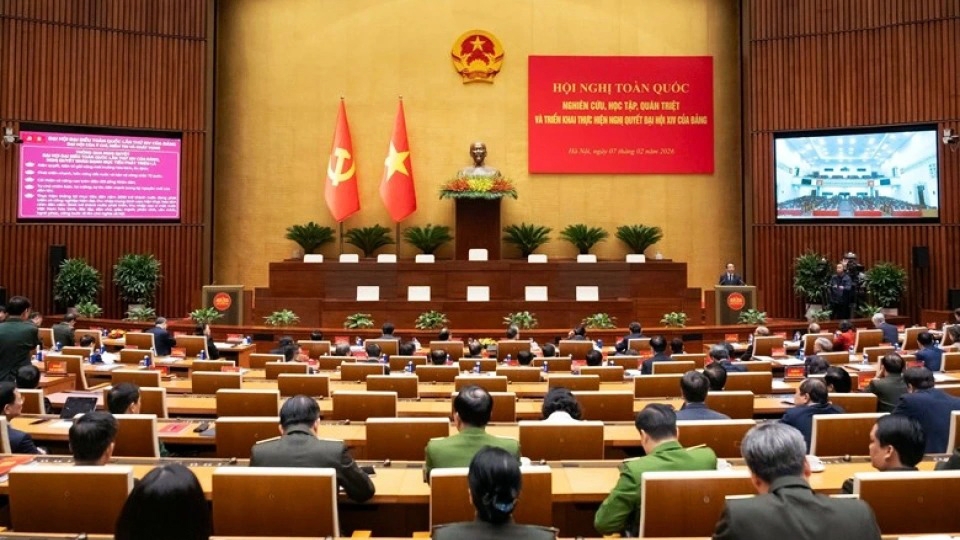
The event was organised by the Politburo of Vietnam and the Secretariat of the Communist Party of Vietnam, and was held in both in-person and virtual formats, connecting localities nationwide.
Party General Secretary and State President To Lam attended and delivered a keynote speech at the conference.
Participants examined several key areas, including regulations on the implementation of the Party Charter; measures to enhance the effectiveness of inspection, supervision and Party discipline; political and ideological work within the Party; and policies to strengthen anti-corruption, wastefulness and misconduct prevention in the new phase.
The conference also addressed conclusions on socio-economic development, national finance, public debt management and medium-term public investment for the 2026–2030 period, aligned with the goal of achieving double-digit economic growth.
Earlier this month, the second plenum of the Party Central Committee adopted Resolution No.05, which aims to enhance the effectiveness of Party inspection, supervision and discipline. The resolution notes that after nearly two decades of implementation, this work has achieved significant progress, contributing to Party building and the strengthening of the political system.
Awareness and responsibility among Party committees, organisations and members have improved, while the regulatory framework has become more complete. Inspection and supervision activities have been increasingly innovative and comprehensive, with discipline enforced under the principle of “no forbidden zones and no exceptions.”
However, the resolution also points out persistent limitations, including insufficient attention in some areas, lack of decisiveness in inspection, weak regular supervision, and delays in detecting and handling violations. In some cases, there remains a tendency to avoid responsibility or show leniency. These shortcomings are attributed to incomplete awareness, inconsistent leadership, institutional gaps and uneven capacity among inspection personnel.
In the current context of global uncertainties, the rise of the digital and green economy, and increasing demand for power control and anti-corruption efforts, the resolution identifies inspection and supervision as a core leadership function of the Party and a key instrument for controlling power and ensuring discipline.
It emphasises that inspection and supervision must be conducted regularly, proactively, comprehensively and objectively, in close connection with organisational and personnel work, as well as leadership reforms. All Party organisations and members are required to engage in self-inspection and be subject to equal supervision and discipline.
The overarching goal is to enhance the quality, effectiveness and efficiency of inspection and supervision, thereby helping to prevent and curb corruption, misconduct and moral degradation, while strengthening discipline, unity and governance capacity.
To achieve these goals, the resolution calls for stronger awareness and accountability, treating inspection and supervision as a routine task, alongside greater transparency to enhance deterrence. It also highlights the need to improve the legal and regulatory framework, eliminate overlaps, and adopt more proactive, preventive inspection methods, particularly in sensitive sectors.
The resolution further underscores the importance of comprehensive digital transformation in inspection work to improve data management, monitoring and operational efficiency. At the same time, it calls for streamlining the organisational apparatus and enhancing the quality, integrity and professionalism of inspection personnel.
Stronger coordination between inspection bodies and relevant agencies is also required to ensure effective power control and violation handling.
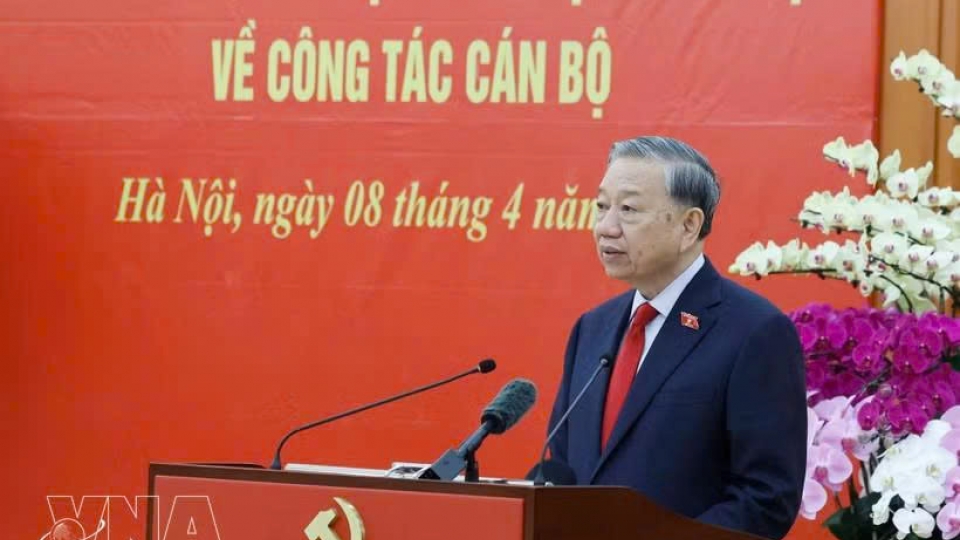
General Secretary To Lam signs regulation on Party's political, ideological work
Party General Secretary To Lam, on behalf of the Party Central Committee, has signed Regulation No. 19-QD/TW on political and ideological work within the Party.