NA debates draft laws to step up digital governance, administrative reform

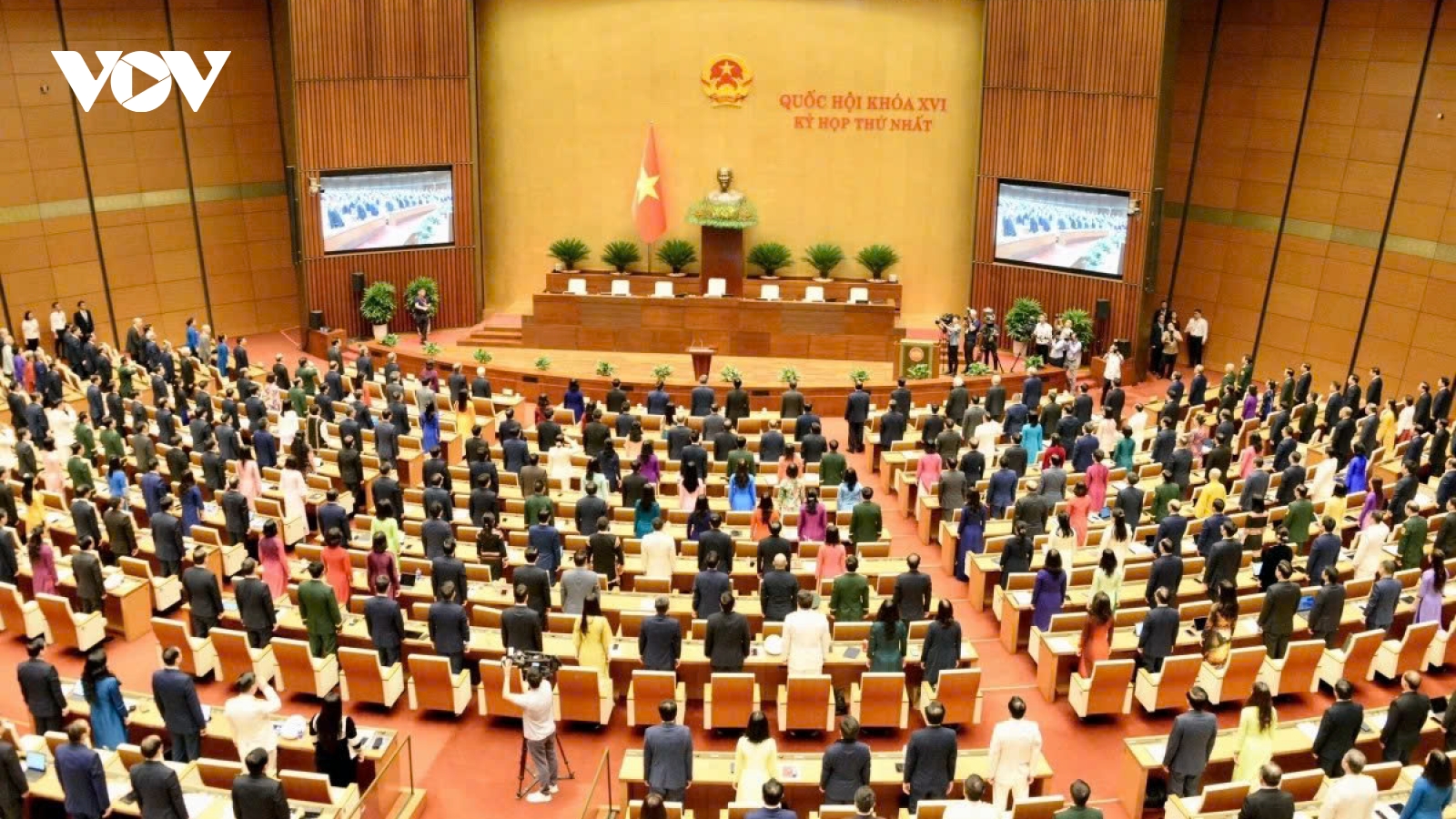
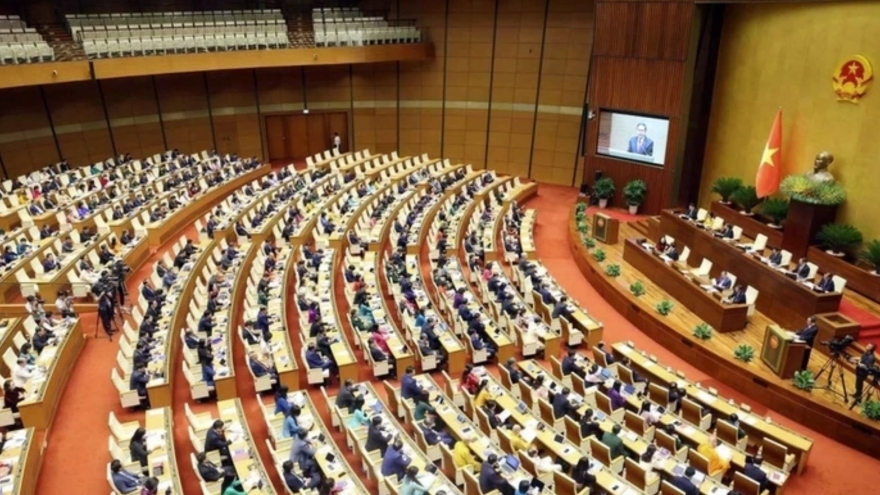
VOV.VN - The 16th National Assembly on April 9 deliberated four draft laws aimed at promoting decentralisation, accelerating digital transformation and simplifying administrative procedures to better serve citizens and businesses.
The session was chaired by National Assembly Chairman Tran Thanh Man, with Vice Chairman Nguyen Khac Dinh moderating proceedings.
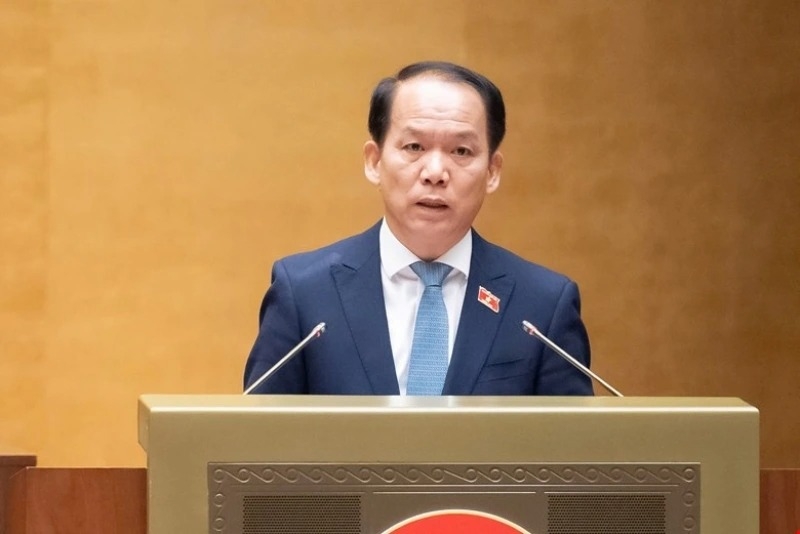
Authorised by the Prime Minister, Minister of Justice Hoang Thanh Tung presented proposals for the draft laws, including the revised Law on Civil Status, amendments to the Law on Notarisation, revisions to the Law on Legal Aid, and the amended Law on Access to Information.
A key focus of the draft revised Law on Civil Status is to institutionalise decentralisation and digital transformation. The draft reduces the number of provisions compared to the current law and introduces significant reforms.
Under the proposal, commune-level authorities would be granted full competence to handle civil status registration, regardless of place of residence or administrative boundaries. The draft also expands eligibility to allow people of Vietnamese origin with undetermined nationality to register civil status, ensuring all children can be officially registered at birth.
Citizens would be able to access services online, in person or via postal channels, while electronic civil status records would carry the same legal validity as paper documents. A centralised civil status database is planned, enabling lifelong data storage and interconnection across systems.
For the revised Law on Notarisation, the Government proposed further decentralisation by authorising provincial-level People’s Committee chairpersons to appoint and dismiss notaries. The draft also restructures notarisation practice along commune-level administrative units, narrows the scope of transactions requiring notarisation and simplifies procedures.
A unified nationwide notarisation database is also proposed, allowing citizens to use digital data in place of traditional paperwork when carrying out administrative procedures.
Meanwhile, the draft amendments to the Law on Legal Aid seek to broaden the range of eligible beneficiaries, including vulnerable groups and people of Vietnamese origin without determined nationality. The model for legal aid provision would be streamlined, with state legal aid centres operating at the provincial level, alongside expanded digital service delivery.
The amended Law on Access to Information aims to widen the scope of accessible information, including data from Party agencies, the National Assembly and People’s Councils. It also clarifies the responsibilities of state agencies, particularly their heads, and promotes online information provision with shorter response times.

Presenting the review report, Chairman of the National Assembly’s Committee for Legal and Judicial Affairs Phan Chi Hieu said the committee broadly agreed on the necessity and key contents of the four draft laws.
However, the committee recommended further review to ensure full institutionalisation of Party resolutions, as well as careful assessment of financial resources, human capacity and technological infrastructure to guarantee feasibility.
The simultaneous revision of these four laws is expected to mark a significant step forward in institutional reform, accelerate national digital transformation and enhance public service delivery through integrated data systems.
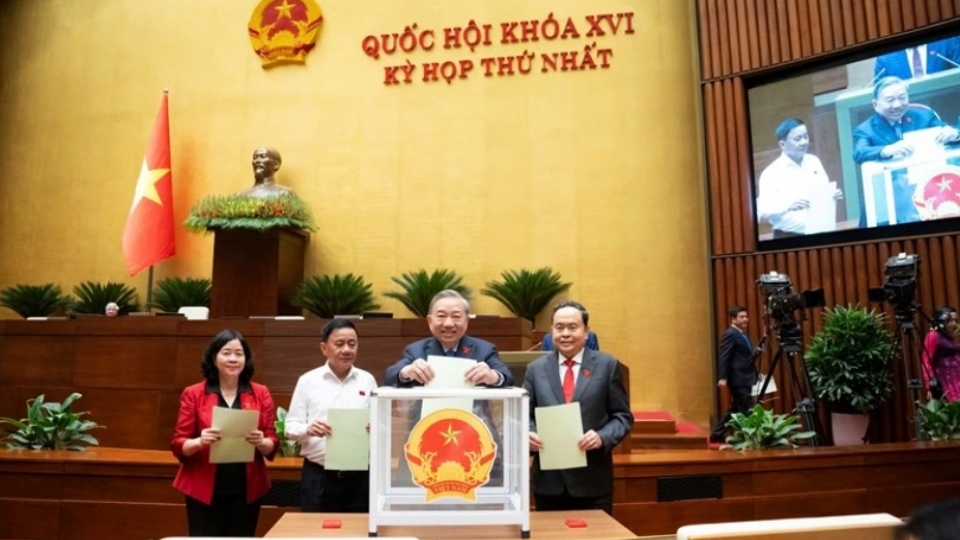
National Assembly elects State President and Prime Minister for 2026–2031 term
VOV.VN - The National Assembly of Vietnam is to devote its full-day session to high-level personnel decisions on April 7, including the election of the State President and the Prime Minister for the 2026–2031 term, in accordance with constitutional procedures.