


Leadership reform must deliver tangible results, top leader says

VOV.VN - Reforming the Party’s leadership and governing methods should go beyond institutional changes and new regulations, with clear responsibilities, effective implementation and tangible results, including outcomes and the satisfaction of people and businesses, serving as the basis for assessment.
The message was delivered by Party General Secretary and State President To Lam at his working session with the Party Central Committee’s Organisation Commission in Hanoi on August 20 that examined a proposal to review five years of implementing the Politburo’s Resolution 28 on further renewing the Party’s leadership and ruling methods toward the political system in the new period.
The top leader stressed that the review is an important task in Party building and political-system development. It should not simply produce a report or another policy document, but identify the factors that are holding back the effectiveness of the Party’s leadership and ruling role and recommend mechanisms capable of producing change in the new period.
Upholding principles, renewing leadership methods
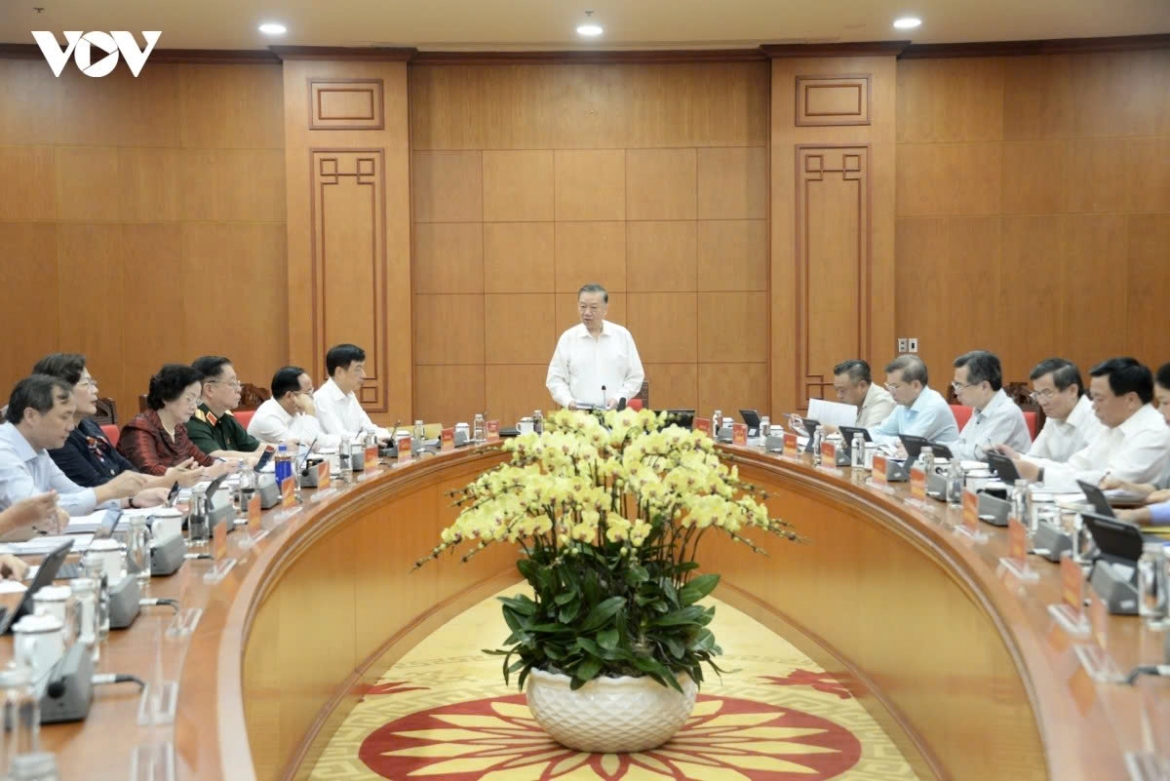
The Party General Secretary and State President called for the inheritance, supplementation and further development of Resolution 28, ensuring continuity in the reform process while adapting leadership methods to new conditions.
The guiding principle, he said, is to preserve the Party’s ideological foundation, organisational principles and leadership role, and make its leadership more accurate, targeted, close to reality, scientific, democratic and effective.
Among the principles highlighted are comprehensive leadership without replacing the work of state agencies; unified direction alongside initiative at lower levels; stronger decentralisation together with tighter power control; and linking every policy decision to implementation and ultimate accountability for results.
In other words, reforming leadership methods should not alter the Party’s fundamental principles or role, but make its leadership more effective in the new context.
“Steadfastness must go hand in hand with innovation; comprehensive leadership must respect proper roles and authority; unified direction must encourage initiative; stronger decentralisation must be accompanied by power control; and technology cannot replace political responsibility or human decision-making,” he said.
The top leader also called for greater clarity on how the principle of “the Party leads, the State manages, and the people are the masters” should operate in practice, alongside standardised processes for developing, issuing, institutionalising, implementing and adjusting policy.
A sound policy, he said, must be timely and well targeted, backed from the outset by forecasting, impact assessments and an implementation plan.
From decisions to accountability for results
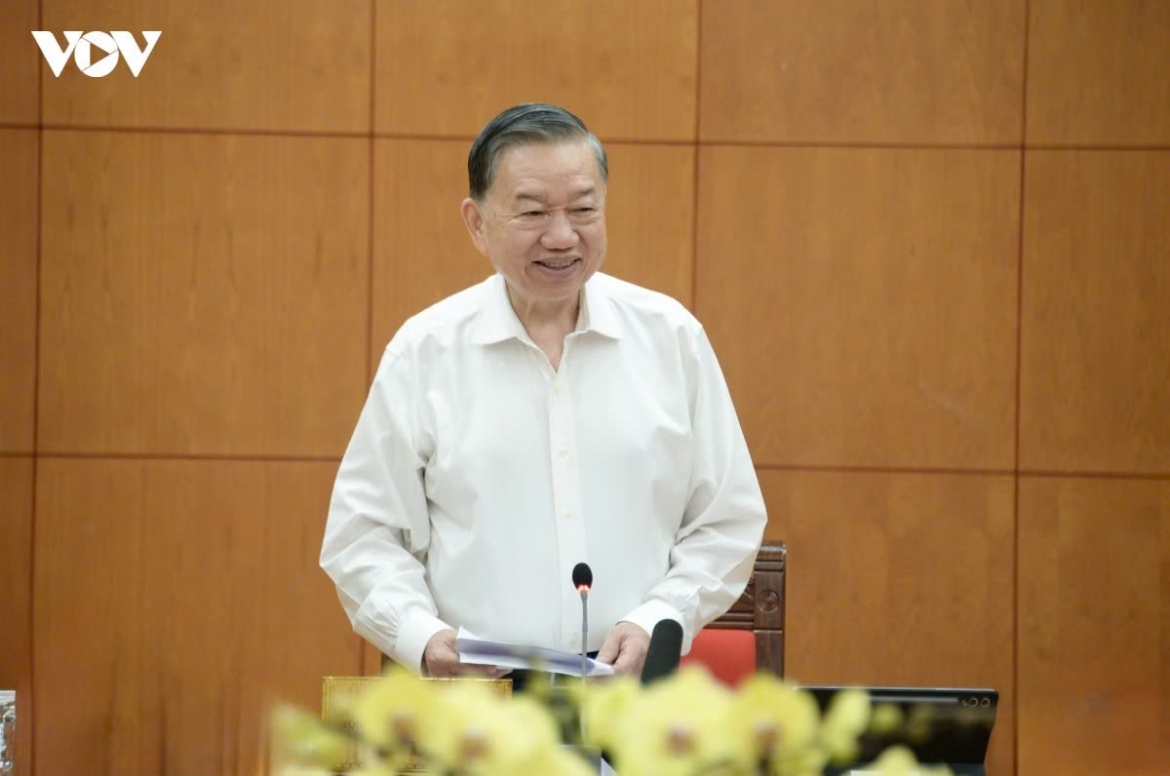
A central point in the top leader’s remarks is that the quality of a policy decision should be judged not only by how it is formulated and issued, but by what it delivers after implementation.
Each task should therefore have clearly defined people responsible, duties, authority, resources, deadlines and expected results, with implementation tracked through to its final output.
Outcomes and the satisfaction of people and businesses should become key criteria for assessing policies, institutions and officials.
A policy may be sound in principle but still fail if implementation is poor or officials lack the capacity to carry it out, the leader noted. Leadership reform must therefore go hand in hand with organisational reform and personnel development.
“Decentralisation must be matched by resources, data, tools, accountability and power control. Higher levels should focus on strategy, institutions and inspection, while lower levels should make decisions proactively rather than passing matters upward,” he stressed.
This also calls for officials who are politically committed, strategically minded and capable of implementation, forecasting and governance, while being able to master technology, stay close to the people and take responsibility.
Performance assessment should likewise be tied to political qualities, credibility, work products and effectiveness.
The approach requires clearer divisions of functions, authority and working relationships, with each task assigned to a lead agency that bears primary responsibility, avoiding overlap and the shifting of responsibility.
Establishing results-based leadership by 2030

Based on the views and proposed tasks put forward by the Organisation Commission, Party General Secretary and State President To Lam called for further clarification of seven areas in the review proposal, ranging from a common understanding of leadership and ruling to standardised processes for policy development and implementation, organisational reform, personnel work, decentralisation and power control.
He said the review report must provide an honest assessment of the implementation of Resolution 28, distinguishing between areas validated by practice, shortcomings arising from implementation, institutional weaknesses and new issues that have emerged.
It should then clearly identify what needs to be carried forward, supplemented and further developed in the draft new resolution.
The draft resolution should be concise, appropriately framed, clear in its principles, focused in its objectives and breakthrough-oriented in its tasks, while being accompanied by an action programme, explanatory report and a list of legal documents requiring amendment so that implementation can begin immediately after adoption.
Looking ahead, the top leader said by 2030, a firm culture of results-based leadership should be established, linking leadership to objectives, outputs, outcomes and accountability; by 2045, leadership and ruling methods should reach a higher level of professionalism, science, democracy, rule of law, modernisation and adaptability, ensuring that the political system operates smoothly, effectively and efficiently and creates momentum for rapid and sustainable national development.
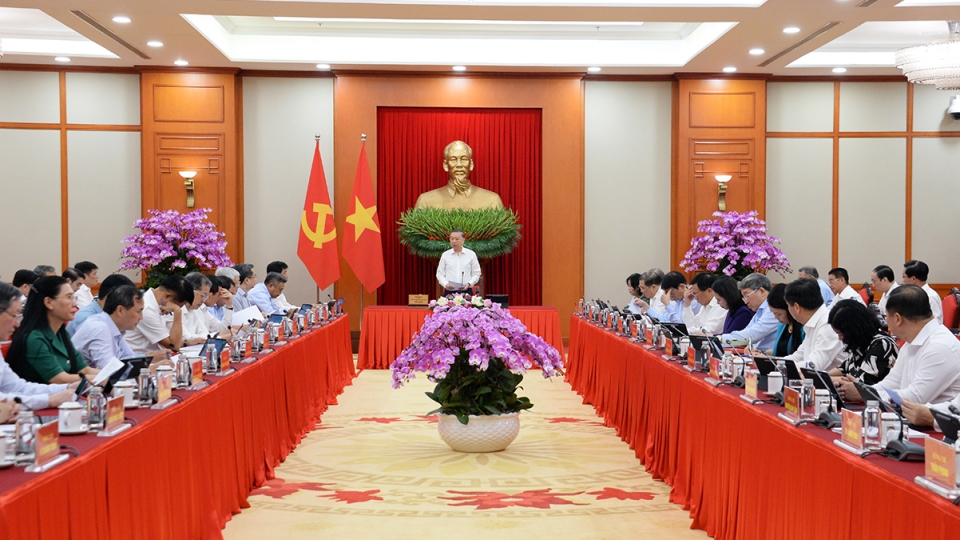
Party Charter review proposals to be submitted to upcoming plenum
VOV.VN - The Party Central Committee’s Organisation Commission has been tasked with completing a research framework and proposed amendments to the Party Charter for submission to the fourth Plenum of the 14th Party Central Committee.


