


Government links 2027 growth ambitions to productivity and reform

VOV.VN - Vietnam is seeking to translate its ambition for rapid economic growth into tangible development gains in 2027, with the government targeting GDP per capita of US$6,100 while prioritising productivity improvements, institutional reform and more effective use of national resources.
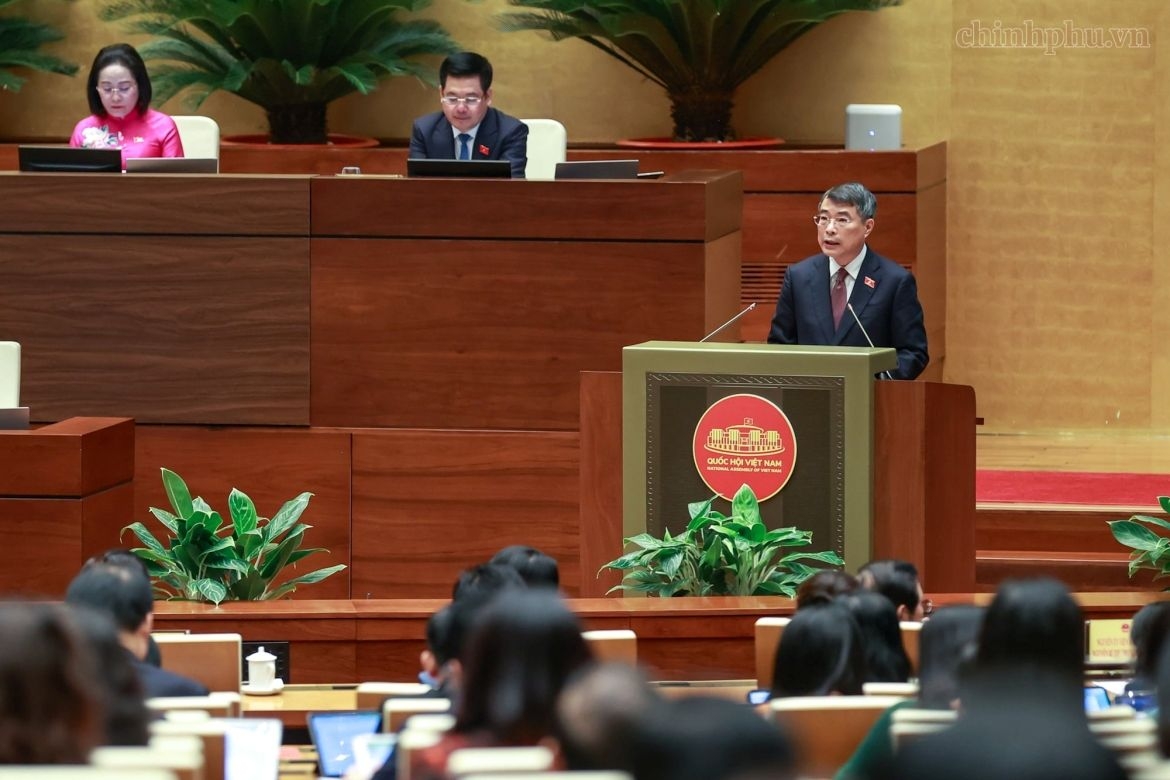
Presenting the government’s socio-economic report to the National Assembly on October 17, Prime Minister Le Minh Hung outlined 45 key socio-economic targets for 2027. These include GDP growth of at least 10%, average consumer price inflation of around 4.5%, average social labour productivity growth of 8.6%, and a reduction of 1-1.5 percentage points in the multidimensional poverty rate.
Beyond the headline growth target, the plan places emphasis on building a new development model driven by science and technology, innovation and digital transformation, alongside a more coherent institutional framework and stronger mobilisation of resources for development.
Productivity and institutional reform at the core
The government has identified institutional improvement and implementation quality as central to its 2027 agenda, calling for a comprehensive review of the legal system, the removal of overlapping and conflicting regulations, and the timely issuance of implementing documents.
Administrative procedures and business conditions are also set to undergo further simplification, while localities are expected to improve the effectiveness of the two-tier local government system.
The report calls for a shift from policy commitments to measurable results, with greater accountability among ministries, agencies and local authorities. Officials are expected to identify priority tasks, strengthen coordination and regularly monitor implementation, while addressing delays and avoiding the evasion or transfer of responsibility.
These priorities are intended to improve the business environment, facilitate economic activity and ensure that policies produce tangible benefits in practice.
Mobilising investment and strengthening domestic capacity
The government also plans to expand the resources available for growth through public investment, private-sector development and foreign investment.
For 2027, it aims to disburse 100% of the allocated public investment capital, simplify investment procedures and reallocate funds from projects with slow disbursement to those able to use capital more effectively.
The report also calls for stronger development of the domestic industrial ecosystem, particularly foundational and supporting industries, alongside efforts to help private enterprises expand and improve their competitiveness.
Foreign investment is to be more selective, with an emphasis on technology transfer and substantive links with Vietnamese businesses. The government also intends to encourage foreign-invested enterprises to reinvest profits in Vietnam.
These measures form part of a broader effort to strengthen the economy’s internal capacity, autonomy and resilience, rather than rely solely on the expansion of economic activity.
Building on 2026 economic momentum
The 2027 plan follows a year in which Vietnam recorded strong economic performance despite a challenging international environment, according to the government’s report.
GDP grew 9.01% year on year in the first nine months of 2026, while total exports and imports are estimated to reach US$1.11 trillion for the full year, exceeding the US$1 trillion mark for the first time.
Registered foreign direct investment reached US$50.36 billion in the reviewed period, up 76.4% year on year, with investment concentrated in manufacturing and processing, high technology, electronics and semiconductors.
The report also highlights progress in administrative reform, stating that measures implemented have reduced administrative processing time by 53% and compliance costs by 55% for citizens and businesses.
However, the government acknowledged continuing challenges, including pressure on inflation and exchange rates, relatively high lending rates, difficulties faced by small and medium-sized enterprises in accessing land and credit, and the need to strengthen the contribution of science, technology and digital transformation to productivity growth.
Addressing these constraints will be important to improving the efficiency of investment and ensuring that economic expansion is supported by stronger productive capacity.
A broader development agenda for 2027
The government’s plan extends beyond economic growth to include improvements in education, healthcare, social welfare, environmental protection and national security.
It aims to strengthen the quality of education and vocational training, expand access to healthcare, accelerate social housing development and improve labour-market connections. Science and technology, innovation and digital transformation are expected to play a more prominent role across economic sectors.
The government has set 45 key socio-economic indicators for 2027, seeking to combine rapid growth with macroeconomic stability, social progress and environmental protection.
Taken together, the targets reflect an effort to make high growth more sustainable by strengthening productivity, improving institutions and ensuring that resources are allocated and used more effectively.
The challenge will be to translate these priorities into measurable results across the economy, alongside maintaining price stability and improving the quality of development.

Leaders pay tribute to President Ho Chi Minh ahead of National Assembly session
VOV.VN - Vietnamese Party and State leaders and National Assembly deputies paid tribute to President Ho Chi Minh at his mausoleum in Hanoi on the morning of October 17, ahead of the opening of the 16th National Assembly’s second session.


