




Leaders pay tribute to President Ho Chi Minh ahead of National Assembly session

VOV.VN - Vietnamese Party and State leaders and National Assembly deputies paid tribute to President Ho Chi Minh at his mausoleum in Hanoi on the morning of October 17, ahead of the opening of the 16th National Assembly’s second session.
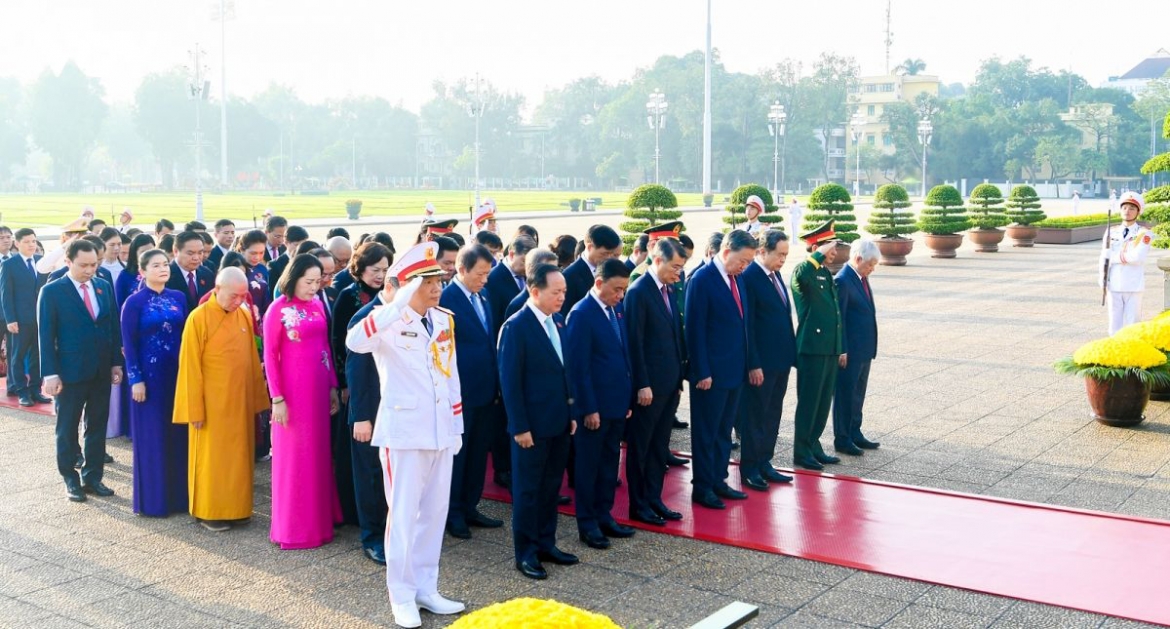
The delegation was led by General Secretary of the Communist Party of Vietnam Central Committee and State President To Lam, Prime Minister Le Minh Hung, National Assembly President Tran Thanh Man and Permanent Member of the Party Central Committee’s Secretariat Tran Cam Tu, alongside other incumbent and former leaders and National Assembly deputies.
The delegation laid a wreath bearing the inscription “Forever Grateful to the Great President Ho Chi Minh” before entering the mausoleum to pay their respects. The ceremony expressed the nation’s profound gratitude for Ho Chi Minh’s contributions to Vietnam’s revolutionary cause and his legacy in shaping the country’s political institutions, including the National Assembly. He laid the foundations for Vietnam’s legislature and advanced the vision of an assembly of the people, by the people and for the people.
The tribute took place ahead of the opening of the second session of the 16th National Assembly, a key legislative gathering in the first year of the current parliamentary term. The session comes as Vietnam continues efforts to translate major policy orientations into laws and regulations, address institutional constraints and create stronger foundations for long-term socio-economic development.
Legislative reform at the centre of the session
Scheduled to run until November 21, the session is expected to consider 47 draft laws and resolutions, including 43 slated for adoption and four additional draft laws for discussion. Lawmakers will also consider major socio-economic, budgetary and public investment issues, alongside matters relating to parliamentary oversight.
The legislative agenda includes important amendments and revisions in areas such as criminal law, land management, housing and real estate business. These are policy areas with direct implications for public administration, business operations, investment decisions and people’s lawful rights and interests.
The consideration of a substantial number of legal documents reflects the importance attached to improving Vietnam’s institutional framework. Clearer, more consistent and practical regulations can help address regulatory bottlenecks, improve the predictability of the business environment and facilitate the more effective mobilisation of resources for development.
At the same time, the challenge extends beyond the number of laws adopted. The effectiveness of legislative reform will depend on whether new and amended provisions are coherent, implementable and responsive to problems arising in practice.
The year-end sitting is therefore expected to play an important role in advancing the legislative agenda while addressing broader priorities in economic management, public investment and social development.
The National Assembly is scheduled to meet in two phases, from October 17 to November 14 and from November 20 to 21. The recess between the two phases will allow parliamentary bodies, the Government and relevant agencies to review feedback and finalise draft laws and resolutions before further consideration and decisions.
The session’s agenda underscores the close connection between institutional reform and Vietnam’s development ambitions, with lawmakers facing the dual task of advancing legislation and ensuring that policy decisions can be translated into tangible results for businesses and the public.
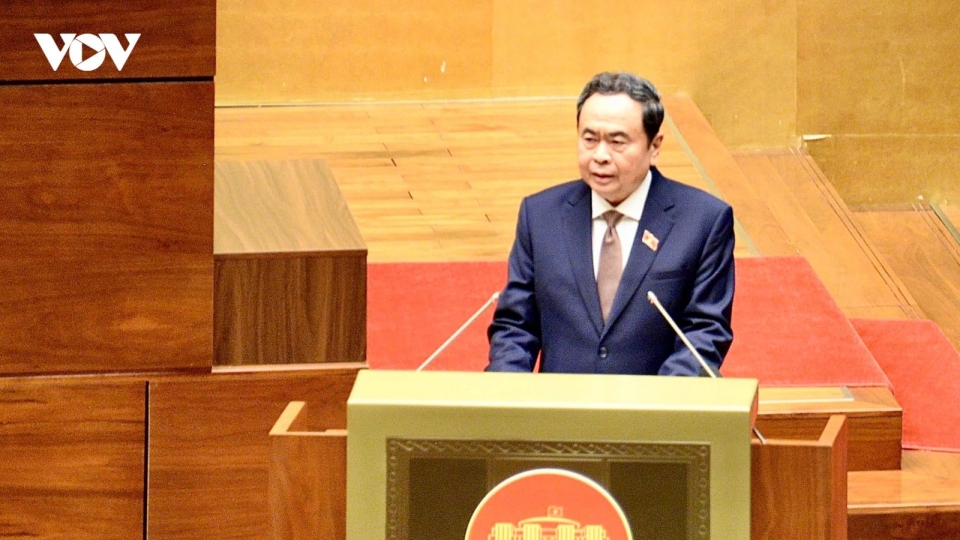
National Assembly leader urges action without delay
VOV.VN - National Assembly President Tran Thanh Man has called for faster decision-making without compromising quality, warning that caution must not become a reason for delay as lawmakers take up a major legislative agenda at the second session of the 16th National Assembly.


