




National Assembly to consider 43 draft laws and resolutions at year-end session

VOV.VN - The second session of Vietnam’s 16th National Assembly is expected to consider and adopt 43 draft laws and resolutions, review four other draft laws, and decide on key socio-economic, financial and budgetary matters.
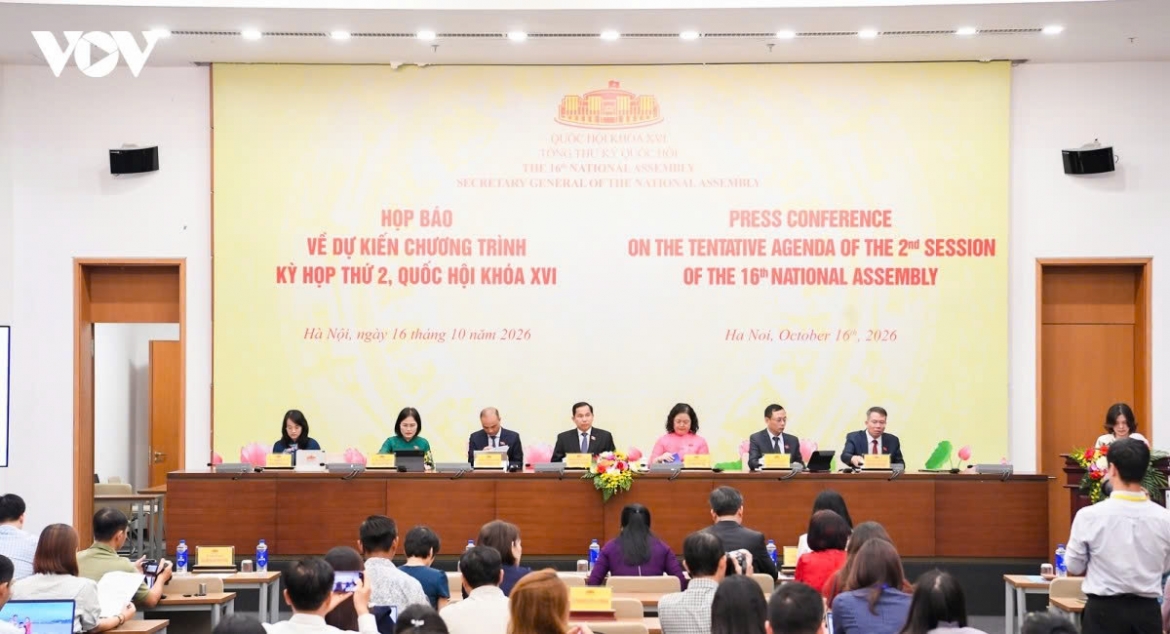
The information was announced at a press briefing in Hanoi on October 16 ahead of the opening of the second session, the year-end sitting of the legislature.
Presenting an overview of the agenda, Deputy Chairman of the National Assembly Office Nguyen Van Hien said the session will hold its preparatory meeting and opening ceremony on October 17, and is scheduled to close on November 21.
The session will be held in person in two phases, with the first running from October 17 to November 14, and the second from November 20-21.
The sitting is expected to last 28 days, including six Saturdays and one Sunday. From November 15 to 19, the National Assembly will recess to allow its agencies, the Government and relevant bodies to incorporate feedback and finalise draft laws and resolutions.
43 draft laws and resolutions expected to be adopted
During the session, the National Assembly is to consider and adopt 43 draft laws and resolutions. Key items include the revised Criminal Code and Criminal Procedure Code; amendments to the Land Law, Law on Real Estate Business and Housing Law; the consolidated State Budget Law; the Law on Small and Medium-sized Enterprise Development; and amendments to the Law on the Implementation of Grassroots Democracy.
Other proposals include the Law on Legal Normative Documents; amendments to the Labour Code and laws governing archives, gender equality, Red Cross activities and employment; amendments to the Law on Social Insurance; and revisions to legislation on children, persons with disabilities, medical examination and treatment, pharmaceuticals, older persons and health insurance. The National Assembly will also consider resolutions on the implementation of the revised Criminal Code and Criminal Procedure Code.
Four other draft laws will be submitted for discussion, namely the Vietnam Maritime and Inland Waterway Code, the revised Law on Food Safety, the Law on Commodity Derivatives Trading and the Law on Cultural Industry Development.
The National Assembly will also review and decide on major socio-economic, financial and budgetary issues. These include the implementation of the 2026 socio-economic development plan and the proposed plan for 2027, as well as the implementation of the 2026 state budget and the proposed 2027 budget estimates and central budget allocation plan.
Lawmakers will also examine the implementation of the 2026 public investment plan and the proposed plan for 2027, and approve the final state budget accounts for 2025.
On oversight and other important matters, the National Assembly will consider a report summarising voters’ and public recommendations submitted to the session, as well as reports on the handling of voters’ petitions, citizen reception, correspondence and the settlement of complaints and denunciations.
One day provisionally set aside for question-and-answer sessions
Responding to a question about the selection of topics for parliamentary questioning, Hoang Nam Hai, a full-time National Assembly deputy serving on the National Assembly Committee for Public Petitions and Supervision, said the committee’s standing body had sent a document to National Assembly delegations in provinces and cities in September 2026.
The committee also reviewed issues highlighted by the media, those attracting public attention and concerns raised by voters. Based on feedback from National Assembly delegations and information gathered through various channels, the committee has identified six potential areas for questioning, namely health, agriculture and environment, education and training, science and technology, finance, and home affairs.
The committee is working with other National Assembly committees and the Council for Ethnic Affairs to submit its recommendations to the National Assembly Standing Committee. Lawmakers will then be asked to select two areas for questioning.
Hai said the session would involve a particularly heavy legislative workload. The National Assembly Standing Committee therefore plans to hold questioning and answers over one day, provisionally on November 12. Two ministers are expected to take the lead in responding, while other relevant ministers and sector heads will also participate.
National Assembly leader calls for faster legal reforms to drive growth
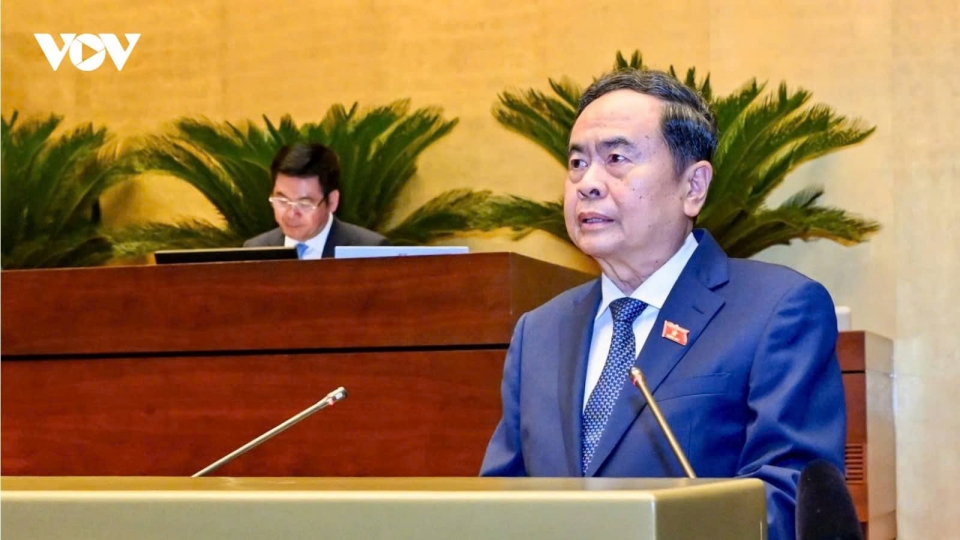
VOV.VN - The 16th National Assembly opened its first extraordinary session in Hanoi on August 3 with National Assembly Chairman Tran Thanh Man calling for faster legislation to promptly institutionalise the Party’s major policies, remove legal bottlenecks and create momentum for the country’s next stage of development.


