Vietnam proposes elevating India cooperation in emerging global value chains

VOV.VN - Vietnam’s Party General Secretary and State President To Lam has proposed upgrading economic cooperation between Vietnam and India beyond expanding bilateral trade toward deeper strategic connectivity in emerging global value chains, particularly in high technology, innovation and the green economy.
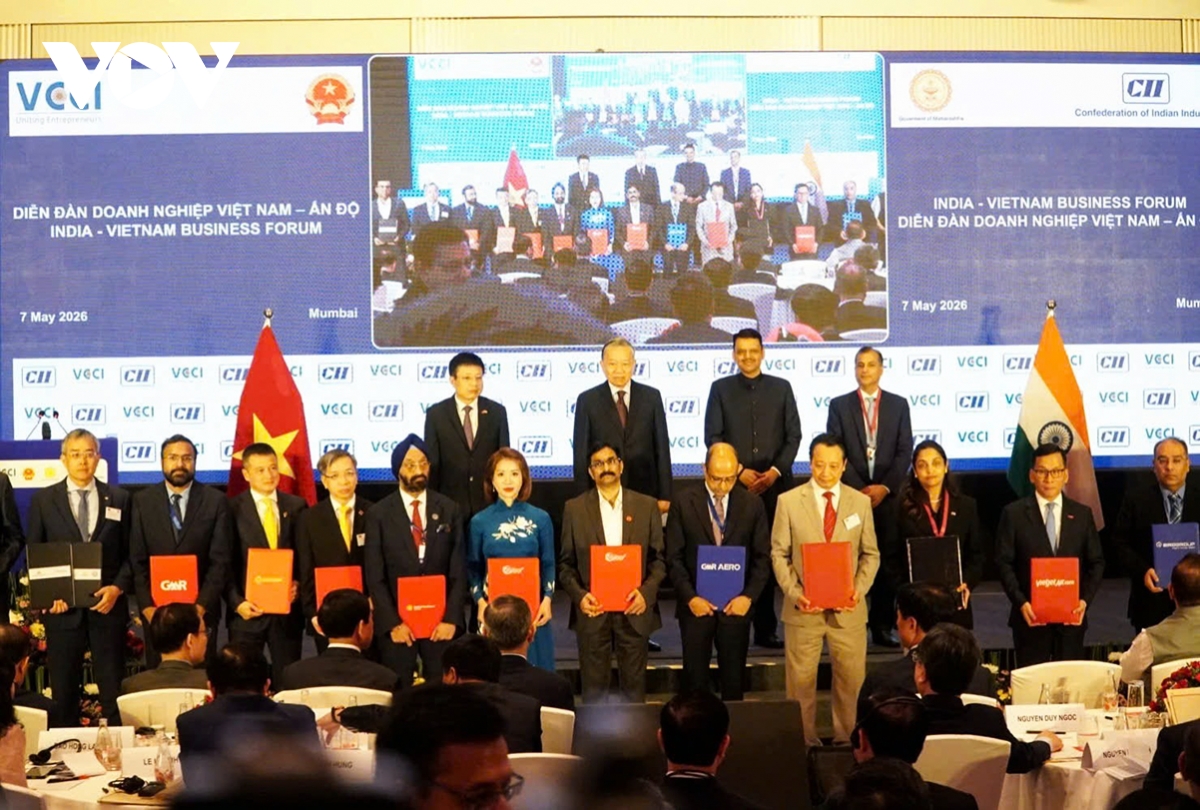
Addressing nearly 400 Vietnamese and Indian businesses at a joint business forum in Mumbai on May 7, the Vietnamese leader noted that the ongoing restructuring of the global economy is creating both new challenges and opportunities for developing countries, including Vietnam and India.
He stressed that amid the reconfiguration of regional economic structures, the two countries are not only dynamic economies but also increasingly important “connectivity hubs” linking Southeast Asia and South Asia within the broader Indo-Pacific space.
According to the Vietnamese leader, Vietnam, as a gateway to ASEAN with an extensive network of next-generation free trade agreements, and India, a major economic centre in South Asia with growing influence in global supply chains, possess significant potential to complement each other and deepen integration into new value chains.
Against this backdrop, the leader suggested bilateral economic ties should be elevated to a new level, focusing not only on trade growth but also on enhancing the quality of cooperation, the depth of economic linkages and long-term strategic value.
He proposed expanding cooperation in future-oriented sectors such as artificial intelligence, information technology, semiconductors, biotechnology, pharmaceuticals, clean energy, logistics, data centres and research and development.
At the same time, he called for stronger connectivity in infrastructure, aviation, logistics and tourism to facilitate the movement of goods, capital, technology and human resources between the two countries. Cooperation in high-quality workforce training and knowledge transfer was also identified as a key pillar for the next phase of bilateral relations.
Regarding the investment environment, Party General Secretary and President To Lam affirmed that Vietnam is accelerating institutional reforms, simplifying administrative procedures, promoting digital transformation in state governance and improving law enforcement effectiveness.
Vietnam is also continuing to develop investment-support ecosystems, including industrial parks, high-tech zones, innovation centres and logistics infrastructure, in order to create favorable conditions for long-term foreign business operations, he added.
He emphasised that Vietnam seeks not only to attract investment but also to become a trusted long-term partner by ensuring a transparent, stable and predictable business environment that supports sustainable corporate growth.
According to the top leader, while governments can establish frameworks for cooperation, businesses are the driving force that transform commitments into concrete projects and outcomes. He encouraged enterprises from both countries to strengthen partnerships, share technologies and expand market access in order to turn opportunities into substantive cooperation.
On the occasion, in the presence of the Vietnamese leader, businesses and associations from both countries exchanged multiple cooperation agreements in trade, investment, tourism, industry and services, contributing to stronger economic connectivity and efforts toward more balanced Vietnam–India trade relations.
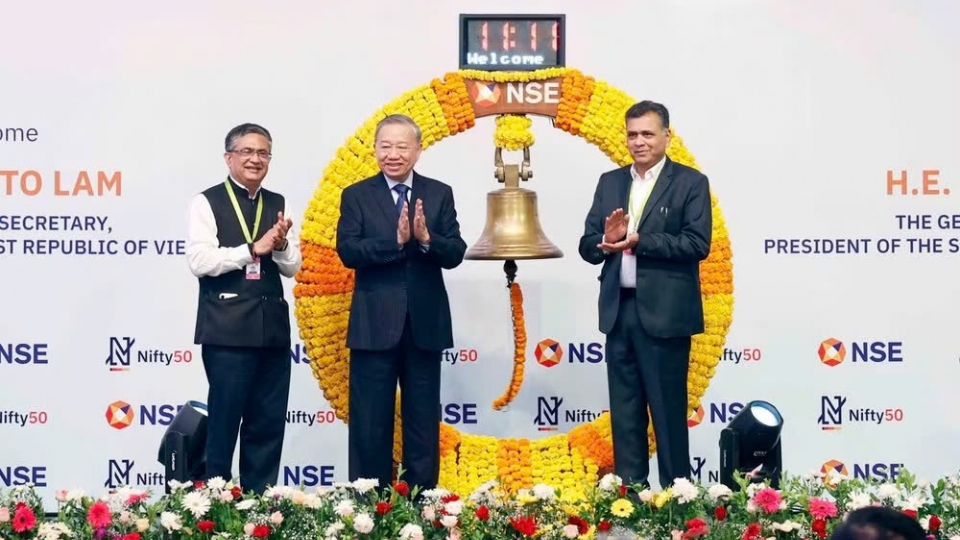
Vietnamese leader rings opening bell at India’s National Stock Exchange
VOV.VN - General Secretary of the Communist Party of Vietnam and President of Vietnam To Lam on May 7 visited the National Stock Exchange of India (NSE) in Mumbai as part of his ongoing state visit to India.