Vietnam confident of sustaining double-digit growth, says policy official

VOV.VN - Vietnam has sufficient conditions, potential, policy space and confidence to achieve economic growth of 10% or higher in the coming period, according to Nguyen Anh Tuan, deputy head of the Central Policy and Strategy Commission.
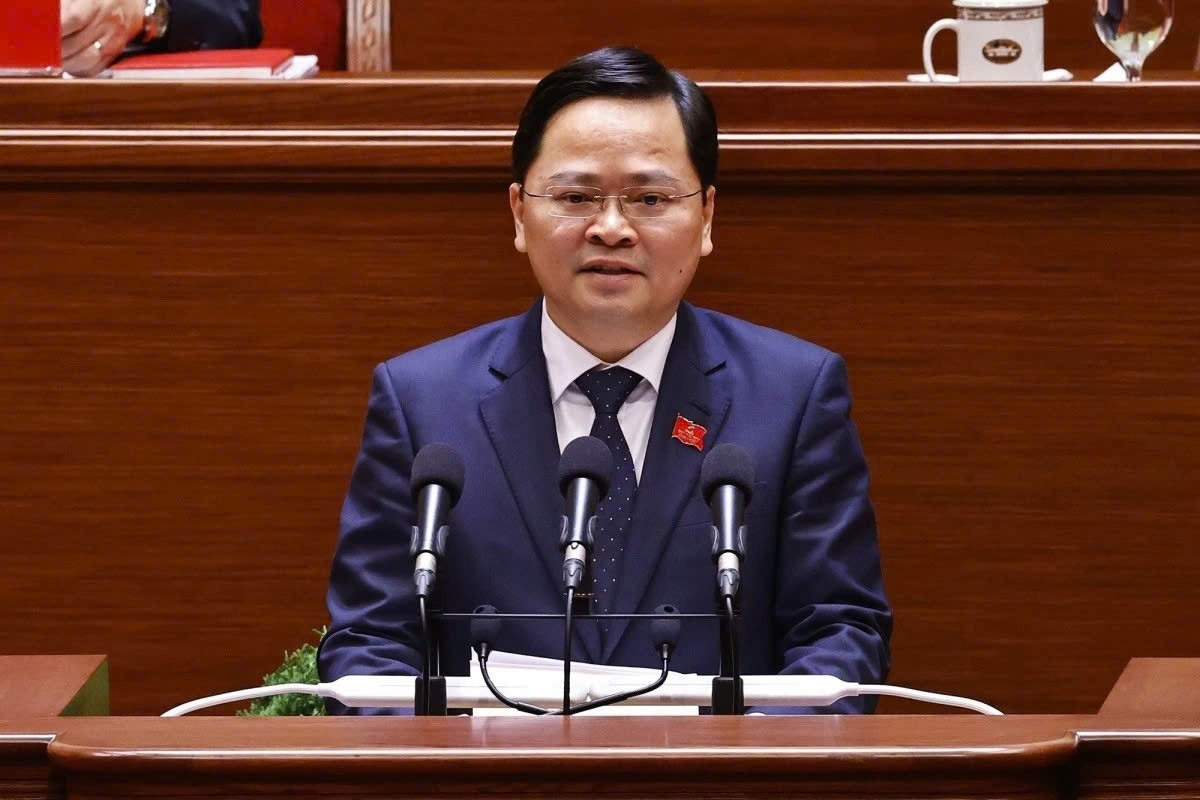
In a report presented at the ongoing 14th National Party Congress in Hanoi on January 21, Tuan said the Central Policy and Strategy Commission strongly agrees with the draft documents submitted to the Congress, particularly the country’s development goals, including the target of economic growth exceeding 10%. He stressed that achieving high and sustainable double-digit growth in the coming years is an urgent requirement and cannot be delayed if Vietnam is to meet its strategic development goals for 2030 and 2045.
Vietnam has set two centennial strategic goals of becoming a developing country with modern industry and upper-middle income by 2030 to celebrate 100 years of the Communist Party of Vietnam, and a high-income developed economy by 2045 to mark 100 years of the founding of the modern Vietnamese state.
Analysing the practical foundations for growth of 10% or more, Tuan said that based on the country’s accumulated achievements and the national aspiration for renewal and advancement, Vietnam possesses ample conditions, potential and room for maneuver to realise this objective.
He noted that overall economic efficiency remains relatively low, meaning that improvements in productivity, better utilisation of strengths and potential, removal of structural bottlenecks and more effective mobilisation of resources could generate breakthrough growth. All economic sectors still show significant growth potential, while many new drivers and resources have yet to be fully unlocked. Although the domestic and international context presents major challenges, he agreed, it also offers opportunities for Vietnam to narrow development gaps and accelerate its rise.
Ensuring strategic autonomy
According to the official, the Central Policy and Strategy Commission proposed a number of strategic solutions to promote double-digit economic growth in the coming period. These include maintaining macroeconomic stability, strengthening economic resilience and ensuring strategic autonomy as a foundation for rapid and sustainable growth in both the short and long term.
The commission emphasised the need to reinvigorate traditional growth drivers while simultaneously creating and effectively exploiting new ones. It recommended accelerating economic restructuring and promoting industrialisation and modernisation, with science and technology, innovation and digital transformation as the primary drivers.
Priority sectors include the data economy, digital economy, green economy and circular economy, along with the effective development of the maritime economy, low-altitude economic space, outer space and underground economic space.
Harnessing all economic sectors’ potential
The policy paper also underscored the need to maximising the role of all economic sectors, particularly the private sector, improve the efficiency of the state sector, and develop the collective economy in a sustainable manner. It suggested further improving the quality and effectiveness of foreign direct investment in line with new standards, and enhancing the role of growth poles, economic corridors and key regions as engines of national growth.
Furthermore, Tuan highlighted the importance of expanding and diversifying international markets while developing the domestic market into a truly sustainable growth driver. He advocated restructuring export strategies, shifting from price-based competition to exports driven by branding, high standards and high value-added, technology-intensive products, and making deeper use of free trade agreements (FTAs) and emerging markets.
Efficient use of resources
The official also underlined the need to mobilise and efficiently use resources, particularly capital, through all three channels: public investment, domestic private investment and foreign direct investment. Measures include boosting private investment, developing diversified capital markets to mobilise medium- and long-term funding, encouraging venture capital funds and fintech companies to improve access to finance for small and medium-sized enterprises and startups, and attracting selective foreign investment with a focus on high technology and energy efficiency.
In addition, he suggested accelerating breakthroughs in economic institutions, human resources, science and technology, innovation and infrastructure as a solid foundation for rapid and sustainable growth.
According to Tuan, these solutions must be implemented in a coordinated manner with clear priorities, focusing on removing growth bottlenecks while stimulating and amplifying key drivers with spillover effects across the economy.
He stressed the need to establish and implement a new growth model based on productivity, quality and competitiveness, with science and technology, innovation and digital transformation as its core pillars, ensuring the efficient use of resources.
Recognising the demands of the new development stage, the Party official assured the Central Policy and Strategy Commission would continue to work closely with ministries, sectors and localities to provide timely advice on strategic guidelines, policies and major socio-economic measures, contributing to the successful implementation of the Resolution to be adopted at the 14th National Party Congress.
Vietnam shifts focus from resolutions to effective execution and governance
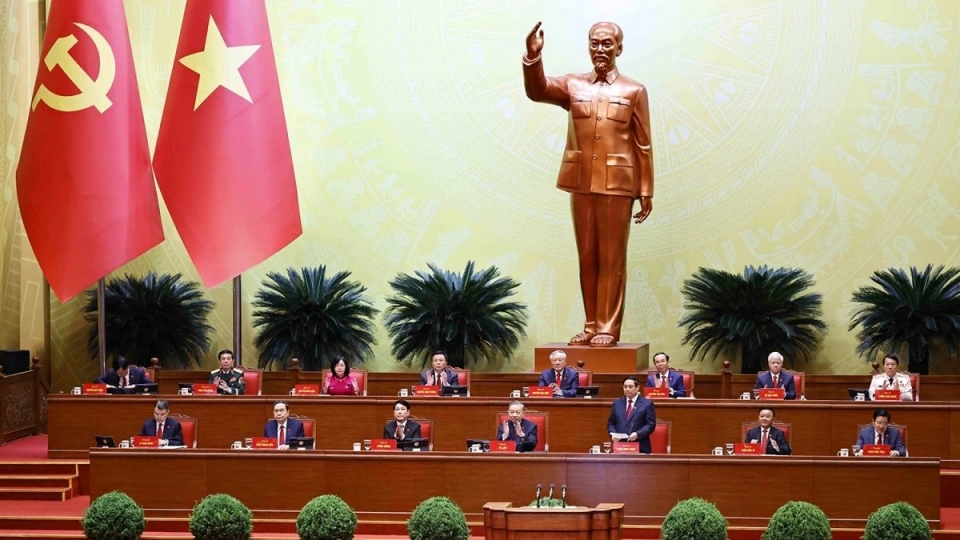
VOV.VN - Vietnam’s top leadership has signalled a strategic shift from policy formulation to effective implementation and results-based governance, as the Communist Party of Vietnam convenes its 14th National Congress.