Vietnam trade deficit reaches US$7.11bln as imports surge in early 2026

VOV.VN - Vietnam recorded a trade deficit of US$7.11 billion in the first four months of 2026 as imports rose sharply, outpacing strong export growth and reflecting rising demand for production inputs as well as continued reliance on the foreign invested sector.
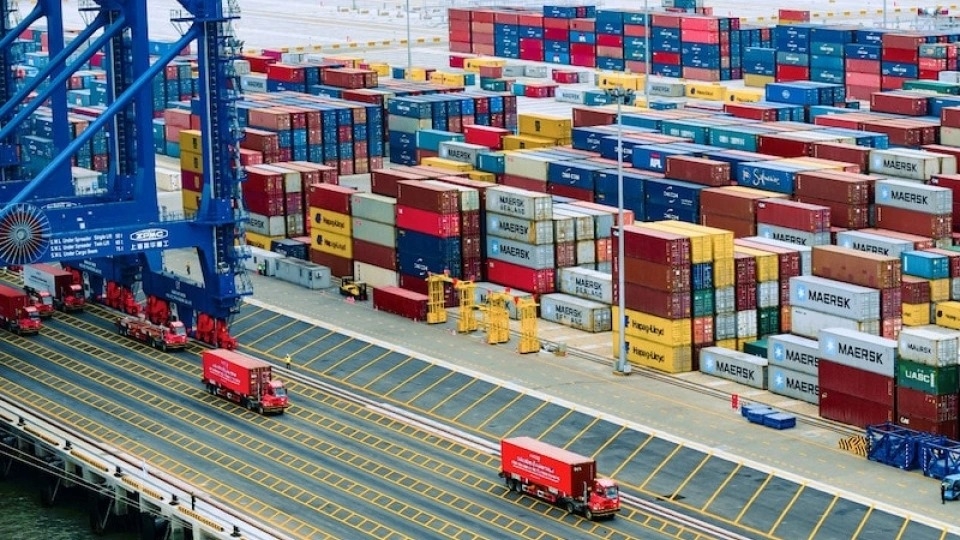
According to the National Statistics Office under the Ministry of Finance, export turnover in April was estimated at US$45.52 billion, down 2% compared with the previous month. The domestic sector accounted for US$8.88 billion, declining 1.2%, while the foreign invested sector generated US$36.64 billion (including from crude oil), down 2.1%.
Compared with the same period last year, however, exports in April increased 21%, driven largely by the foreign invested sector which rose 29.2%, while exports from the domestic sector fell 4.2%.
For the first four months, total export turnover brought back an estimated US$168.53 billion, up 19.7% year on year. The domestic sector contributed US$33.65 billion, rising 0.4% and accounting for 20% of total exports, while the foreign invested sector generated US$134.88 billion, up 25.8% and making up 80%.
During this period, 24 export items recorded turnover exceeding US$1 billion, representing 89.1% of total exports, including seven items with export value above US$5 billion.
Manufactured goods continued to dominate the country’s export structure, accounting for US$151.5 billion or 89.9%. Agricultural and forestry products earned US$12.68 billion, equivalent to 7.5%, while fisheries accounted for US$3.55 billion or 2.1%. Fuel and mineral exports remained modest at US$0.8 billion, making up just 0.5%.
On the import side, Vietnam recorded strong growth driven by demand for machinery, equipment and raw materials. Import turnover in April was estimated at US$48.8 billion, up 3.6% from the previous month. The domestic sector hit US$13.8 billion, increasing 2.6%, while the foreign invested sector totaled US$35 billion, up 4%. Compared with a year earlier, imports in April surged 32.5%, with the domestic sector rising 22.7% and the foreign invested sector increasing 36.8%.
In the first four months of 2026, total import turnover hit US$175.64 billion, up 28.7% year on year. The domestic sector imported US$49.27 billion, rising 20.4%, while the foreign invested sector made up US$126.37 billion, up 32.3%. There were 30 imported items with turnover exceeding US$1 billion, accounting for 87.4% of total imports, including two items surpassing US$5 billion.
Production related goods continued to dominate import structure, representing US$165.37 billion or 94.2% of total imports. Within this category, machinery, equipment and spare parts made up 54.8%, while raw materials and fuels accounted for 39.4%. Consumer goods represented a relatively small share at US$10.27 billion, or 5.8%.
Vietnam’s trade balance recorded a deficit of US$3.28 billion in April alone. For the first four months of 2026, the country posted a trade deficit of US$7.11 billion, reversing a surplus of US$4.3 billion in the same period last year. The domestic sector recorded a deficit of US$15.61 billion, while the foreign invested sector maintained a surplus of US$8.5 billion, highlighting a structural imbalance in trade performance.
The United States remained Vietnam’s largest export destination with turnover estimated at US$53.9 billion, while China continued to be the largest source of imports at US$69 billion. Vietnam posted a trade surplus of US$46.9 billion with the United States, up 24.4% year on year, and a surplus of US$14.2 billion with the European Union, rising 6.7%. The country also recorded a modest surplus of US$0.5 billion with Japan, though this declined 28%. Meanwhile, trade deficits widened with China to US$46.4 billion, up 33.4%, with the Republic of Korea to US$15 billion, up 57.8%, and with ASEAN to US$7.6 billion, up 44.3%.
The latest figures underscore strong demand for production inputs as Vietnam’s manufacturing sector expands, while also reflecting the continued dominance of the foreign invested sector in driving export growth.
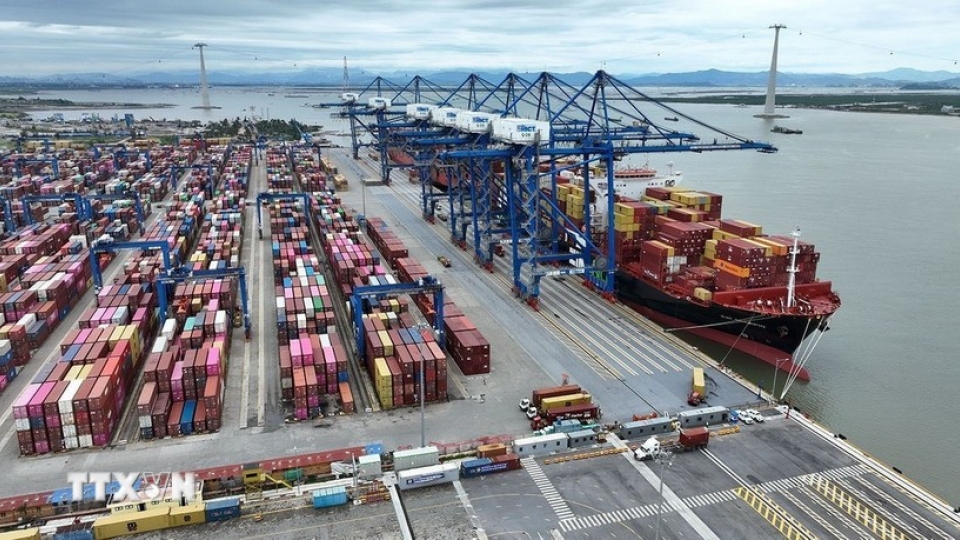
Vietnam targets US$23 billion trade surplus in 2026
The Agency of Foreign Trade (AFT) under the Ministry of Industry and Trade aims to increase total export turnover by more than 8% in 2026 compared with 2025, while maintaining a trade surplus of over US$23 billion, up 15% year on year.