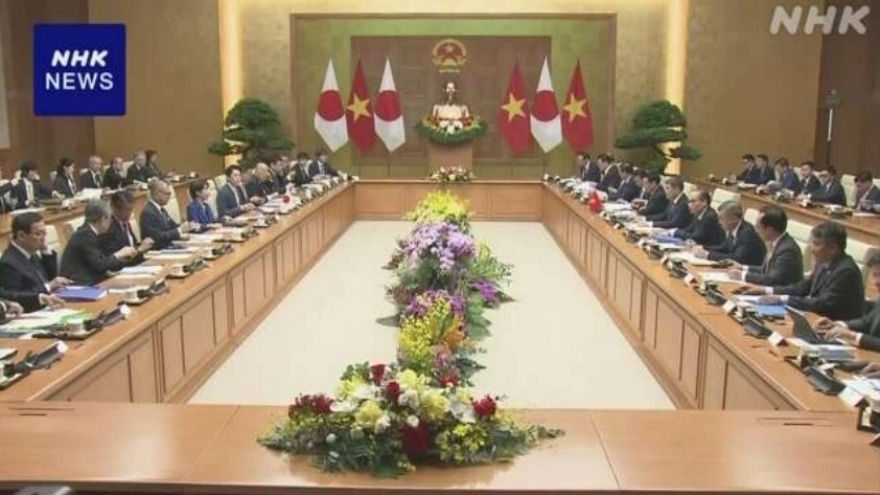
Vietnam, Japan agree to target US$60 billion in bilateral trade by 2030

VOV.VN - Vietnam and Japan agreed to target US$60 billion in bilateral trade by 2030 and raise Japanese investment in Vietnam to US$5 billion per year, following talks between Prime Minister Le Minh Hung and his Japanese counterpart Sanae Takaichi.
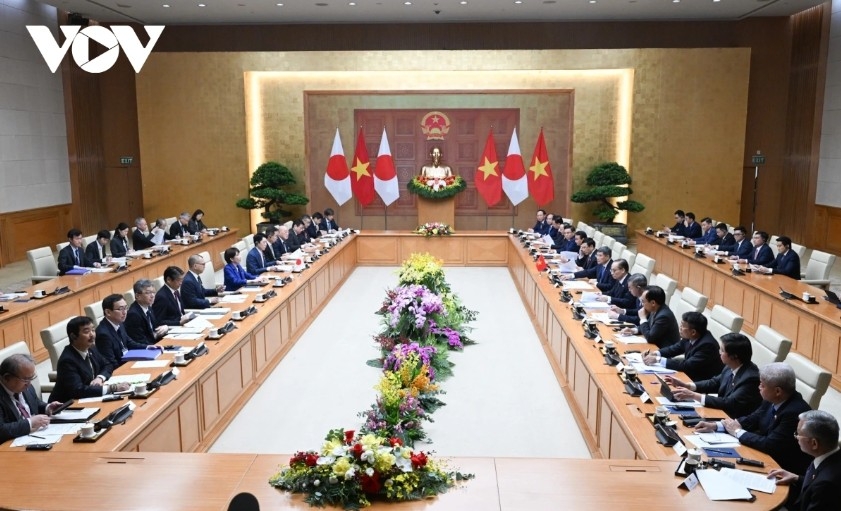
The talks took place on May 2 after an official welcome ceremony during Japanese PM Takaichi’s official visit to Vietnam from May 1 to 3, 2026.
At the talks, the two sides also agreed to accelerate early market access for Vietnam’s green-skinned pomelo and Japan’s grapes, and to implement ODA cooperation projects in climate change response.
The Vietnamese Government chieft welcomed PM Takaichi and the high-level Japanese delegation, noting that Vietnam being chosen as her first destination in Asia after re-election shows Japan’s strong interest in and priority for Vietnam.
Congratulating the Japanese PM on successfully chairing the expanded Asia Zero Emission Community (AZEC) Summit, Hung affirmed Japan’s role in dealing with global energy security issues and reiterated that Vietnam regards Japan as one of its most important strategic partners and a sincere and reliable friend, working with Vietnam to realise sustainable development goals.
He said the visit would create fresh impetus to forge the Comprehensive Strategic Partnership, making it deeper, more substantive and more effective across areas of shared interest, particularly in economic, trade, investment, ODA, digital and green transformation, science and technology, food security and sustainable energy.
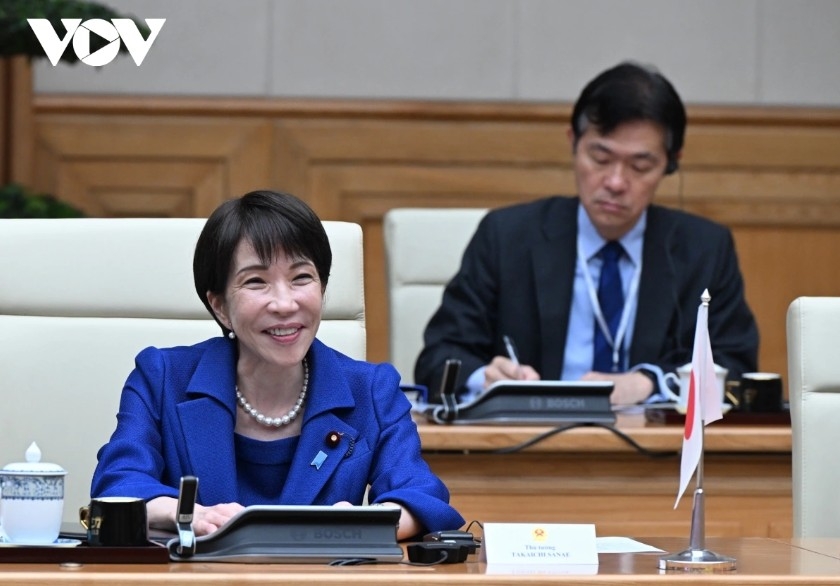
PM Takaichi thanked the Vietnamese Government and people for their reception, congratulated Hung on his election, and expressed confidence that Vietnam would achieve further successes under his leadership.
She noted Vietnam’s development achievements and growing international role, saying Vietnam holds an important position in regional supply chains and pursues an independent and deeply integrated foreign policy. She affirmed Japan’s support for Vietnam’s development direction and its readiness to work with Vietnam to enhance the autonomy and resilience of both economies.
In a sincere, friendly and trusting atmosphere, the two leaders held comprehensive exchanges on bilateral relations as well as regional and international issues of mutual concern.
They consented to consolidate political trust through regular high-level exchanges and to effectively implement ministerial-level cooperation mechanisms, while boosting practical cooperation in defence and security, including maritime issues, war legacy issues, cybersecurity, United Nations peacekeeping operations (PKO), military medicine, training and combating transnational crime.
In economic cooperation, both sides agreed to further deepen economic ties as the main pillar of the relationship, contributing to ensuring economic security, energy security and sustainable agriculture.
They agreed to advance cooperation under regional initiatives such as AZEC and the Asia Energy and Resource Resilience Initiative (POWERR Asia), and to promote cooperation on energy projects including nuclear and gas power.
Japan will support arrangements for crude oil supply for the Nghi Son refinery and continue supporting Vietnam’s one-million-hectare low-emission rice project in the Mekong Delta.
Prime Minister Le Minh Hung highlighted efforts to improve the investment environment and streamline administrative procedures to promote the private sector and develop the foreign direct investment (FDI) sector.
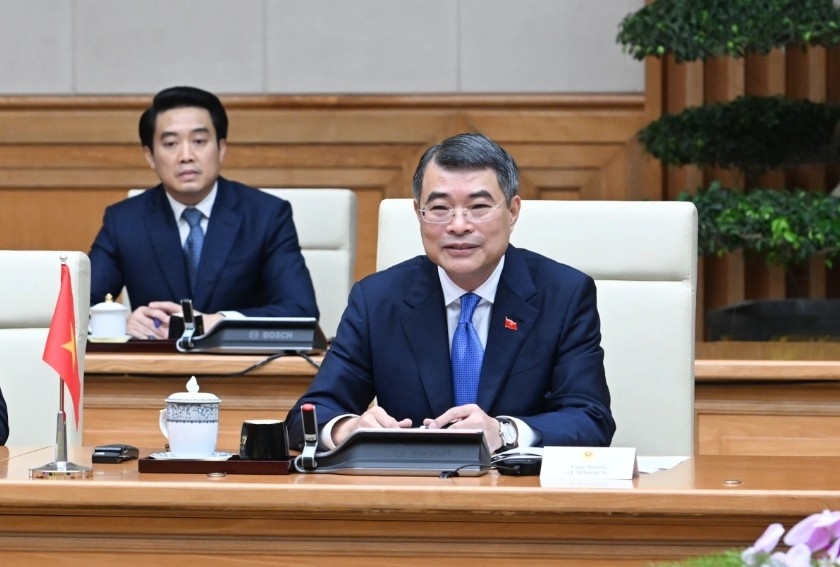
He also welcomed the role of Japanese banks and financial institutions as a bridge between businesses of the two countries, and proposed promoting mergers and acquisitions among small and medium-sized enterprises, encouraging Japanese investment in high-tech sectors, increasing localisation and supporting Vietnamese firms to participate in Japanese government-funded projects and operate in Japan.
In science and technology, both sides concurred to restart the Vietnam-Japan Joint Committee in 2026 and to organise a public-private high-tech event.
Japan will continue supporting Vietnam in enhancing technological capacity in artificial intelligence, semiconductors and space, while promoting high-quality human resource training through scholarships and joint research programmes such as NEXUS and the Sakura Science Programme.
The two sides agreed to beef up cooperation in labour, local-level cooperation, people-to-people exchanges, culture and tourism, and to organise the second Vietnam-Japan locality-to locality Cooperation Forum in 2026.
PM Hung proposed that Japan simplify visa procedures for Vietnamese citizens to support the goal of doubling two-way tourism by 2030. The two leaders also agreed to closely cooperate on the Vietnam-Japan University project and to soon sign an agreement on the university.
On regional and international issues, host and guest agreed to continue close coordination at forums such as ASEAN, the Mekong subregion and the United Nations, as well as within the Comprehensive and Progressive Agreement for Trans-Pacific Partnership (CPTPP) framework in 2026 when Vietnam assumes the chairmanship.
They reaffirmed the importance of resolving disputes in the East Sea by peaceful means in accordance with international law, particularly the 1982 United Nations Convention on the Law of the Sea (UNCLOS).
The host leader invited PM Takaichi to attend the APEC 2027 Summit in Phu Quoc and said Vietnam will participate in GREEN EXPO 2027 in Yokohama. Japan pledged to support the success of APEC 2027 hosted by Vietnam.
After the talks, both PMs adopted a list of priority cooperation areas in science and technology, innovation, digital transformation and economic security, and held a joint press briefing.
On this occasion, host and guest witnessed the exchange of six important cooperation documents in areas including science and technology, ODA loans for climate change response, irrigation, space and emissions reduction.
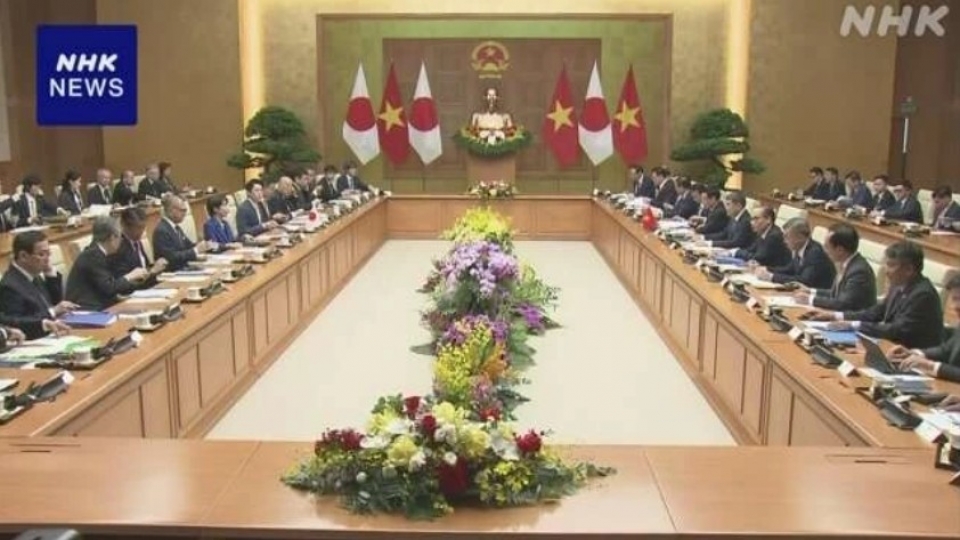
Japanese media praise outcomes of Vietnam-Japan talks
VOV.VN - Major Japanese media outlets on May 2 carried detailed coverage of talks between Japan’s Prime Minister Sanae Takaichi and her Vietnamese counterpart Le Minh Hung and praised the outcomes.