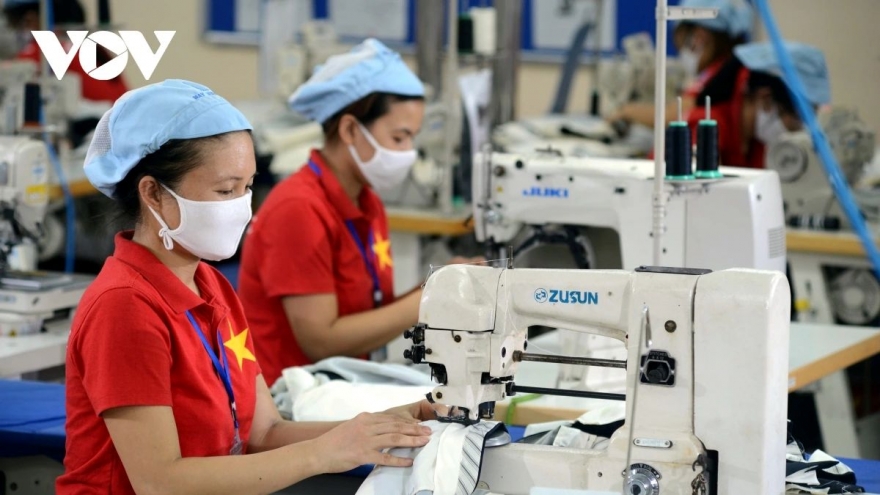
Exports jump nearly 30% in January, but trade posts US$1.78 bln deficit

VOV.VN - Vietnam’s exports surged nearly 30% in January from a year earlier, driven by strong shipments from the foreign-invested sector, but a sharper rise in imports pushed the country into a trade deficit, government data showed on February 6.
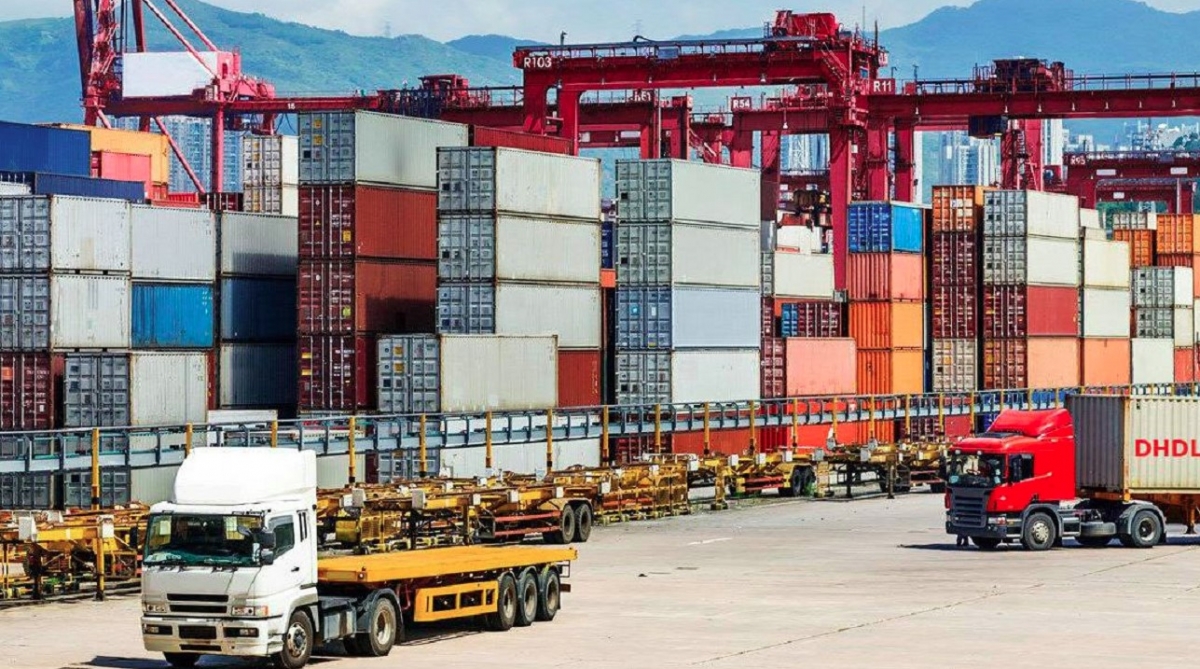
Export turnover rose 29.7% year on year to US$43.19 billion, though it slipped 2% from December, according to the National Statistics Office (NSO) under the Ministry of Finance.
Of this, the domestic economic sector contributed US$9.51 billion (down 2%), while the foreign-invested sector, including crude oil, generated US$33.68 billion (down 1.9%). Nine product groups recorded export turnover exceeding US$1 billion each, accounting for 72.4% of total exports.
Processed industrial goods dominated exports, reaching US$38.43 billion and making up 89% of total export value. Agricultural and forestry products contributed US$3.65 billion, aquatic products US$1.01 billion, and fuel and mineral products US$0.10 billion.
Import turnover achieved US$44.97 billion, up 0.6% from the previous month. The domestic sector accounted for US$12.91 billion, down 11.4%, while the foreign-invested sector recorded US$32.06 billion, up 6.5%. Compared to January last year, imports soared 49.2%, with domestic-sector imports increasing 18.2% and foreign-invested imports surging 66.8%.
Eight imported items posted values exceeding US$1 billion each, representing 64.9% of total import value, including one item exceeding US$10 billion and constituting 37%.
Production materials made up the bulk of imports, totaling US$42.3 billion or 94% of the total. Machinery, equipment, tools, and spare parts represented 56.1%, while raw materials, fuels, and materials registered 37.9%. Consumer goods imports reached US$2.67 billion, representing 6%.
The United States remained Vietnam’s largest export market with shipments worth US$13.9 billion, while China was its biggest source of imports at US$19 billion.
Vietnam posted a trade surplus of US$12 billion with the United States, up 28.6% year on year, alongside surpluses of US$3.9 billion with the EU, up 3.9%, and US$0.2 billion with Japan, down 59.9%.
Meanwhile, the country’s trade deficit with China widened to US$12.7 billion, up 52.1%, while deficits with the Republic of Korea and ASEAN expanded to US$3.4 billion and US$1.3 billion, rising 74.9% and 92.2%, respectively.
Overall, the January trade balance posted a deficit of US$1.78 billion, compared to a surplus of US$3.17 billion a year earlier. The domestic economic sector witnessed a trade deficit of US$3.4 billion, while the foreign-invested sector racked up a surplus of US$1.62 billion.
To boost exports, NSO Director Nguyen Thi Huong recommended that the Government accelerate trade promotion, diversify supply and production chains, expand export markets, and improve product quality to enhance participation in regional and global value chains.
She also emphasised the need to better leverage free trade agreements, strengthen exports to major markets, and tap into emerging markets such as the Middle East, Halal markets, Latin America, and Africa, with the goal of achieving a sustainable trade surplus.
In parallel, authorities should support businesses in meeting new market standards, handling anti-dumping cases, accessing capital, applying advanced technologies, and enhancing product quality and value.
To further raise the value, quality, and market share of agricultural, forestry, and aquatic products, the Ministry of Agriculture and Environment is prioritizing institutional reforms aligned with amended laws, removing policy bottlenecks, and building sustainable agricultural supply chains to enhance the competitiveness and reputation of Vietnamese products at home and abroad.
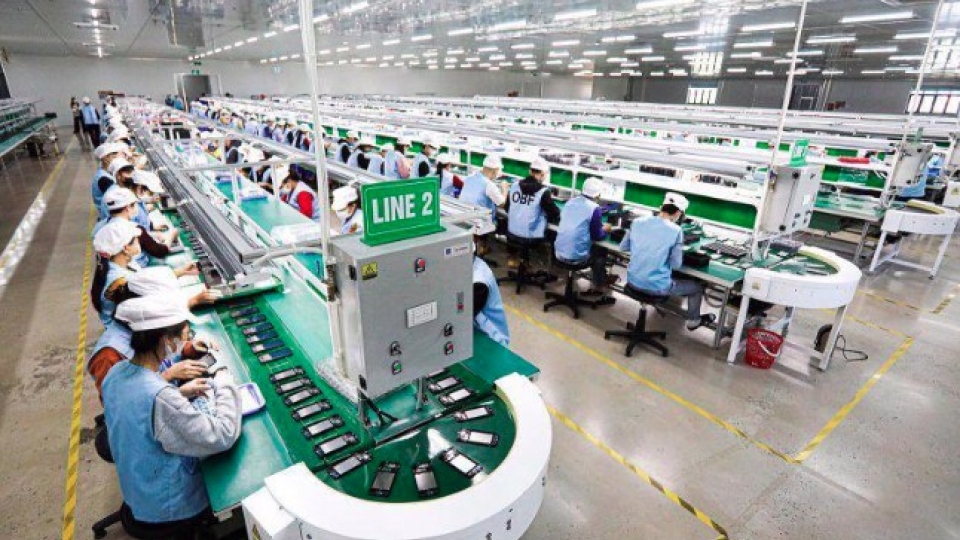
Vietnam’s exports to US jump 28.1% in 2025 on electronics surge
VOV.VN - Vietnam’s exports to the United States rose 28.1% year on year in 2025 to more than US$153.1 billion, driven by strong demand for electronics, machinery and garments, data from the Ministry of Industry and Trade showed.