Vietnam shifts toward high-quality FDI as investors call for stronger reforms

VOV.VN - As global competition for foreign direct investment (FDI) intensifies, Vietnam is reshaping its investment attraction strategy by shifting from a focus on “investment quantity” to “investment quality,” prioritising high technology, innovation, sustainability, and value-added industries.
The view was highlighted during a working session between Nguyen Thanh Nghi, head of the Communist Party of Vietnam’s Central Policy and Strategy Commission and domestic and foreign business communities at the Vietnam Connect Forum 2026 held on May 13.
Administrative procedures remain the biggest bottleneck
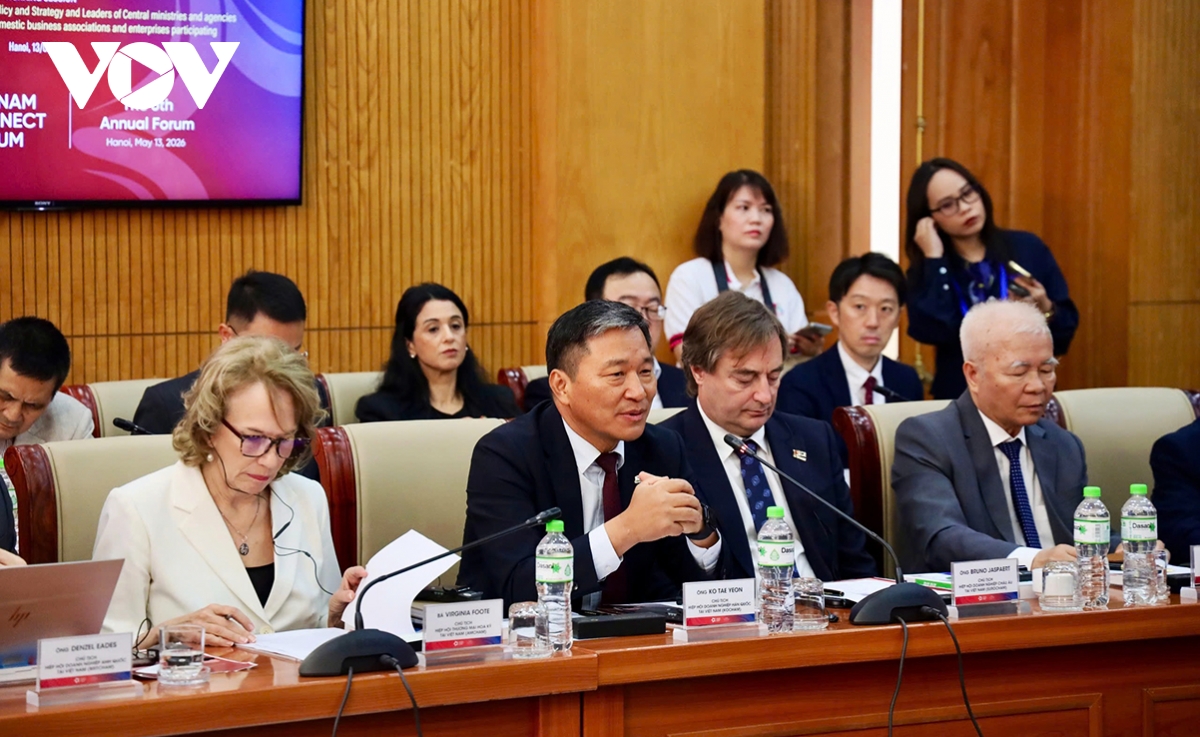
At the forum, foreign business associations agreed that Vietnam continues to be an attractive investment destination thanks to its political stability, large market size, and strong growth potential. However, many investors argued that traditional competitive advantages such as low labour costs and tax incentives are gradually narrowing within the region.
Bruno Jaspaert, chairman of the European Chamber of Commerce in Vietnam (EuroCham) said, Vietnam should focus not merely on incentives, but on building a stable and predictable investment environment.
According to him, amid the rapid restructuring of global supply chains, investors are increasingly concerned about policy consistency and implementation effectiveness at the local level, factors that directly influence long-term investment decisions.
Meanwhile, Ko Tae-yeon, chairman of the Korean Chamber of Commerce in Vietnam (KoCham), emphasised that administrative procedures remain the largest obstacle facing FDI enterprises in Vietnam.
He noted that although Vietnam has made progress in recent years, procedures related to investment licensing, tax refunds, land access, and sub-licenses are time-consuming and inconsistent across localities, increasing operational costs and risks for businesses.
Several enterprises also proposed extending land lease terms to provide greater stability for large-scale projects and long-term investments, particularly in high-tech sectors.
Investors call for clearer rules rather than higher incentives
Foreign business representatives also argued that Vietnam should no longer compete primarily through cost advantages, as such strategies are becoming less sustainable within the region.
Instead, they stressed the importance of “institutional quality,” including legal transparency, policy predictability, and consistency in implementation.
Some opinions also highlighted the need for clearer regulations regarding Economic Needs Test (ENT) in merger and acquisition activities, as well as improved market access mechanisms as Vietnam participates in next-generation free trade agreements.
In addition, workforce quality was repeatedly identified as a decisive factor, especially as FDI flows increasingly shift toward high-tech industries such as artificial intelligence, semiconductors, and the digital economy.
Vietnam accelerates reforms for new generation FDI
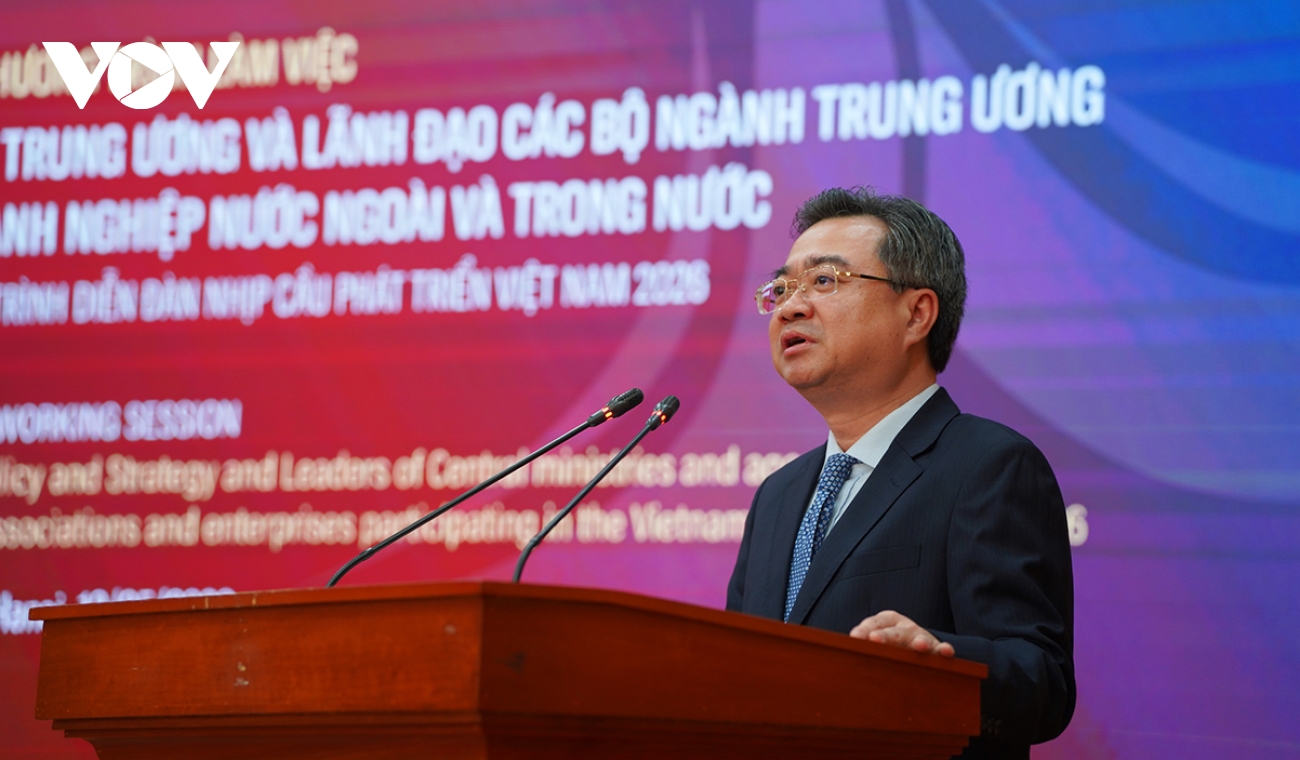
Addressing the meeting, Nguyen Thanh Nghi, head of the Communist Party of Vietnam’s Central Policy and Strategy Commission, highly appreciated the constructive feedback and recommendations put forward by the business community and industry associations, noting that these practical proposals would help enhance the effectiveness of foreign investment attraction and further strengthen linkages between foreign-invested enterprises and domestic businesses.
The Party and the State of Vietnam consistently view the foreign-invested economic sector, together with the state-owned and private sectors, as important pillars of the national economy, maintaining close linkages, complementing one another, and developing in parallel within the country’s new growth model, he emphasised.
He said Vietnam has clearly defined its next-stage FDI strategy as improving investment quality, efficiency, and sustainability rather than focusing solely on capital scale.
Under the strategy, Vietnam is encouraging foreign investment into high-tech industries, research and development centres, innovation ecosystems, green economy sectors, and high-quality workforce training, while also strengthening linkages between foreign investors and domestic enterprises to boost localisation and technology transfer.
The government is also accelerating administrative reforms through comprehensive digitalisation, shifting from pre-licensing control toward post-audit supervision, and enhancing data connectivity among regulatory agencies.
Vietnam aims to place its investment environment among the top three in ASEAN and among the world’s top 30 economies by 2028.
As competition for FDI across Asia is increasingly shifting from “cost competition” toward “competition in institutions, technology, and human capital,” Vietnam’s new-generation FDI strategy is expected not only to increase investment inflows, but more importantly, to upgrade the country’s position within global value chains.
FDI disbursement reaches five-year high in four months
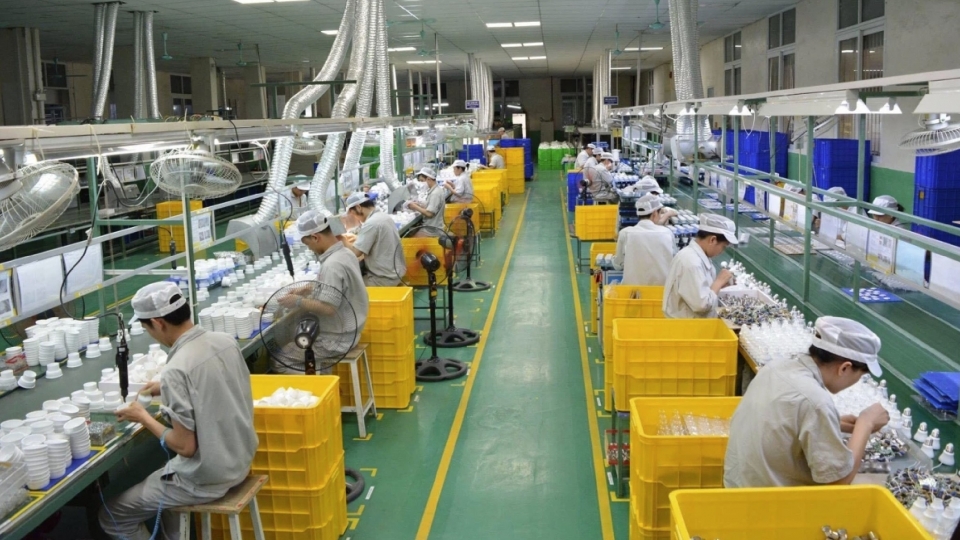
VOV.VN - Foreign direct investment (FDI) continued to perform strongly in Vietnam during January-April 2026, with realized FDI estimated at US$7.4 billion, up 9.8% from the same period last year.