Vietnam maintains FDI inflows as investment quality improves

VOV.VN - Amid fluctuations in global foreign direct investment (FDI) flows, with geopolitical tensions and trade uncertainty increasing, Vietnam has remained relatively stable while the quality of inflows is gradually improving and the country is moving deeper into global value chains.
Maintaining stability amid global headwinds
Between 2021 and 2025, registered FDI into Vietnam ranged from US$27 billion to US$38 billion per year, with 2025 reaching about US$38.4 billion. Disbursed capital totalled around US$27.6 billion, up 9% and the highest level in five years.
According to Nguyen Ba Hung, Chief Economist of the Asian Development Bank (ADB) in Vietnam, the increase in disbursed capital indicates that projects are not only committed but are being implemented in practice, demonstrating foreign investors’ confidence in the investment environment.
Newly registered capital and the number of newly licensed projects continued to rise, showing that Vietnam continues to attract the interest of many investors as they diversify supply chains. Major investors from Singapore, the Republic of Korea, China and Japan continued to account for a high share, reflecting Vietnam’s close integration into Asian production networks.
A clearer shift towards deeper investment has also emerged. In 2025, capital contributions and share purchases rose by 54.8%, showing that foreign investors are expanding operations and participating more deeply in the domestic market. This also indicates that FDI enterprises are “voting with their capital” on Vietnam’s investment environment.
In the first quarter of 2026, total registered FDI hit about US$15.2 billion, rising sharply year-on-year, while disbursed capital stood at around US$4.6 billion, up about 7-8%.
The FDI sector continues to serve as a pillar in exports, accounting for roughly 70-75% of total export turnover and maintaining a large trade surplus.
Shift towards higher technology and greater value added
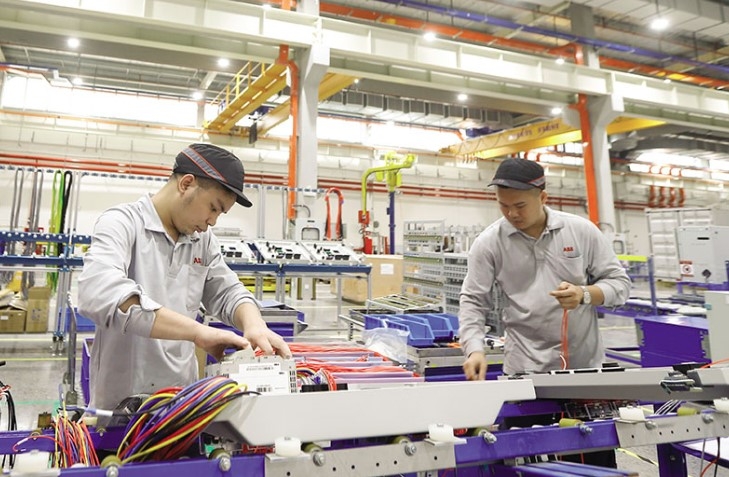
In addition to maintaining scale, the quality of FDI inflows has improved. Manufacturing and processing remained the largest recipient, at around 55–60% of total registered capital in 2021–2025, rising to over 70% in early 2026. In 2025 alone, the sector made up more than 80% of disbursed capital.
The internal structure of the sector is shifting from labour-intensive and simple assembly activities towards higher-technology segments such as electronic components, semiconductors, precision equipment, data centres and digital technologies.
Recent large-scale projects, particularly in the first quarter of 2026, including a US$1.2 billion FCBGA substrate project by Samsung Electro-Mechanics in Thai Nguyen and a US$2.2 billion LNG power project in Nghe An, indicate that Vietnam is moving further into higher value-added segments of global supply chains.
Outlook depends on reform and adaptability
The World Bank (WB) and the Asian Development Bank (ADB) say global FDI flows will continue to face pressure from high interest rates, geopolitical tensions and economic fragmentation. However, Vietnam retains advantages to sustain its appeal.
According to Nguyen Quoc Viet, Head of the Macroeconomic Research Group at the University of Economics, Vietnam National University, Hanoi, the country needs to shift from offering tax incentives to “building a nest through institutions and infrastructure”.
He highlighted three pillars for next-generation FDI attraction: strategic infrastructure, including digital, data, energy and urban systems; a high-quality workforce; and a transparent, stable and predictable institutional framework.
Vietnam continues to benefit from macroeconomic and political stability, an extensive network of free trade agreements (FTAs), and the ongoing “China+1” shift in manufacturing.
Its FDI strategy is also moving towards selective attraction, prioritising high-technology, innovation-driven, green economy and digital transformation projects.
Vietnam in the race to attract high-tech FDI
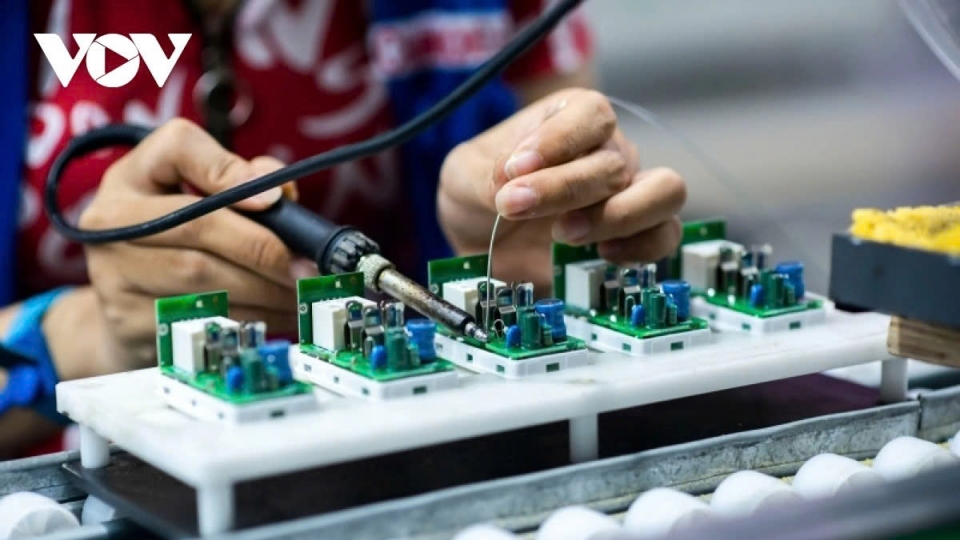
VOV.VN - Vietnam is emerging as a key contender in the race for high-tech FDI as global capital shifts toward technology-driven sectors, but it faces mounting pressure to move beyond low-cost advantages and strengthen its capacity for innovation and value creation.