Vietnam sees circular economy as key driver of green, digital transition

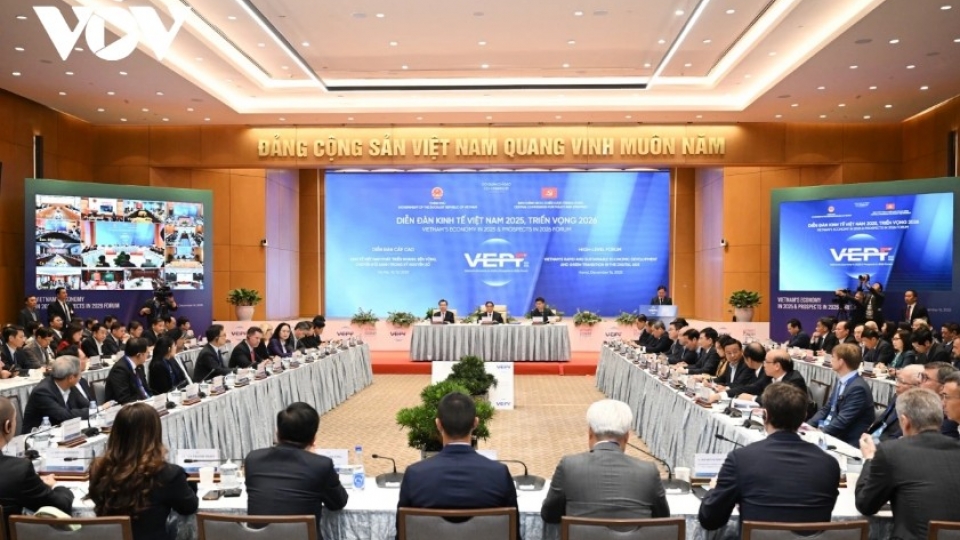
VOV.VN - Vietnam has identified the circular economy as a strategic pillar of a new growth model, serving as a key driver of the country’s green transition in the digital era, said experts at the Vietnam Economic Forum in 2025 and Prospects in 2026 Forum.
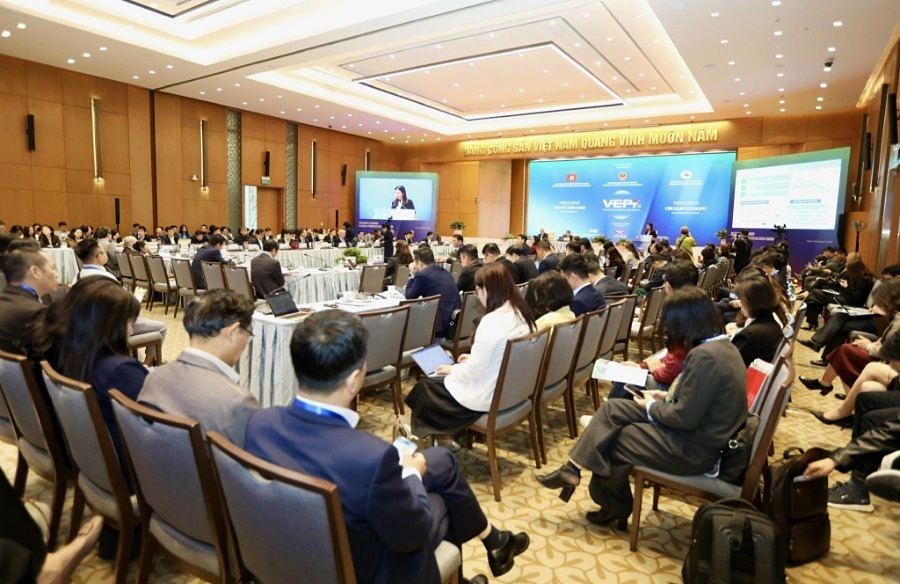
At a thematic session on the circular economy and green transformation on December 16, Pham Dai Duong, deputy head of the Party Central Committee’s Policy and Strategy Commission, said Vietnam must achieve a breakthrough in its growth model to meet long-term development goals set by the Party.
Vietnam aims to become a developing country with modern industry and upper-middle income by 2030, and a high-income developed economy by 2045. To reach these targets, Duong said the country would need to sustain double-digit economic growth during 2026–2030 and beyond.
The new growth model must be sustainable, inclusive and comprehensive, focusing not only on growth but also on quality, efficiency and competitiveness, Duong said, adding that the model would be shaped by four transformational shifts.
These four transitions, according to the official, include digital transformation to build a digital economy and society; green transformation to ensure sustainable, climate-resilient development; energy transition to guarantee energy security and meet Vietnam’s net-zero emissions commitment by 2050; and transformation of the structure and quality of human resources to meet the demands of a knowledge-based economy.
In his view, digital and green transitions are no longer optional but inevitable and mutually reinforcing, often referred to as a dual transition. Digital transformation creates speed and intelligence, boosting productivity and enabling high-value digital industries, while green transformation ensures sustainability and social equity without sacrificing long-term environmental and social well-being.
The circular economy, as a driver of green transformation in the digital era, closely linked to science, technology, innovation and digitalisation, is a strategic pillar of the new growth model and a key to Vietnam’s breakthrough development, he said.
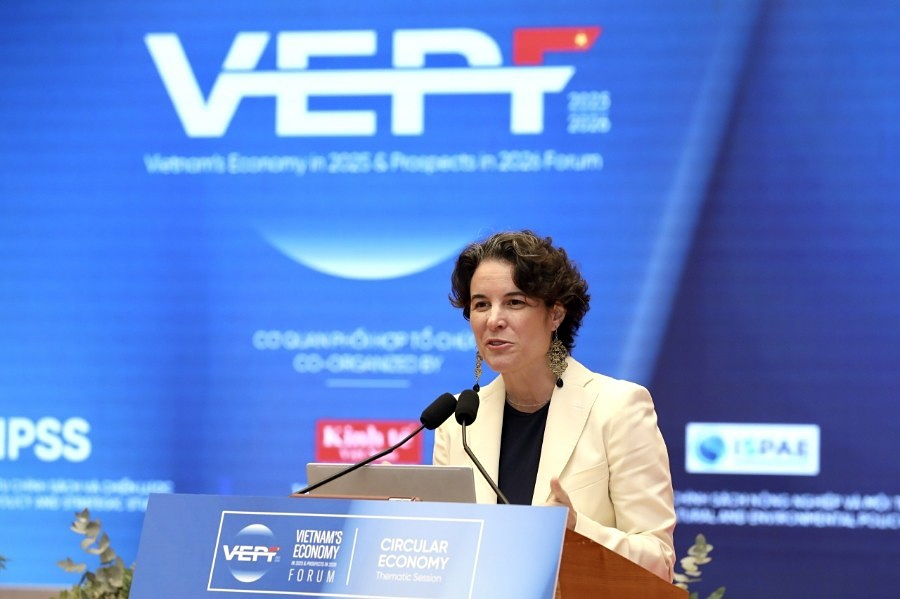
Francesca Nardini, Deputy Resident Representative of the United Nations Development Program (UNDP) in Vietnam, pointed out that despite growing awareness of sustainability, the global economy remains largely linear. Only about 6.9% of the global economy currently operates on a circular model, a figure expected to reach just around 7% in 2025.
Linear economic models based on “take-make-use-dispose” generate large volumes of waste and place heavy pressure on the environment, she said, while economic value often leaks along supply chains instead of being retained. By contrast, a circular economy extends the life cycle of materials through reuse and recycling, retaining value within the economy for longer.
The circular economy is not only an environmental issue but also an important economic strategy, Nardini said, noting its relevance for Vietnam as one of Southeast Asia’s fastest-growing economies.
Data from Europe and the Organisation for Economic Co-operation and Development (OECD) indicate that Vietnam has a solid foundation to implement a circular economy model. Projections suggest that by 2030 and 2050, circular economy practices could reduce municipal waste by 30–34%, cut greenhouse gas emissions by 40–70%, create jobs, strengthen economic resilience and reduce dependence on imported raw materials.
According to the United Nations Development Program, agriculture and food systems are among the priority sectors, accounting for about 11.6% of the country’s GDP and 26% of total employment. Vietnam currently produces around 100–105 million tonnes of agricultural output each year, consuming large amounts of energy and resources, which gives the sector significant potential for circular solutions.
The energy sector is also a key pillar, contributing roughly 4% of GDP and employing nearly four million people. Improving energy efficiency and applying circular economy approaches in this sector would help reduce pollution and enhance the competitiveness of the economy.
Vietnamese economy demonstrates resilient strength, PM Chinh says
VOV.VN - Prime Minister Pham Minh Chinh has affirmed the country’s determination to maintain macroeconomic stability, control inflation, and ensure major economic balances to create favorable conditions for rapid and sustainable growth.