Vietnamese economy demonstrates resilient strength, PM Chinh says

VOV.VN - Prime Minister Pham Minh Chinh has affirmed the country’s determination to maintain macroeconomic stability, control inflation, and ensure major economic balances to create favorable conditions for rapid and sustainable growth.
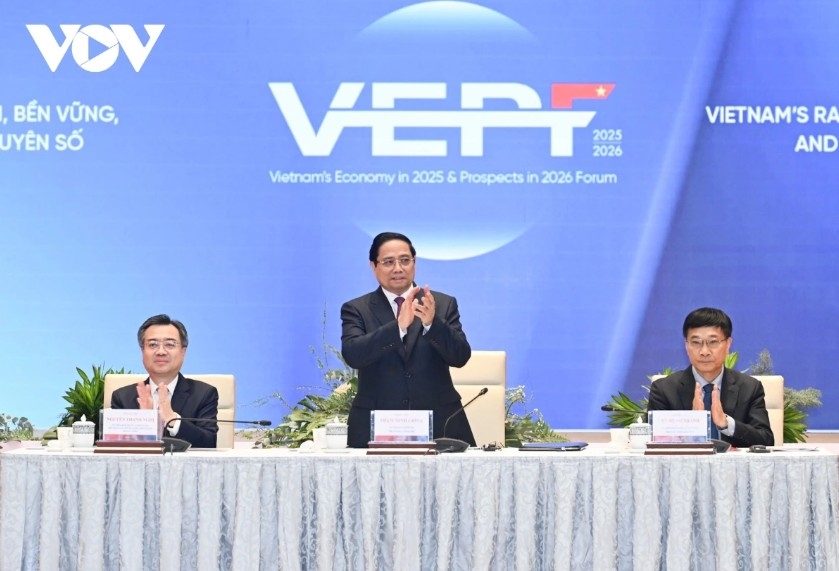
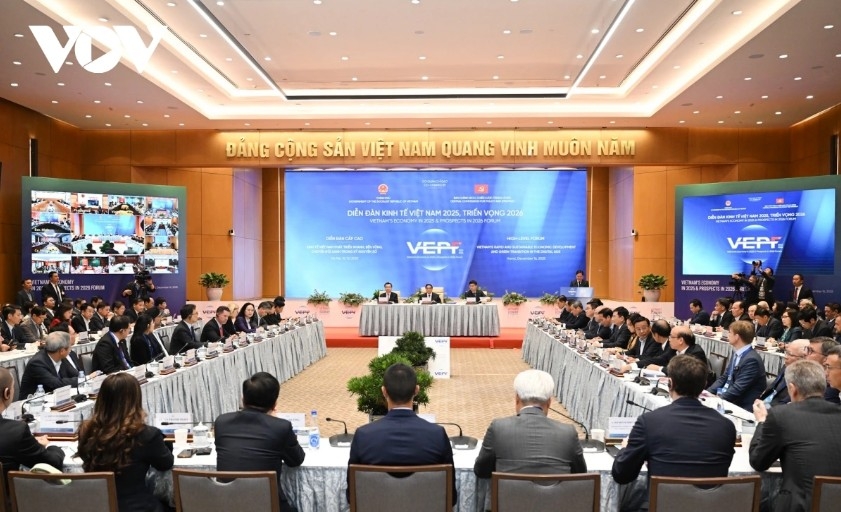
Prime Minister Pham Minh Chinh attended the Vietnam Economy& Prospects in 2026 Forum, themed “Vietnam’s rapid and sustainable economic development and green transition in the digital age.” in Hanoi on December 16.
Reviewing macroeconomic performance in 2025, Nguyen Duc Hien, Deputy Head of the Central Policy and Strategy Committee, reported that Vietnam’s economy grew by over 8% last year, ranking among the fastest-growing in the region and outperforming many countries worldwide.
Agriculture achieved positive growth of 3.92%, contributing 0.41 percentage points to overall GDP despite numerous severe natural disasters. The manufacturing sector rebounded strongly, growing 9.7% and adding 2.34 points to GDP, driven by strong export performance and investment. The services sector continued its recovery with double-digit growth, while construction expanded around 11%, raising its contribution to 0.73 points thanks to the implementation of major infrastructure projects.
To achieve double-digit growth in 2026 and maintain fast, sustainable expansion through 2026-2030, Hien stressed the importance of keeping inflation stable at about 4% per year. He noted that high growth accompanied by excessive inflation would diminish the value of growth. Proposed measures include coordinated fiscal and monetary policies, targeted public investment disbursement, sectoral tax reductions, tailored monetary policies, and financial resource mobilization through bond issuance and strategic use of pension and social insurance funds.

Mariam Sherman, World Bank Country Director for Vietnam, highlighted the outlook for the global and Vietnamese economies in 2025 and offered policy recommendations for 2026-2030. She emphasized the importance of a strong private sector, human capital and technology development, sustainable infrastructure, green growth, equitable distribution of economic gains, and institutional modernization.
Sherman noted that Vietnam has the potential to adapt, diversify growth drivers, deepen regional partnerships, accelerate reforms, enhance competitiveness, and respond to global uncertainties, drawing on decades of past achievements since 1986.
She also stated that while Vietnam’s 2045 goals are ambitious, they remain achievable through bold and determined policy actions, clear targets, consistent reform pathways, and courage in tackling challenges.
Tim Evans, CEO of HSBC Vietnam, expressed the bank’s commitment to supporting Vietnam in mobilizing capital for high growth and sustainable development from 2026-2030. He stressed the need to enhance transparent governance, adopt widely recognized management practices, improve financial reporting quality, accelerate digital and AI adoption to add value to goods and services, and strengthen capital and credit markets to diversify investment sources.

At the forum, Minister of Agriculture and Environment Tran Duc Thang outlined strategies for climate-resilient, green agricultural development, while Hanoi People’s Committee Chairman Vu Dai Thang presented solutions to achieve 11% growth in 2026, aiming to position Hanoi as a national growth hub.
Acknowledging the diverse proposals to promote rapid, sustainable, and green development in the digital era, PM Chinh affirmed Vietnam’s resilient economic performance, with growth among the highest in the region and globally. He reiterated the country’s determination to maintain macroeconomic stability, control inflation, and secure key economic balances to foster a conducive environment for fast, sustainable development.

The Government chief also emphasized the importance of driving rapid, sustainable growth through a “dual transformation” approach of green and digital development, targeting double-digit growth while preserving macroeconomic stability and strengthening the economy’s resilience and competitiveness.
"He stressed enhancing analytical and forecasting capacity to respond flexibly and effectively to external fluctuations, and pushing institutional breakthroughs to transform bottlenecks into key drivers of growth. Digital, green, and circular economy initiatives should be supported through experimental mechanisms."
He also laid stress on building a comprehensive, modern strategic infrastructure system to facilitate digital and green transformation. Utilizing new development spaces via inter-regional connectivity projects, promoting new economic models, free trade zones, and international financial centers can attract investment and technology. Priority will be given to FDI in high-tech, green, and circular industries, closely linked to domestic investment, he added.

Vietnamese economy looks toward high-quality integration in ASEAN
VOV.VN - Vietnam’s accession to ASEAN 30 years ago has marked a strategic turning point, transforming the country from a closed economy into an open, dynamic, and deeply integrated player in both regional and global markets.