
Resolution 59: Leveraging global integration to strengthen Vietnam’s growth drivers

VOV.VN - Issued on January 24, 2025, the Politburo’s Resolution No. 59 on international integration in the new context has marked a clear shift in Vietnam’s integration strategy.
Rather than focusing primarily on expanding trade relations, the country is increasingly leveraging external engagement to attract advanced technology, knowledge and high-quality resources.
One year into implementation, this shift has become more evident. Amid intensifying global competition in technology, science and innovation are emerging as critical drivers of national competitiveness, strengthening internal capacity and enabling sustainable development.
Integration as a catalyst for breakthroughs
From a business perspective, enterprises are actively translating the Resolution’s orientation into practice. Vu Thanh Thang, director of AIZ JSC in Hanoi, noted that his firm has partnered with Qualcomm, one of the world’s leading chipset manufacturers, to adopt advanced technological solutions.
In recent years, AIZ has integrated Qualcomm’s artificial intelligence inference systems with software developed by Vietnamese engineers. This cooperation model has enabled the company to gradually build a relatively comprehensive AI ecosystem, including data analytics systems, a “digital brain” for enterprise management, and integrated digital processes.
According to Thang, as international markets increasingly demand sustainability, green transition and ESG compliance, technology plays a central role. It enables businesses to measure emissions, optimise resource use and calculate carbon credits transparently. In this context, technology and green standards are not separate goals but mutually reinforcing pillars of long-term development strategies.
He emphasised that Resolution 59 identifies technological cooperation as a key external resource. In a highly competitive global environment, Vietnamese enterprises cannot develop technology in isolation; international collaboration is essential for differentiation and breakthrough growth.
To strengthen internal capacity, AIZ has adopted a ‘shared value’ approach. While international partners provide core technology platforms and infrastructure, Vietnamese engineers develop data platforms and customized AI solutions tailored to domestic conditions. This “50–50” model allows local teams to gradually master key components of technological systems, enhancing autonomy and adaptability.
Harnessing external relations to attract high-quality resources
From a policy perspective, Dr. Loc Thi Thuy, a researcher at the Institute for European and American Studies under the Vietnam Academy of Social Sciences, noted that Resolution 59 has created an important framework linking political diplomacy with economic and science-technology diplomacy.
Over the past year, the implementation of technology cooperation agreements, particularly in digital infrastructure, green transition and advanced technologies, has gained momentum. Strategic partnerships with major international partners are opening access to cutting-edge technologies, high-quality investment capital and global expert networks.
A notable shift, according to Dr. Thuy, is that Vietnam is no longer solely seeking capital but is proactively negotiating investment agreements tied to technology transfer, human resource development and the growth of domestic innovation ecosystems. This approach aligns with the goal of using external economic relations as a channel to absorb global knowledge while strengthening internal capacity.
However, challenges remain. Mobilising non-state resources for science and technology continues to face financial and regulatory constraints. In addition, shortages of highly skilled workers in key sectors such as semiconductors, microchips and high-tech logistics require urgent attention.
To attract international experts and overseas Vietnamese talent, Dr. Thuy stressed the need for consistent, transparent and long-term policies. Beyond income incentives, creating a professional research environment, ensuring autonomy and adopting performance-based evaluation mechanisms are essential. Flexible participation models, including remote collaboration in research, policy advisory and technology startups, should also be promoted.
She added that developing internationally standardized R&D centres linked with high-tech parks and innovation hubs will be critical to attracting and retaining talent.
Turning global integration into internal strength
After one year of implementation, Resolution 59 has not only expanded Vietnam’s international cooperation space but also driven domestic reforms. It has encouraged both government agencies and businesses to adopt more proactive and adaptive approaches, marking a shift in Vietnam’s integration mindset.
Going forward, the key lies in effectively leveraging external economic relations to acquire advanced technology, knowledge and management expertise, while improving domestic institutions to transform these resources into real capabilities.
In the context of a global transition toward digital, green and circular economies, international integration is no longer just about expanding cooperation, it is about converting global strengths into endogenous drivers, enabling Vietnam to achieve stronger and more sustainable growth in the years ahead.
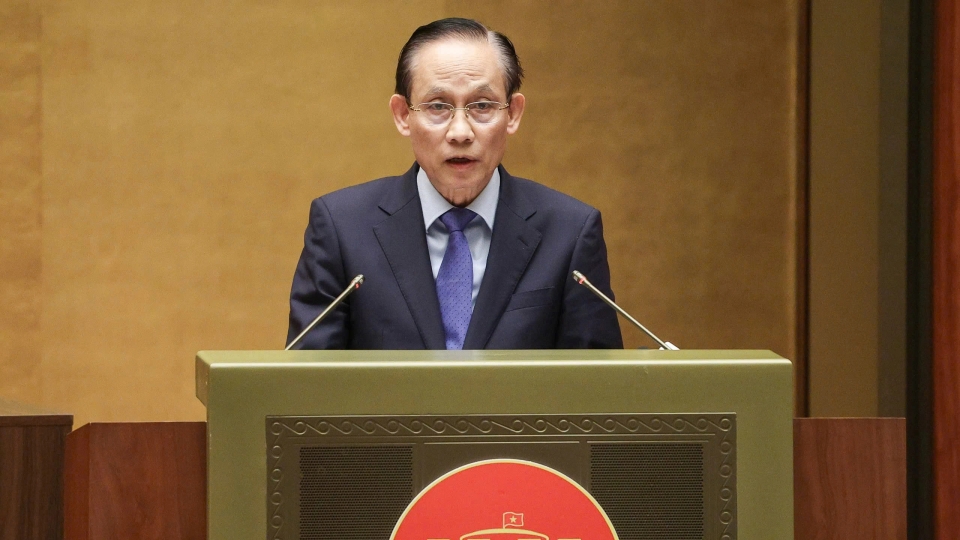
Diplomacy in a new era to match Vietnam’s stature and global standing
VOV.VN - Vietnam must elevate its diplomacy to a new level commensurate with the country’s historical legacy, cultural identity and growing international standing, Politburo member and Foreign Minister Le Hoai Trung said on February 7.

