Politburo resolution strengthens state sector, targets global champions by 2030

VOV.VN - The Politburo has issued a new resolution outlining an ambitious roadmap to strengthen the State-owned sector, aiming to build globally competitive State-owned enterprises (SOEs), modernise strategic infrastructure and unlock key national resources.
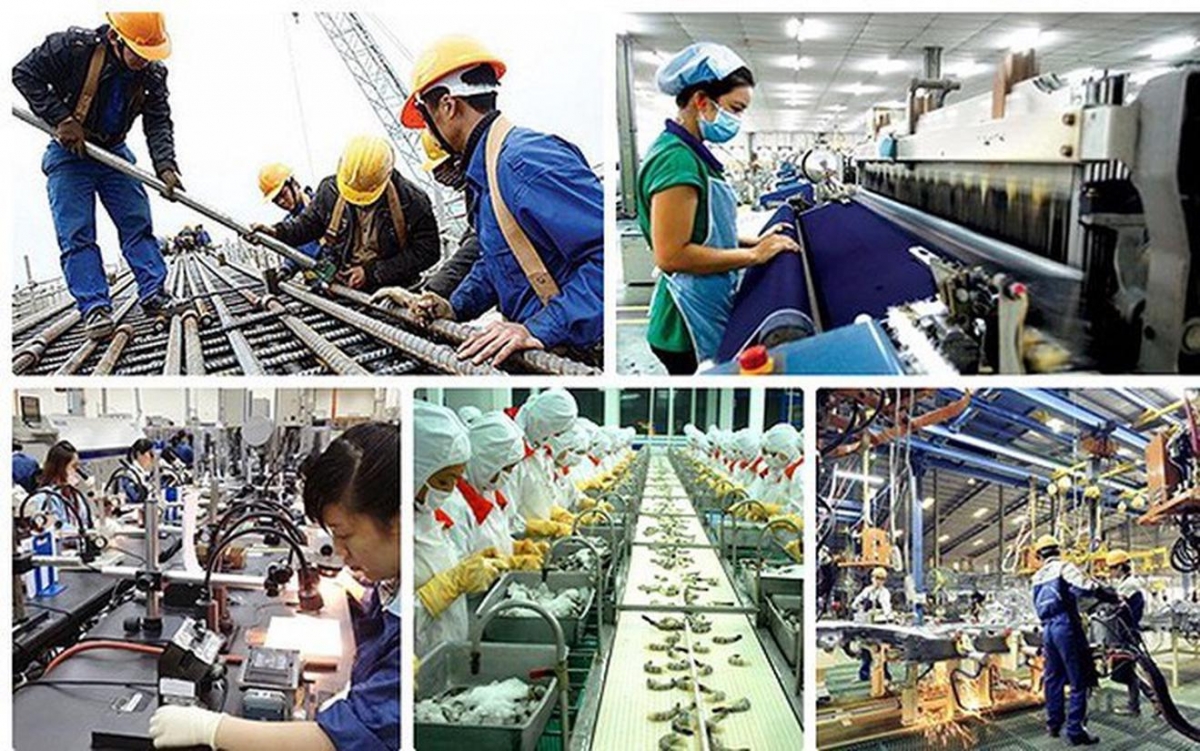
Resolution 79 signed by Party General Secretary To Lam reaffirms that the state sector plays a leading role in Vietnam’s socialist-oriented market economy, serving as a pillar for macroeconomic stability, national security and long-term development.
Expanding the scale and global presence of State-owned enterprises
Under the Resolution, Vietnam targets 50 SOEs among Southeast Asia’s 500 largest companies by 2030, with one to three SOEs entering the world’s top 500 corporations. By 2045, those figures are expected to rise to around 60 SOEs regionally and five globally.
The government plans to develop large, modern State-owned conglomerates capable of competing at regional and international levels, particularly in strategic sectors, while playing a leading role in global supply chains.
All SOEs are required to adopt modern digital governance systems, with major State-owned groups applying OECD corporate governance standards by 2030.
The resolution also sets goals for the financial sector, aiming to place at least three State-owned commercial banks among Asia’s 100 largest banks by total assets. Four major State-owned banks are expected to take a leading role in technology, governance capacity and market regulation.
Authorities plan to continue increasing charter capital for State-owned banks to improve financial resilience and capital adequacy. The Vietnam Development Bank and the Vietnam Bank for Social Policies will undergo comprehensive restructuring to enhance efficiency and policy effectiveness.
Ending overlapping inspections and protecting reform-minded officials
A key reform commitment in Resolution 79 is to end overlapping, prolonged and unnecessary inspections, audits and examinations, which have long been cited as obstacles to business operations.
The Politburo calls for stronger use of digital platforms in inspection and auditing, aligned with national digital transformation plans, and orders strict handling of any abuse of inspection powers that causes disruption to organisations and enterprises.
The resolution also stresses the need for robust mechanisms to protect officials who dare to innovate and take responsibility for the common good, provided no corruption or personal gain is involved.
Land reform and resource management
Resolution 79 places land and natural resources at the centre of economic reform. Vietnam aims to complete nationwide land measurement, digitisation and data cleansing by the end of 2026, paving the way for more efficient land use and planning.
The Politburo instructs relevant agencies to finalise and enact a revised Land Law in 2026, together with detailed implementation guidelines, to remove legal bottlenecks and unlock land-based resources for development.
The revised framework will promote equal access to land for all economic sectors, prioritise land allocation for infrastructure, industry, services and social housing, and enforce the recovery of land that is misused or left idle.
Strategic infrastructure and new growth sectors
The resolution calls for accelerated development of national strategic infrastructure, focusing on large-scale, inter-regional projects that enhance domestic and international connectivity.
Vietnam will expand public–private partnership models, including hybrid mechanisms such as “public investment – private management” and “private investment – public use”, to improve infrastructure efficiency and transparency.
Emerging sectors highlighted include the digital economy, data markets, aerospace, low-altitude economy and space-based industries, supported by controlled regulatory “sandbox” mechanisms.
The state will also strengthen governance of maritime, airspace and underground resources, while encouraging SOEs to invest overseas in mineral exploration and processing where domestic reserves are limited.
Vision to 2045
The Politburo resolution sets out a vision for 2045 in which Vietnam’s state sector becomes a solid foundation for strategic autonomy, self-reliance and the overall competitiveness of the economy.
Under the vision, the state sector is expected to operate with modern, transparent and efficient governance, possess strong competitiveness and integrate deeply into the global economy, while delivering high-quality public services. It is envisaged to work alongside other economic sectors to help Vietnam achieve its goal of becoming a high-income, developed country by 2045.
The resolution sets long-term targets including national reserves equivalent to 2% of GDP, expanded global presence of SOEs, and at least 50% of public service units operating on a fully or largely self-financed basis under market mechanisms.
The resolution also outlines a broad set of tasks and solutions, calling for a fundamental shift in leadership and governance thinking, moving from administrative control toward a development-oriented, modern and action-driven governance approach.
It stresses the need to complete a coherent and transparent legal framework, promptly remove institutional bottlenecks, and create a fair, open and predictable business environment, while strengthening human resources—particularly senior managers, leaders and technical experts.

Vietnam, Laos boost strategic cooperation through SOE reform experience
VOV.VN - Prime Minister Pham Minh Chinh has praised the results of bilateral cooperation across multiple areas, particularly the exchange of experience on state-owned enterprise (SOE) reform, a strategic area vital to sustainable economic development in both countries, and emphasized its positive contribution to strengthening the special solidarity and comprehensive cooperation between Vietnam and Laos.