Party Congress seen as milestone in shaping new growth model

VOV.VN - The 14th National Congress of the Communist Party of Vietnam is expected to mark a major shift in the country’s development mindset, including the establishment of a new growth model aimed at sustaining high economic growth over the coming decades.
Foundations for a new growth model
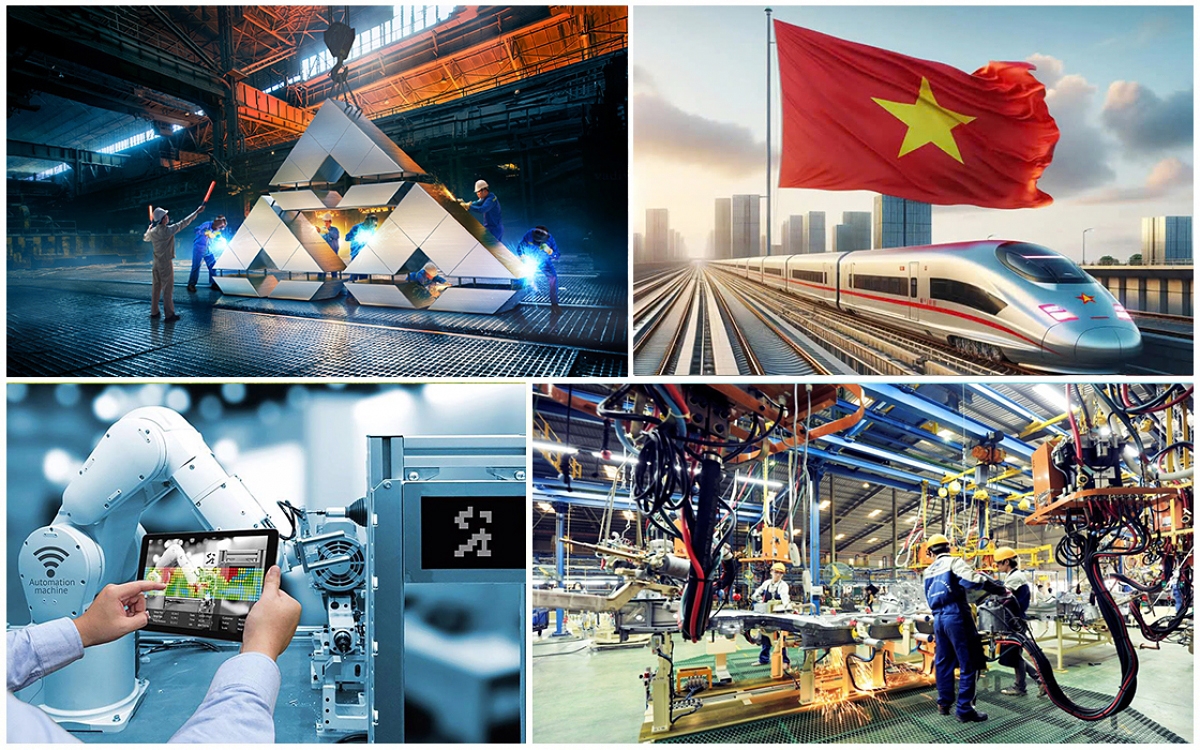
Despite mounting global uncertainties, Vietnam maintained macroeconomic stability and robust growth during the 2021–2025 period. Notably, the country’s gross domestic product (GDP) expanded by 8.02% in 2025, up from 7.09% in 2024.
Trade continued to be a key driver, with total import-export turnover hitting a record US$930.05 billion in 2025, an 18.2% increase year on year. Disbursed foreign direct investment (FDI) totalled US$27.62 billion, up 9% from the previous year and the highest level recorded during the 2021–2025 period.
Science and technology, innovation and digital transformation have increasingly emerged as new pillars of growth. The share of businesses adopting digital technologies has risen steadily, renewable energy development has accelerated, and the economic structure has shifted toward productivity, innovation and higher value-added activities. Institutional reforms have also gained momentum, with several key laws amended to support socio-economic development.
These developments are seen not only as strong growth outcomes, but also as a qualitative transformation that lays the groundwork for a new development model based on self-reliance, deeper international integration and sustainable growth.
Linking traditional and new growth drivers

National Assembly deputy Nguyen Thi Viet Nga said Vietnam’s new growth model must combine traditional drivers such as investment, exports and consumption with emerging drivers including science and technology, innovation, the digital economy, green growth and the circular economy.
She stressed that science and technology should sit at the core of development strategies, supported by incentives for research and development (R&D), innovation funds, public procurement for research, and a stronger start-up ecosystem. In the digital economy, data should be treated as a strategic resource, while digital infrastructure, cybersecurity and digital transformation across government and businesses must be advanced in parallel.
Green and low-carbon growth, she said, is no longer optional but essential for Vietnam’s deeper participation in global value chains that requires long-term and stable policy frameworks aligned with market mechanisms.
The new growth drivers would only be effective if underpinned by modern institutions, a highly skilled workforce and integrated infrastructure, Nga said, adding that implementation must balance breakthroughs with long-term consistency and sustainability.
Institutions as a decisive factor

Nguyen Bich Lam, former General Director of the General Statistics Office (now National Statistics Office), said effective institutions would be decisive in turning the new growth model into a long-term growth engine. Removing institutional bottlenecks, he added, should be a top priority.
He called for an inclusive, transparent institutional framework that places businesses and citizens at the centre, while recognising the private sector as the most important driver of economic growth and ensuring a level playing field for all enterprises.
The Party and the State should move quickly to develop and implement a national strategy to build strong domestic enterprises, backed by flexible institutional frameworks, policies and financing, in order to balance internal strengths with external resources, he suggested.
He also said policies should also enable the private sector to adopt new technologies and strengthen innovation capacity.
Strategic direction
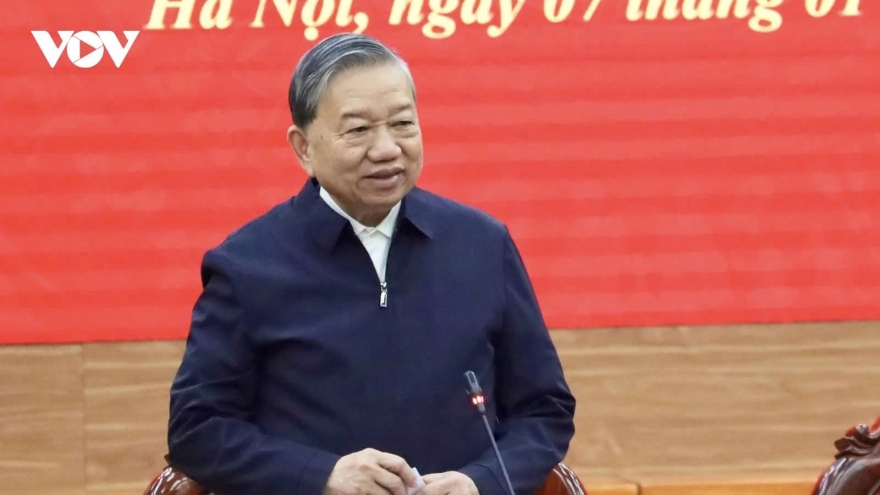
At a recent meeting with the Party’s Central Policy and Strategy Commission, Party General Secretary To Lam emphasised that upcoming resolutions on development model reform and high-growth strategies must be forward-looking, grounded in Vietnam’s realities, and highly actionable. He stressed the importance of mobilising broad consensus and inspiring national ambition based on knowledge and innovation.
Shifting to a growth model driven by science, technology and innovation is widely seen as essential to achieving Vietnam’s long-term development goals, including becoming an upper-middle-income economy by 2030 and a high-income country by 2045. In this framework, the state sector is expected to play a leading and enabling role, while the private sector is seen as the most important engine of national economic growth.

Vietnam signals need for shift in development model to meet long-term goals
VOV.VN - With the 14th National Congress of the Communist Party of Vietnam set to open in days, Vietnam is signalling a decisive shift in its development strategy, placing science, technology, innovation and digital transformation at the centre of long-term growth.