Vietnam signals need for shift in development model to meet long-term goals

VOV.VN - With the 14th National Congress of the Communist Party of Vietnam set to open in days, Vietnam is signalling a decisive shift in its development strategy, placing science, technology, innovation and digital transformation at the centre of long-term growth.
The Congress, widely viewed as a critical milestone, will not only review nearly four decades of economic reform but also set the development model that will shape Vietnam’s trajectory for decades to come.
Business as usual is no longer an option

After nearly 40 years of reform, Vietnam has recorded strong economic expansion, rising living standards and growing international standing. However, traditional growth drivers are losing momentum, while labour productivity, growth quality and competitiveness remain constrained. At the same time, the space for extensive growth is narrowing.
These challenges are unfolding against a rapidly changing global environment marked by intensifying strategic competition, supply chain realignments and accelerating technological disruption.
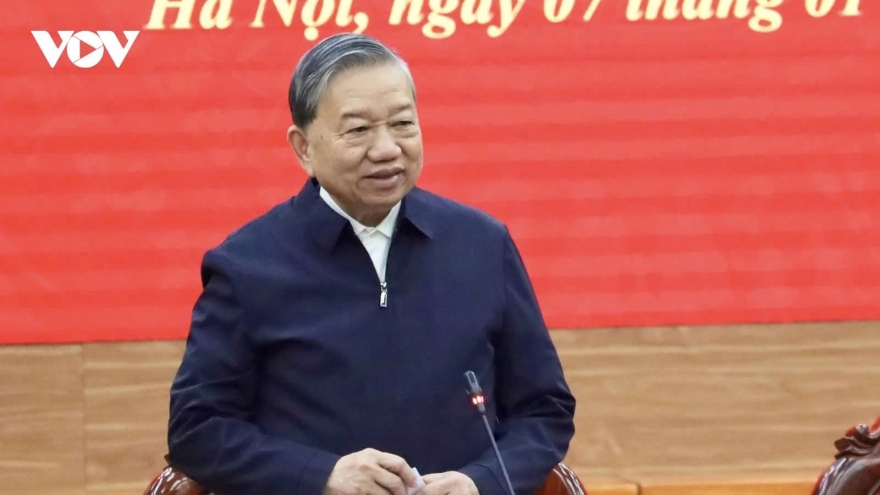
At a recent national conference reviewing government performance, Party General Secretary To Lam stressed that Vietnam “cannot continue operating on old momentum,” calling instead for a fundamental shift in development thinking, governance methods and resource allocation. He underscored the need for deep, decisive institutional reform, stronger decentralisation and a more effective implementation framework.
According to the General Secretary, improving productivity, upgrading human capital and accelerating science, technology and innovation must become the central pillars of Vietnam’s development strategy - a clear signal of transition from a resource-based development model toward one driven by knowledge, technology and innovation capacity.
From policy direction to concrete action
In recent years, this strategic orientation has begun to translate into tangible policy measures. Vietnam has stepped up efforts in science and technology, innovation and digital transformation, while gradually refining its policy framework. A national innovation ecosystem is taking shape, with stronger participation from the state, businesses, research institutes and universities.
Notably, the development approach has shifted from fragmented initiatives to coordinated, national-level planning. The launch of the National Innovation Centre and the National Data Centre reflects a recalibration of how development resources are mobilized, moving from broad-based support toward focused investment in priority areas, particularly emerging and core technologies seen as critical to long-term competitiveness and global value chain positioning.
Early results are reflected in international benchmarks. In 2025, Vietnam ranked 44th out of 139 economies in the Global Innovation Index. Digital transformation linked with administrative reform is being advanced with citizens and businesses at the centre, supporting the gradual development of a digital government, digital society and digital citizenship.
Project 06 on population data and electronic identification has delivered concrete socio-economic benefits, generating estimated savings of around VND3 trillion in social costs every year. More importantly, it has laid the groundwork for a more modern, transparent and efficient governance model.
A system-wide reform imperative
Despite initial progress, Vietnamese leaders have acknowledged that results remain uneven and largely at an early stage. Digital transformation and innovation efforts often lack depth, and outcomes have yet to match the country’s potential.
General Secretary To Lam pointed to institutional quality, implementation capacity and the vitality of the development model itself as the core challenges ahead, rather than external shocks or resource constraints. His remarks highlight a strong political resolve to address structural bottlenecks that could otherwise undermine Vietnam’s long-term growth ambitions.
The call to move from laying foundations to accelerating quality and scale, from short-term management to long-term growth creation, and from ad hoc responses to systemic reform is increasingly framed as a nationwide reform mandate requiring coordinated action across all levels of government.
The year 2026, marking the first year of implementation of the 14th Party Congress resolutions and the 2026–2030 socio-economic development plan, is expected to play a pivotal role in shaping Vietnam’s long-term development trajectory. The government’s target of GDP growth of 10% or higher underscores the scale of ambition and reinforces the view that reforming the development model is no longer optional.
As the 14th Party Congress approaches, the leadership’s policy messages signal a clear commitment to breaking with outdated growth patterns and building a new development model — one aimed not only at faster growth, but at more resilient, innovation-driven and sustainable economic expansion.
Sri Lanka praises CPV’s leadership role, studies Vietnam’s development model
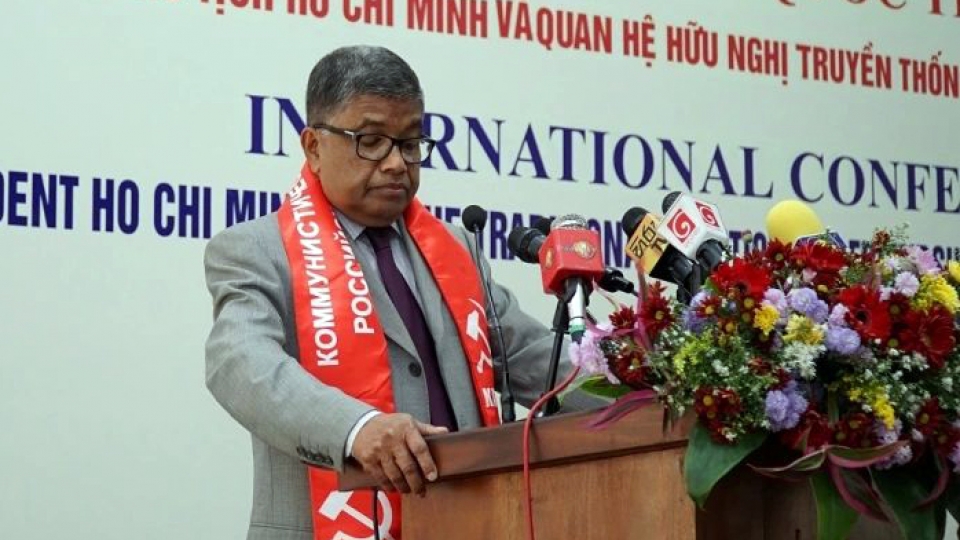
VOV.VN - Ahead of the 14th National Congress of the Communist Party of Vietnam (CPV), General Secretary of the Communist Party of Sri Lanka, G. Weerasinghe, has expressed strong admiration for the CPV’s leadership role and said Sri Lanka is closely studying Vietnam’s development model for possible adaptation.