No reported damage to Vietnam shipments to Israel amid Middle East tensions

VOV.VN - Vietnam has not recorded any damage to export shipments to Israel despite rising military tensions in the Middle East, according to officials at a trade promotion conference held in Hanoi on March 12.
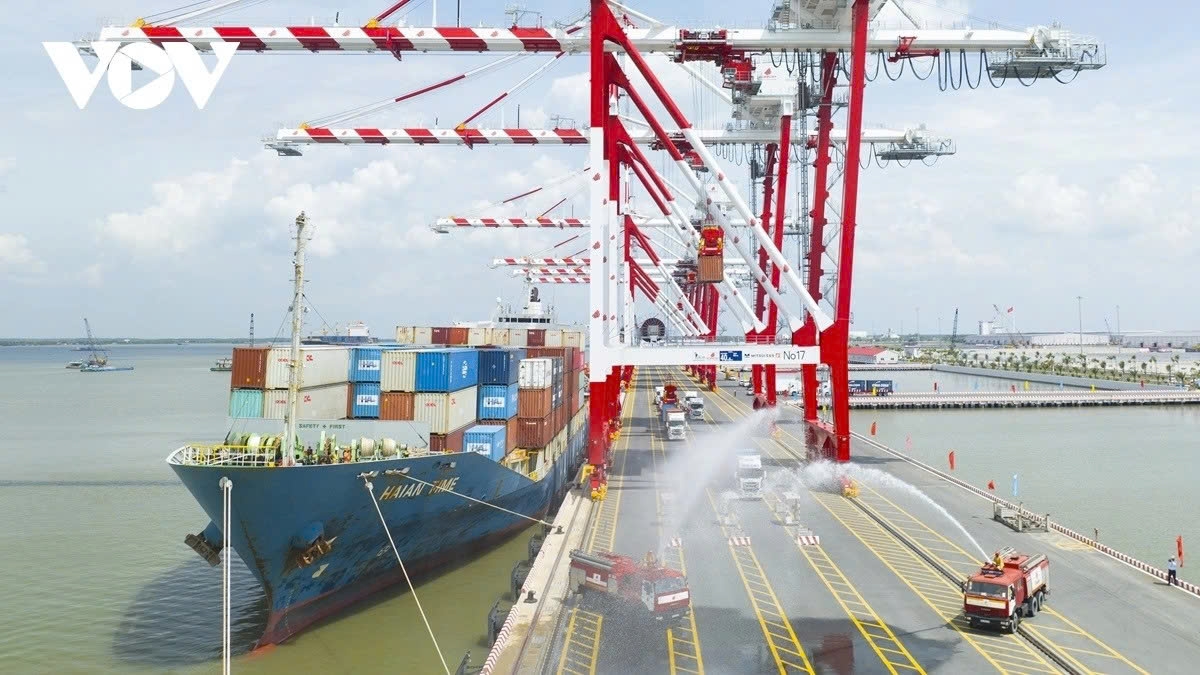
The update was delivered during the first-quarter 2026 trade promotion briefing organised by the Ministry of Industry and Trade, which connected Vietnam’s overseas trade offices to discuss solutions to boost foreign trade and support the country’s economic growth targets for the year.
Representatives of the Vietnamese Trade Office in Israel reported that, despite the increasingly complex security situation in the region, no specific losses have been recorded for import or export shipments between Vietnamese businesses and their Israeli partners.
They also confirmed that no Vietnamese business delegations currently working in Israel have been stranded due to the tensions.
According to trade data, Vietnam’s exports to Israel in the first two months of 2026 reached approximately US$178 million, marking a 21.75% increase compared with the same period last year.
Meanwhile, imports from Israel totaled around US$435 million, representing a 13.35% decline year on year.
The conference, held by the Ministry of Industry and Trade, focused on identifying measures to accelerate foreign trade development in line with the government’s economic growth targets for 2026.
Under the government’s policy direction, the ministry aims to achieve export growth of around 15–16% compared with 2025, with total export turnover projected to reach US$546–550 billion this year.
Despite the current stability in trade flows, the Vietnamese Trade Office in Israel warned that prolonged tensions in the Middle East could still create significant ripple effects on global economic activity.
Businesses’ risk concerns, along with rising oil prices, transportation costs, airfares and insurance fees, could increase production and living expenses, potentially adding inflationary pressure to economies worldwide.
Experts also noted that if military tensions persist, they may affect economic development plans in many countries, including Vietnam, particularly through fluctuations in energy prices and higher logistics costs.
Immediately after the tensions escalated in the region, the Vietnamese Trade Office in Israel coordinated with the Embassy of Vietnam in Israel and relevant agencies to activate emergency response measures.
The office has reported developments to both the Ministry of Foreign Affairs and the Ministry of Industry and Trade, while also ensuring the safety of staff members and office facilities.
Vietnamese enterprises have been advised to closely monitor the evolving situation, maintain regular contact with partners and shipping companies, and proactively prepare contingency plans for existing or ongoing contracts.
Companies are also encouraged to diversify markets, seek additional partners and identify alternative sources of supply in order to minimise risks amid regional instability.
At the same time, businesses should maintain cooperative relationships with Israeli partners, particularly major importers, so they can quickly resume and expand trade and investment activities once the situation stabilises.
According to the Import-Export Department under the Ministry of Industry and Trade, the ongoing tensions in the Middle East are currently expected to have more indirect than direct impacts on Vietnam’s trade activities.
This is partly because trade between Vietnam and the region still accounts for a relatively small share of the country’s total export turnover.
However, fluctuations in global energy prices and maritime transportation costs remain key factors that authorities and businesses will need to monitor closely in the coming period.
Which Vietnamese industries could be hit hardest by Middle East tensions
VOV.VN - Tensions in the Middle East are pushing global oil prices and energy costs higher, adding pressure on inflation, exchange rates and production costs. In that context, many Vietnamese businesses, particularly in fuel-intensive industries, export sectors and aviation, could face greater financial strain.