Ho Chi Minh City eyes free trade zone as new growth engine

VOV.VN - Ho Chi Minh City is facing a rare opportunity to establish and develop a free trade zone (FTZ) linked to production, logistics and commercial-service hubs, a move that could create a new growth engine for the city and Vietnam’s southern key economic region.
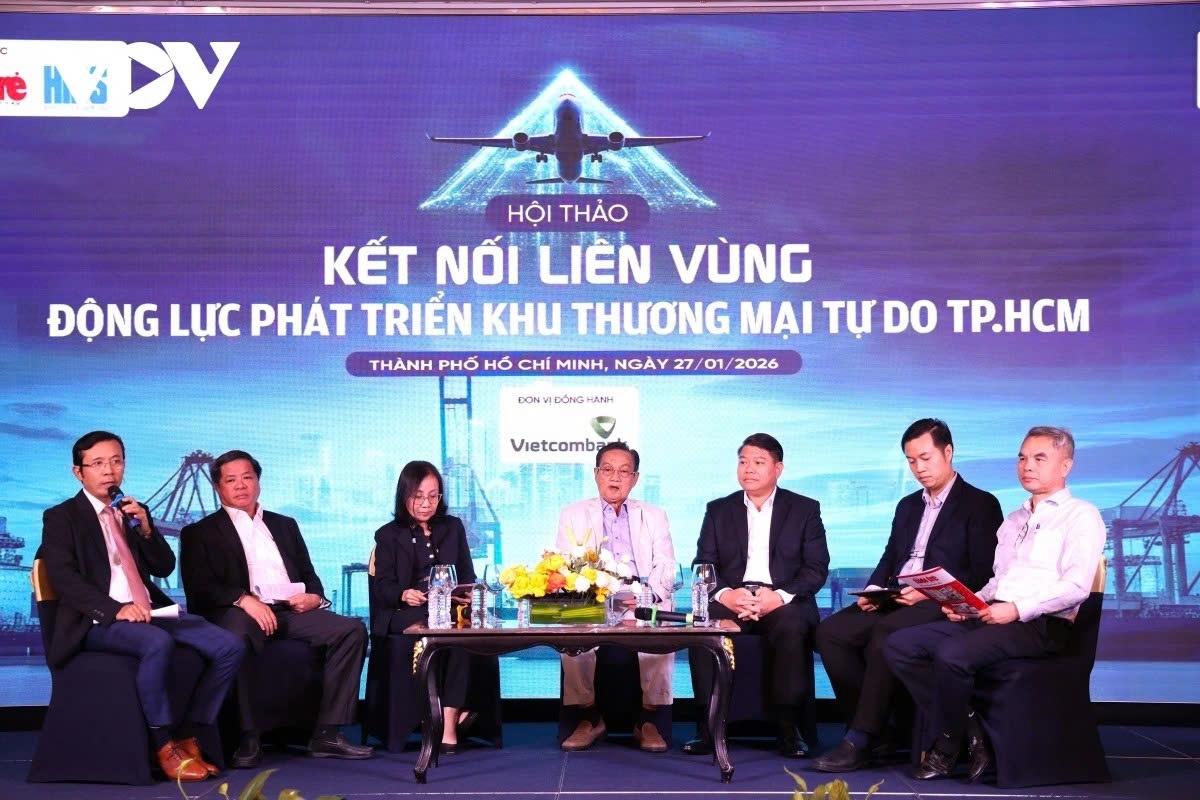
The assessment was highlighted at a seminar titled “Regional Connectivity – A Driving Force for the Development of Ho Chi Minh City’s Free Trade Zone”, jointly organised on January 27 by Tuoi Tre (Youth) Newspaper, the city’s Department of Industry and Trade, the Ho Chi Minh City Institute for Development Studies and the Ho Chi Minh City Export Processing and Industrial Zones Authority.
Tran Xuan Toan, deputy editor-in-chief of Tuoi Tre, said regional connectivity is improving rapidly thanks to a series of strategic infrastructure projects, including the Bien Hoa–Vung Tau Expressway, Ben Luc–Long Thanh Expressway, expansion of the Ho Chi Minh City–Long Thanh–Dau Giay Expressway and planned railway links.
Combined with special mechanisms on taxation, administrative procedures, finance and human resource development under National Assembly Resolution 98 and Resolution 260, the city now has a favourable legal foundation to pursue the development of a free trade zone, he said.
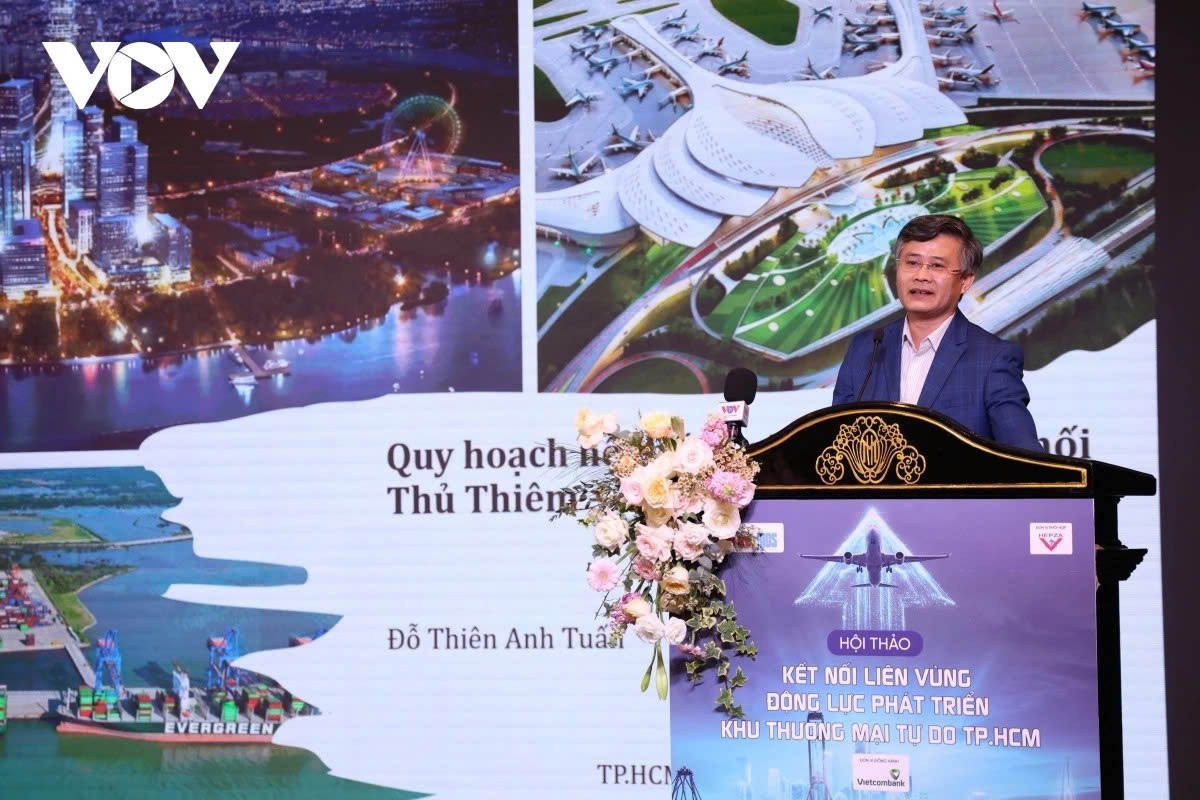
At the seminar, Dr. Do Thien Anh Tuan of Fulbright School of Public Policy and Management and other experts said the Cai Mep–Thi Vai port cluster has strong potential to become a leading maritime economic hub and free trade zone in Southeast Asia. It is one of the few deep-sea ports in the region capable of handling vessels of more than 200,000 tonnes.
Compared with Van Phong Port in northern Vietnam, the Cai Mep–Thi Vai area – particularly Cai Mep Ha – has superior advantages thanks to its proximity to major industrial centres, large cargo volumes and a well-developed logistics system, experts said.
“Vietnam has two mega ports capable of receiving large vessels, but Van Phong lacks sufficient cargo sources and industrial support,” Dr. Tuan said. “If Cai Mep Ha is seen only as a geographical advantage for Ho Chi Minh City and not as a foundation for a free trade zone, that would be a missed opportunity.”
From a regional perspective, Vu Chi Kien, deputy director of the Ho Chi Minh City Institute for Development Studies, pointed out that the integration of Binh Duong and Ba Ria–Vung Tau into the city’s development space has created a super urban–industrial–logistics region of more than 6,770 square kilometres.
In this structure, Cai Mep Ha is positioned as an international maritime gateway and a strategic location for an FTZ, serving as a “core hub” to reshape regional value chains.
“The Ho Chi Minh City FTZ, or Cai Mep Ha FTZ, should be oriented toward logistics and trade linked to the deep-sea port,” Kien suggested. “Its core functions would be international transshipment, regional distribution, port logistics services and maritime-related commercial activities.”
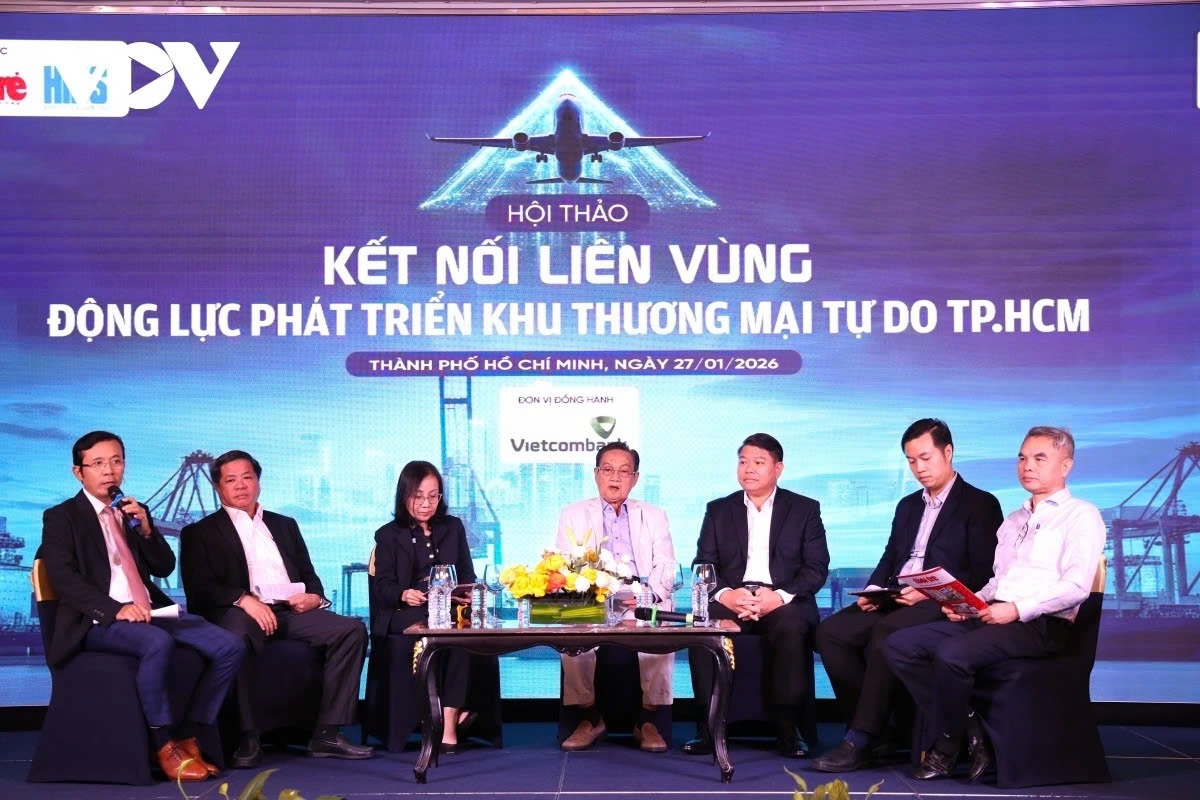
Economist Tran Du Lich said amendments under Resolution 260 have given Ho Chi Minh City significant autonomy, particularly in developing a free trade zone associated with the Cai Mep–Thi Vai port complex.
“The key issue now is no longer asking for more mechanisms, but how to organise implementation effectively,” he said, noting that there are about 5,600 free trade zones worldwide and that the city must identify the right advantages and strategic industries.
He suggested prioritising high value-added sectors closely linked to global value chains, including semiconductors, artificial intelligence, research and development, new materials, energy and digital infrastructure, as well as equipment manufacturing for offshore oil and gas and offshore wind power.
To attract strategic investors, the city’s free trade zone must demonstrate long-term market scale and its ability to integrate deeply into global value chains, he added.
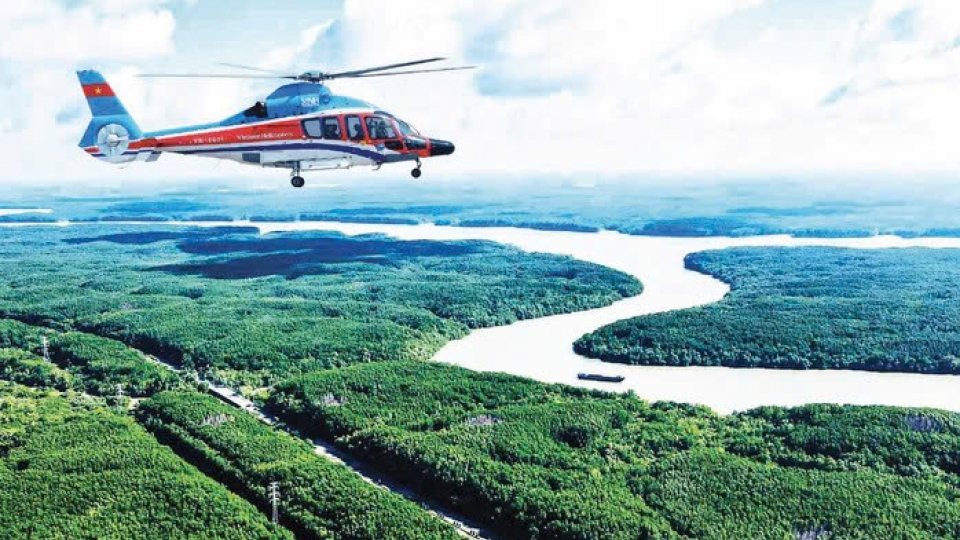
HCM City set to relaunch helicopter sightseeing tours
VOV.VN - Ho Chi Minh City is set to relaunch helicopter sightseeing tours with fares starting from around VND 3 million per passenger, with the first flights expected to take off in March 2026.