




Fuel and electricity price cuts yet to benefit consumers

VOV.VN - Fuel and electricity price cuts in Vietnam have yet to translate into lower prices for many consumer goods and services, as businesses face different cost structures, existing contracts and delays in passing savings on to consumers.
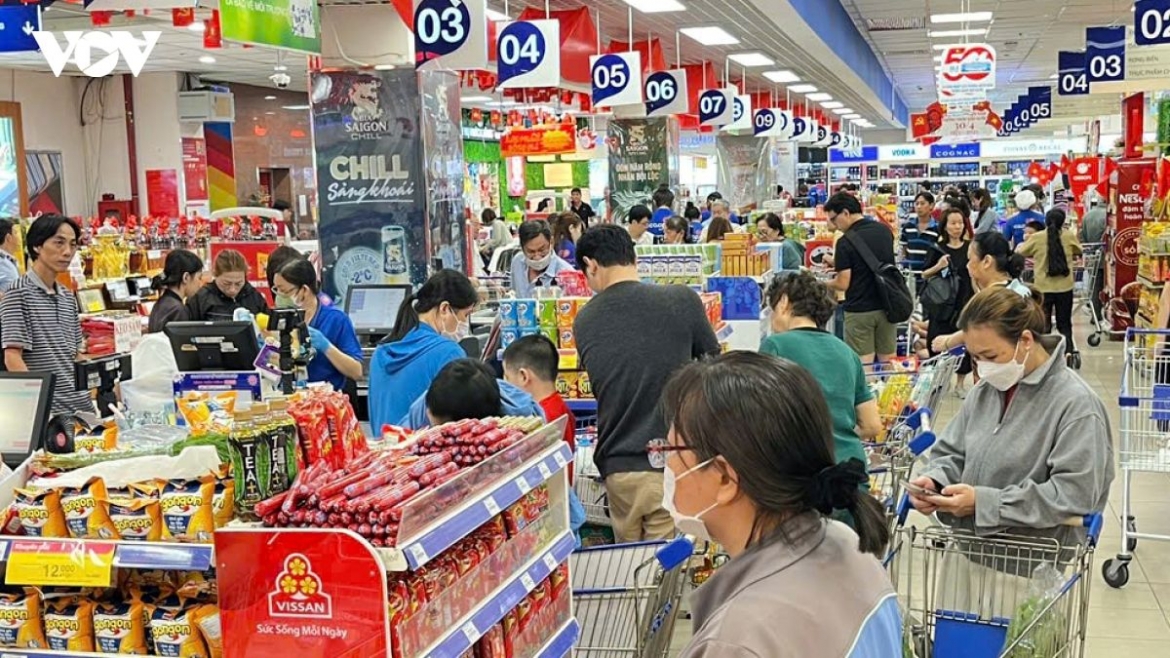
A 2% reduction in retail electricity prices and the removal of the special consumption tax on petrol from November 1, 2026 were expected to ease businesses’ input cost pressures, lower production expenses and help households save money. The measures were also intended to support efforts to contain inflation.
Yet, as of November 10, many consumer goods and essential services had shown little sign of becoming cheaper. Food prices at supermarkets and traditional markets were generally stable, while some products had even become more expensive due to weather-related factors.
Hoang Ngoc Anh, a pork seller at Nguyen Cong Tru Market in Hanoi’s Hai Ba Trung Ward, said wholesale pork prices at slaughterhouses had remained unchanged. Transport, quarantine and market fees had also stayed the same, leaving retailers with little room to reduce selling prices.
Farmers are still facing high costs for animal feed, livestock care and labour, she explained. Further expenses are incurred during transportation, slaughter, quarantine and preservation before meat reached retailers. Electricity and fuel are only part of the overall cost structure, meaning that reductions in these inputs would not necessarily lead to immediate cuts in retail prices.
The same issue is evident in transport. A truck driver, who requested anonymity, operating a regular route between Bac Thang Long Industrial Park in Hanoi and Chua Ve Port in Hai Phong, said his company had yet to announce any freight rate reductions.
Although diesel prices had fallen, the decrease was much smaller than that for petrol. Transport contracts also typically calculate fuel costs on a quarterly basis and allow for a certain range of fluctuations, meaning freight rates are generally reviewed only after a three-month cycle.
Why lower input costs take time to reach consumers
Economist Ngo Tri Long, a member of the Vietnam Financial Consultants Association, said the slow response of retail prices raised questions about how effectively lower input costs were being passed on to consumers.
Petrol prices fell by approximately 18% over three price adjustment periods between November 1 and 5, easing some cost pressures on businesses and households. However, an 18% reduction in fuel prices does not translate into an equivalent reduction in the prices of goods and services, he noted.
“If fuel accounts for 30% of a transport company’s total operating costs, an 18% reduction in fuel prices would lower its overall costs by only about 5.4%, assuming other factors remain unchanged,” Assoc. Prof. Dr. Long explained.
He stressed that this was an illustrative calculation, as the actual impact depended on each company’s cost structure and the extent of price changes across different types of fuel.
In fact, in the November 5 adjustment, E5 RON92 petrol fell by VND2,305 per litre, while diesel prices declined by only VND180 per litre. The reduction in petrol prices therefore could not be applied uniformly to freight operators that mainly use diesel.
Businesses also had to account for inventories purchased at higher prices, existing contracts and other operating expenses that had yet to decline. These factors contribute to a time lag in the transmission of lower input costs to final prices, commonly referred to as cost pass-through.
However, Assoc. Prof. Dr. Long highlighted a broader concern over asymmetric price adjustments. Businesses often raise selling prices relatively quickly when input costs increase, but tend to reduce them more slowly when costs fall.
If this pattern persists without reasonable economic justification, the benefits of tax reductions may not be fully passed on to consumers and could instead be retained by businesses or intermediaries.
The impact of the measures should therefore be assessed not only through retail fuel prices, but also through changes in transport fares, logistics costs and the prices ultimately paid by consumers. The issue goes beyond individual price adjustments to involve market competition and transparency.
Long said businesses had the right to set their own prices in a market economy, and the State should not require all companies to apply uniform price cuts. However, pricing autonomy must go hand in hand with compliance with laws on pricing and competition.
Regulators need to distinguish between legitimate delays caused by cost structures and contractual arrangements, and cases in which businesses exploit market conditions to maintain unreasonably high prices.
For sectors particularly exposed to fuel and electricity costs, including transport, logistics and goods distribution, authorities should regularly monitor input costs and selling prices and step up inspections when unusual developments emerge, he said.
In highly concentrated markets, particular attention should be paid to preventing anti-competitive agreements and the abuse of dominant market positions. Greater transparency in pricing would also enable consumers to make informed choices and encourage fairer competition.
Asymmetric pricing raises questions over market competition
At a November 9 meeting of the Government’s Steering Committee for Price Management, Deputy Minister of Industry and Trade Nguyen Viet Son also called for lower electricity and fuel costs to be reflected in the prices of goods and services that use these inputs. The Ministry of Industry and Trade urged ministries, sectors and local authorities to strengthen inspections and monitoring and ensure that selling prices are adjusted appropriately when input costs decline.
According to Assoc. Prof. Dr. Long, the State should not replace market mechanisms in determining prices, but must ensure transparent and healthy competition and prevent businesses from taking advantage of a lack of transparency.
“If the State budget has already borne the cost of tax reductions but consumers do not receive commensurate benefits, the policy’s objectives of supporting purchasing power and curbing inflation will be undermined,” he concluded.
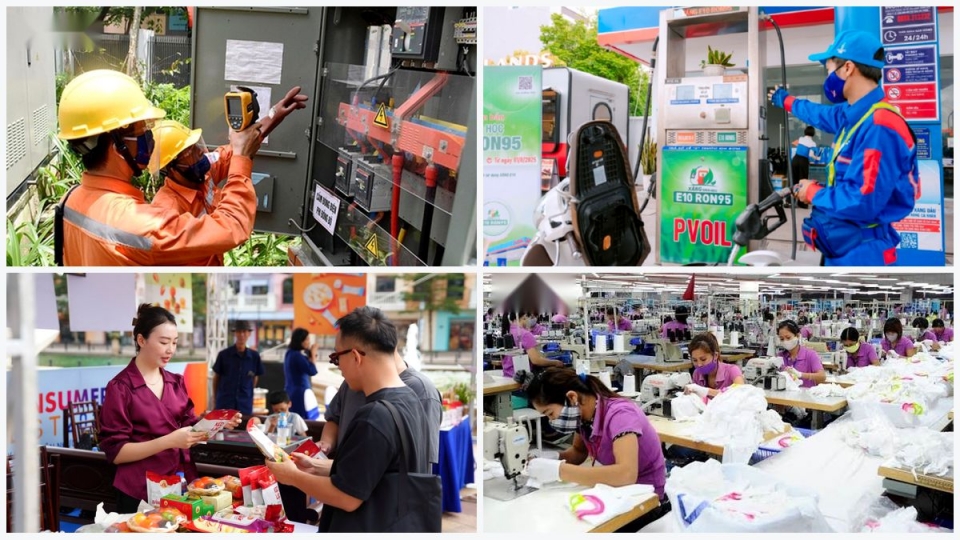
Energy price cuts aim to ease year-end economic pressures
VOV.VN - Vietnamese regulatory agencies’ recent decisions on electricity price reduction and temporary petrol tax cut are expected to ease cost pressures, moderate inflation and support household purchasing power as the economy enters the final months of 2026.


