


Energy price cuts aim to ease year-end economic pressures

VOV.VN - Vietnamese regulatory agencies’ recent decisions on electricity price reduction and temporary petrol tax cut are expected to ease cost pressures, moderate inflation and support household purchasing power as the economy enters the final months of 2026.
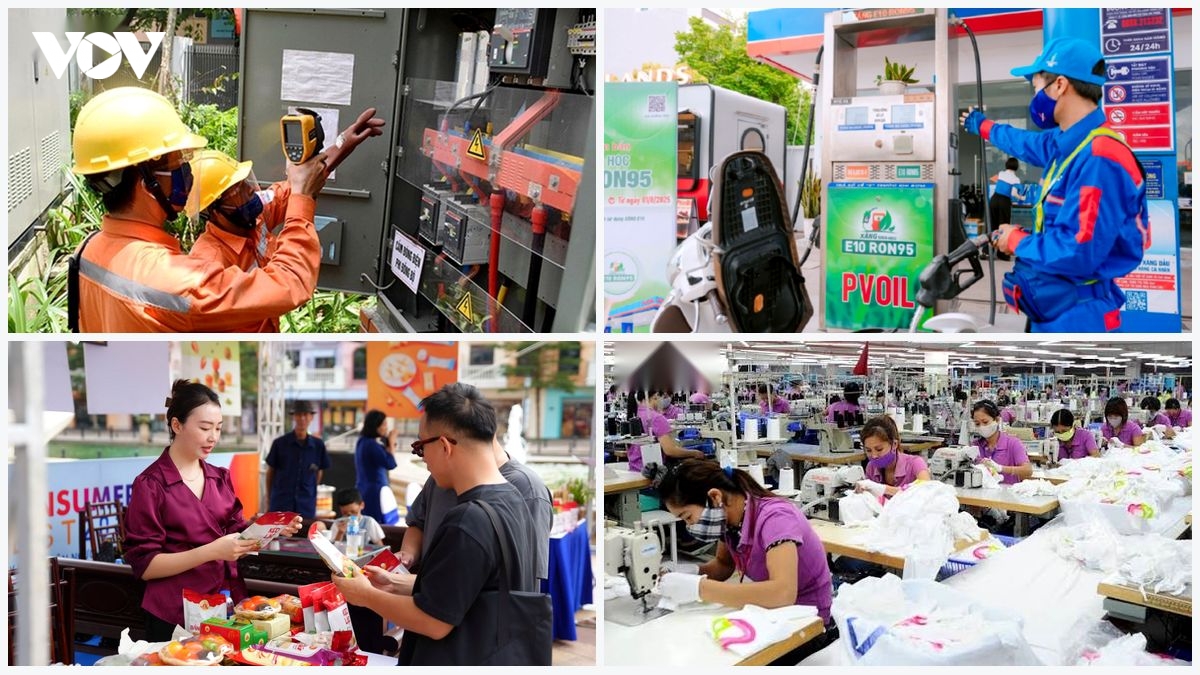
Vietnam has reduced average retail electricity prices by 2% and cut the special consumption tax on petrol to zero from November 1, aiming to ease financial pressure on households and businesses while supporting macroeconomic stability.
According to Vietnam Electricity (EVN), the average retail electricity price has fallen to VND 2,159.90 per kilowatt-hour, excluding value-added tax. Under Government Resolution No. 45/2026/NQ-CP, the 0% tax rate on petrol will remain in effect until March 31, 2027.
The measures come as inflationary pressures persist. The consumer price index (CPI) rose 4.52% year on year in the first nine months of 2026, while the Ministry of Finance has outlined full-year inflation scenarios of 4.5% and 4.8%.
Lower energy costs could help contain inflation
Lower electricity and petrol prices can ease cost-push inflationary pressures by reducing household expenses and businesses’ production, transport and distribution costs.
Nguyen Tien Thoa, chairman of the Vietnam Valuation Association, argued that the measures could help contain inflation at a time when room for price stabilisation is limited. He pointed to the 4.52% CPI increase in the first nine months of the year as a challenge for meeting the annual inflation target.
Experts calculated that the 2% electricity price reduction is projected to lower the CPI by approximately 0.08 percentage points. This estimate relates to the electricity adjustment alone, not the combined impact of both measures.
However, seasonal demand, faster public investment disbursement, credit growth and fluctuations in global energy prices could continue to put pressure on prices. The cuts should therefore be seen as a contribution to inflation management rather than a guarantee of lower inflation.
Businesses stand to gain from lower input costs
Cheaper electricity and petrol could reduce operating expenses, improve cash flow and support profit margins, particularly for energy-intensive manufacturers and businesses reliant on transport and logistics.
Economist Ngo Tri Long of the Vietnam Financial Consultants Association explained that lower energy prices could ease input costs and reduce upward pressure on goods and service prices. The measures could consequently help businesses manage expenses alongside supporting economic growth.
The benefits, however, will vary by sector. Energy accounts for different shares of production costs, while higher raw material prices, financing expenses or labour costs could offset some of the savings.
A key question is price transmission - whether lower costs at the production and distribution stages translate into cheaper goods and services. Businesses may instead use some savings to offset other expenses or rebuild margins, meaning consumers may not immediately benefit from the full reduction.
Household purchasing power depends on price transmission
For households, lower electricity bills and petrol prices could ease living costs and leave more disposable income for other spending. If businesses pass on part of their energy savings, consumers may also benefit from slower increases in transport fares and retail prices.
The impact will nevertheless differ across households. A 2% reduction in the average electricity price does not mean every household’s total bill will fall by the same proportion, as actual expenditure depends on consumption and the applicable tariff structure.
Nor do lower fuel costs automatically translate into lower prices throughout the economy. Effective price monitoring is important to ensure that savings are passed on where justified, particularly in transport and the distribution of essential goods.
Policy relief must be balanced against wider economic risks
The measures provide timely support as Vietnam seeks to sustain growth while keeping inflation under control. Yet their effectiveness will depend on broader macroeconomic conditions, including domestic demand, exchange-rate movements and international energy prices.
Stronger consumption and public investment can support economic activity, but may also add to inflationary pressure if supply cannot respond quickly enough. Meanwhile, a renewed rise in global fuel prices could erode some of the benefits.
The temporary nature of the petrol tax reduction also matters: its scheduled end in March 2027 means the lower rate should not be treated as permanent.
Ultimately, Vietnam’s energy price cuts offer a buffer against year-end cost pressures, rather than a standalone solution to inflation. Their wider economic value will depend on whether the savings help moderate prices, strengthen household purchasing power and improve business conditions without creating additional macroeconomic imbalances.
Inflation control key to maintaining growth momentum
Vietnam's inflation stayed elevated in the first nine months of 2026 even as the economy grew strongly, making price stability a core part of efforts to preserve macroeconomic stability and protect social welfare.


