Export competitiveness must go beyond price as global supply chains reshape: forum

VOV.VN - Export competitiveness must be built on quality, sustainability, traceability and strong branding rather than price alone as global supply chains undergo rapid restructuring and trade standards become increasingly stringent, experts said at a trade forum in Hanoi on February 3.

The forum, held within the framework of the ongoing Spring Fair 2026, brought together government agencies, trade promotion organisations, industry associations and businesses to discuss solutions to strengthen the position of Vietnamese products in global trade chains.
Hoang Minh Chien, deputy director of the Vietnam Trade Promotion Agency (Vietrade), said the key challenge is not only to maintain export growth but also to increase value across the entire chain, from design and raw materials to production, branding and distribution.
“Boosting product value cannot stop at the production stage alone; it must be carried out throughout the entire chain, from design and raw materials to manufacturing, brand building, distribution and expansion into international markets,” said Chien.
Export performance and structural issues
Vietnam’s total import-export turnover reached US$930.05 billion in 2025, up 18.2% from a year earlier, according to data presented at the forum. Exports alone rose 17% to US$475.04 billion.
Manufactured and processed goods generated US$421.5 billion, accounting for 88.7% of total exports. The country recorded 36 export items with turnover exceeding US$1 billion each, including eight products surpassing US$10 billion each.
Tran Quoc Toan, deputy director of the Import-Export Department under the Ministry of Industry and Trade, said the figures reflect Vietnam’s growing production capacity and deeper integration into global markets, but structural weaknesses remain.
Exports still rely heavily on foreign-invested enterprises, while domestic firms have limited participation in higher value-added segments of supply chains, he pointed out.
Future policy priorities will focus on improving growth quality, increasing local content, promoting supporting industries and building national brands for Vietnamese products, he stressed.
Digital channels and B2B e-commerce
Rising costs of traditional trade promotion have accelerated interest in digital platforms as alternative channels for international market access, particularly for small and medium-sized enterprises.
At the forum, the Ministry of Industry and Trade and Alibaba.com Vietnam introduced plans to expand cooperation on cross-border B2B e-commerce.
Under the 2026–2027 “Vietnam Pavilion” project on Alibaba.com, Vietnamese companies will be supported to improve brand visibility, credibility and direct access to global buyers.
According to experts, combining traditional trade promotion with digital platforms will help Vietnamese businesses expand markets, diversify partners, and gradually move deeper into higher value-added segments of the global trade chain.
Bottlenecks in key export sectors

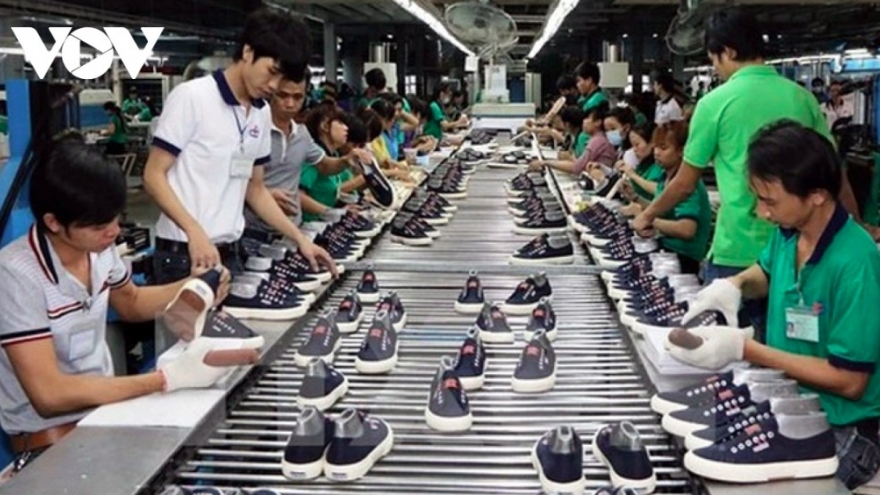
Phan Thi Thanh Xuan, vice chairwoman and secretary general of the Vietnam Leather, Footwear and Handbag Association (LEFASO), said many businesses still prioritise shipment volume over value creation.
Footwear exports remain heavily dependent on the US market, which accounts for about 40% of total shipments. Vietnam currently faces reciprocal tariffs of around 20%, comparable to China but higher than India and Indonesia.
She argued low localisation of raw materials, at around 50–55%, along with shortages of skilled designers and weak branding capacity, are major constraints.
Ngo Sy Hoai, chairman of the Vietnam Timber and Forest Products Association (Vietfores), recalled wood and forestry exports brought back about US$17.2 billion in 2025, rising 5.7%, below industry expectations.
More than half of the sector’s exports go to the US market, exposing companies to growing trade defence risks. To reach a target of US$19 billion in 2026, the industry must diversify markets and shift towards original design and brand development, he said.
Leveraging trade agreements
Vietnam has signed 17 free trade agreements (FTAs), which experts viewed as a key engine for expanding and diversifying export markets.
Toan, deputy director of the Import-Export Department, revealed, the Ministry of Industry and Trade is continuing to work with relevant ministries and agencies to negotiate and implement new agreements, while supporting businesses in making better use of preferences under free trade agreements.
Furthermore, he placed particular emphasis on the role of rules of origin policies, noting that the issuance and refinement of origin regulations help businesses better understand the requirements of each market, take advantage of tariff preferences, define market strategies and enhance competitiveness.
Seafood exports post 13% growth in early 2026
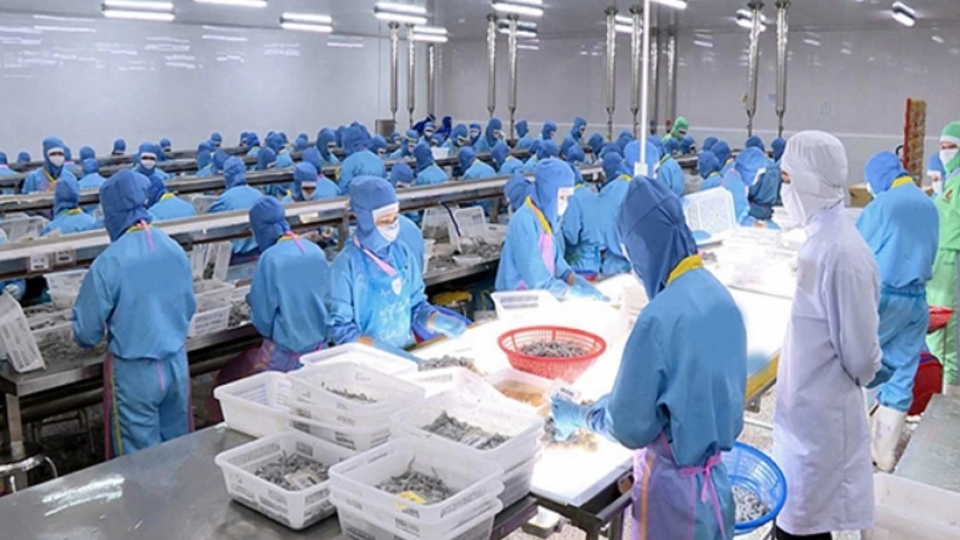
VOV.VN - Vietnam’s seafood export turnover reached approximately US$874 million in January 2026, up 13% year on year, as exporters worked to maintain orders amid continued pressure on global seafood trade from technical barriers and tariffs in several major markets, the Vietnam Association of Seafood Exporters and Producers (VASEP) reported on February 3.