Beyond the old model: Vietnam seeks long-term growth drivers

VOV.VN - As legacy growth engines slow, Vietnam is betting on high-tech investment and climate-focused capital to fuel its next economic leap.
No more room for the old growth model
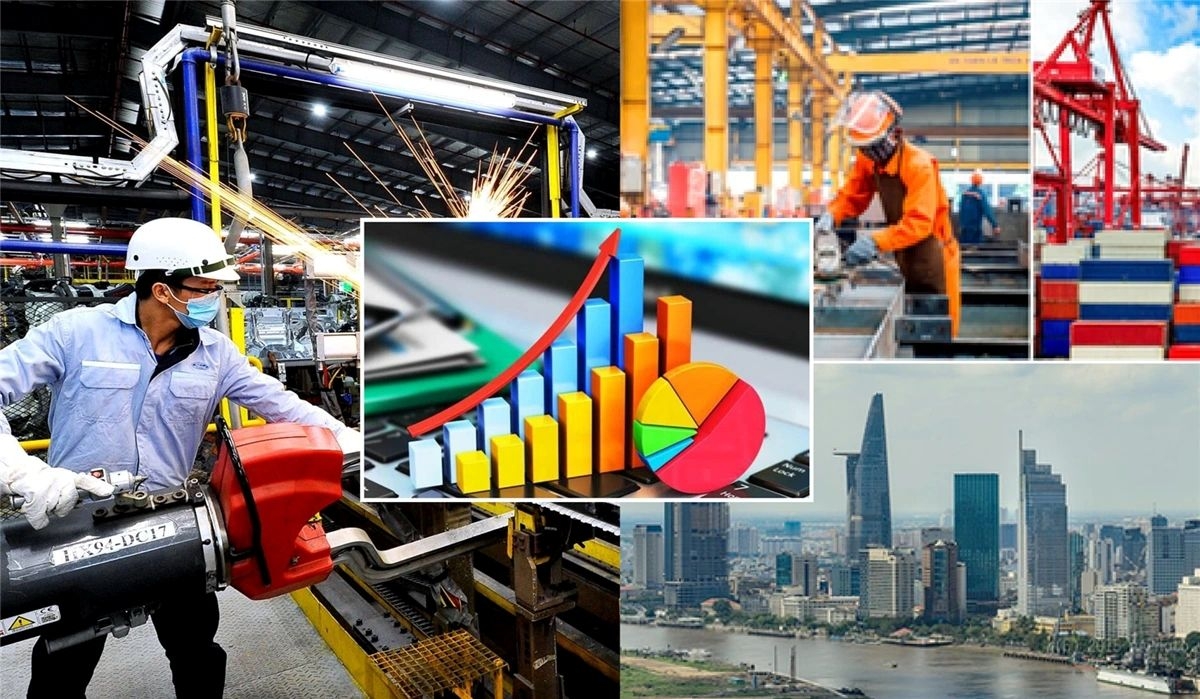
Vietnam is standing at a critical juncture in its development trajectory. As traditional growth drivers gradually lose steam, repositioning the growth model toward green, sustainable development anchored in science, technology, and innovation is no longer optional, it has become imperative.
According to Deputy Minister of Finance Do Thanh Trung, the new development phase sets higher strategic objectives, requiring Vietnam to redefine its position amid a volatile global economic landscape. Achieving high and sustainable growth will demand breakthroughs in mobilising and allocating resources, innovating the growth model, expanding development space, and focusing on long-term structural transformation.
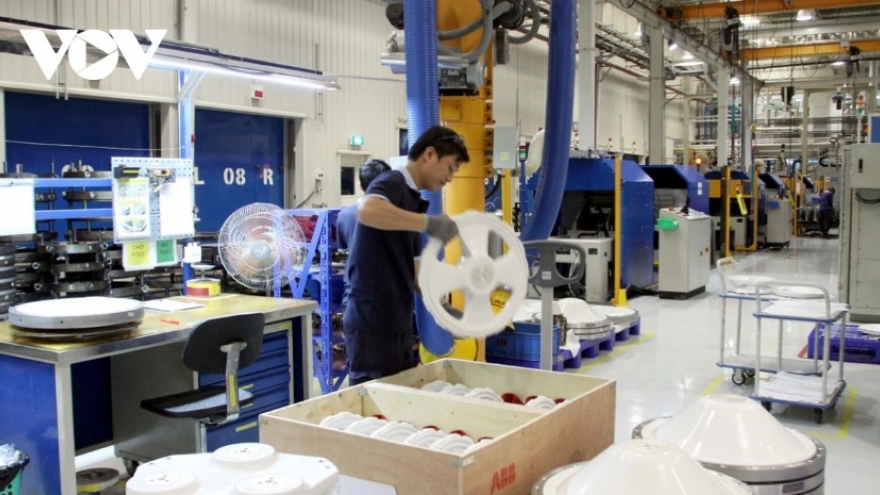
In this renewed model, the roles of economic sectors are more clearly delineated. The State is expected to act as a facilitator and strategic guide, prioritising investment in critical infrastructure and building a transparent regulatory framework. The private sector is identified as the primary engine of innovation, leading in digital economy activities, advanced manufacturing, and high-quality services. Meanwhile, foreign direct investment (FDI) will be selectively attracted, with emphasis on next-generation technology transfer and adherence to international environmental, social and governance (ESG) standards.
Parallel to deepening structural reforms, unlocking new growth spaces at the regional and local levels, and fostering emerging growth poles, is seen as essential to realising Vietnam’s development goals toward 2030 and its longer-term vision to 2045.
However, the economic outlook is mixed. Nguyen Nhu Quynh, director of the Institute of Strategy and Policy on Finance and Economy, notes that Vietnam’s economy is currently “neither pessimistic nor truly optimistic.” Structural weaknesses persist, and the risk of being trapped in the middle-income bracket is tangible. Lingering bottlenecks, if unresolved, could constrain future progress.
“It will be difficult to achieve new results without new approaches,” Quynh emphasises. “What matters most is a renewed development mindset, new leadership methods, and a fundamentally different growth model capable of unlocking new resources and development spaces.”
Seizing high-tech investment amid global supply chain restructuring
In the new growth paradigm, innovation has emerged as a central pillar, particularly as Vietnam’s labour productivity remains modest and global technological competition intensifies.
Vu Quoc Huy, director of the National Innovation Centre (NIC), points out that international experience suggests innovation accounts for approximately 50–70% of long-term growth in upper-middle-income economies. In contrast, models based on low-cost labour and capital expansion are reaching their limits.
Productivity data underscore the urgency of transition. In 2023, Vietnam’s labour productivity measured by purchasing power parity (PPP) stood at just over 11% of Singapore’s level and 27% of the Republic of Korea’s, with significant gaps remaining relative to Japan and Malaysia. Average productivity growth over the past decade was 4.5% annually, highlighting the constraints of traditional growth drivers.
As global supply chains continue to realign, Vietnam has opportunities to attract research and development (R&D) and high-tech investment from the United States, Japan, the Republic of Korea, and Europe. However, Huy stressed that capturing this opportunity requires a robust institutional framework to genuinely foster innovation.
This direction has been formalised in Resolution No. 57-NQ/TW, which identifies science, technology, innovation, and digital transformation as strategic breakthroughs. The Law on Science, Technology and Innovation, effective from October 1, 2025, establishes a comprehensive legal framework for innovation activities, with the same date designated as Vietnam’s National Innovation Day.
At the implementation level, the NIC is leading a semiconductor workforce development programme targeting at least 50,000 engineers and 1,300 lecturers by 2030. Partnerships with Cadence and Siemens EDA provide access to advanced chip design software, while cooperation programmes with Google, Intel, and Samsung in artificial intelligence, Internet of Things (IoT), and big data are accelerating high-tech talent development.
Yet challenges remain substantial. Demand for AI engineers is growing by roughly 40% annually, while training capacity meets only 30–35% of demand. The target of 50,000 semiconductor engineers by 2030 has reached approximately 20,000 so far. Brain drain, limited R&D investment, and resource constraints within the early-stage startup ecosystem continue to pose structural hurdles.
Strengthening policy frameworks to drive green growth
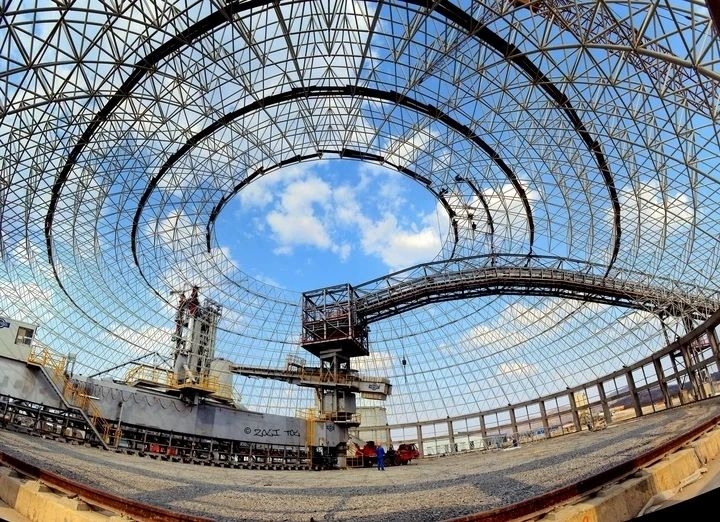
Alongside innovation, green transition has been identified as the second strategic pillar of Vietnam’s new growth model.
David Ambadar, project director for Shifting Investment Flows Towards Green Transformation' (SHIFT) project at the German Society for International Cooperation (GIZ), observed that Vietnam has been gradually strengthening its policy framework through key resolutions on private sector development, energy security, and the establishment of an international financial centre.
Estimates from the World Bank suggest Vietnam will require approximately US$368 billion to finance its green transition, including US$184 billion from the private sector, US$130 billion from public sources, and US$54 billion from international capital. To achieve net-zero emissions by 2050, annual investment needs are projected to peak at around US$118 billion between 2036 and 2040. The Power Development Plan VIII alone requires US$136.3 billion by 2030, with over 70% expected from private investors.
Vietnam’s green finance market has made measurable progress. As of September 2025, outstanding green credit reached VND742 trillion. Green bonds issued between 2022 and mid-2025 totaled roughly VND25 trillion, while the domestic carbon credit market reached approximately VND15 trillion. Renewable energy accounts for the largest share of green lending, and corporate bonds in the sector amounted to VND84 trillion during 2019–2023.
Experts note that the convergence of innovation-driven growth and green transformation is shaping Vietnam’s two principal economic engines for the coming decade. To fully leverage this opportunity, Vietnam must continue prioritising science and technology infrastructure, high-quality human capital development, and comprehensive green finance mechanisms. These foundations will enhance competitiveness, deepen integration into global value chains, and support the country’s long-term sustainable development ambitions.
Vietnam at a turning point: Reforms shaping a new economic model
VOV.VN - Following its post-pandemic recovery and amid mounting geopolitical uncertainties, Vietnam is entering a new development cycle with a clear strategic direction: shifting from growth driven by capital accumulation and low-cost labour toward a model anchored in productivity, innovation, and sustainable development.