Vietnam set for rise in green FDI in 2026 as high-tech shift accelerates

VOV.VN - Vietnam is expected to see a rise in green foreign direct investment (FDI) in 2026 as global capital increasingly pivots toward high-tech and sustainability-driven projects, supported by macroeconomic stability and policy reforms aimed at attracting higher-quality investors.
FDI expands in both scale and quality
Despite geopolitical uncertainties and the rollout of the global minimum tax, Vietnam continues to position itself as a stable and competitive investment destination. A resilient macroeconomic environment and solid growth outlook have strengthened investor confidence.
FDI inflows have grown not only in volume but also in quality and structure. In 2025, disbursed FDI reached record levels, with the processing and manufacturing sector maintaining dominance. Disbursed capital in the sector totaled US$22.88 billion, accounting for 82.8% of total FDI, underscoring the continued concentration of foreign capital in high value-added industries.
Meanwhile, capital contributions and share acquisitions surged, with 3,587 transactions totaling US$7.03 billion, a 54.8% increase compared to 2024. This reflects a growing preference among foreign investors for rapid market entry strategies, leveraging the infrastructure, production capacity, and market presence of domestic enterprises.
According to Dr. Nguyen Duc Do, deputy director of the Institute of Economics and Finance, rising disbursement levels signal stronger capital absorption capacity. Inflation was kept at 3.31% in 2025, reinforcing macroeconomic stability and enabling smoother project implementation.
Strong shift toward high-tech and green investment
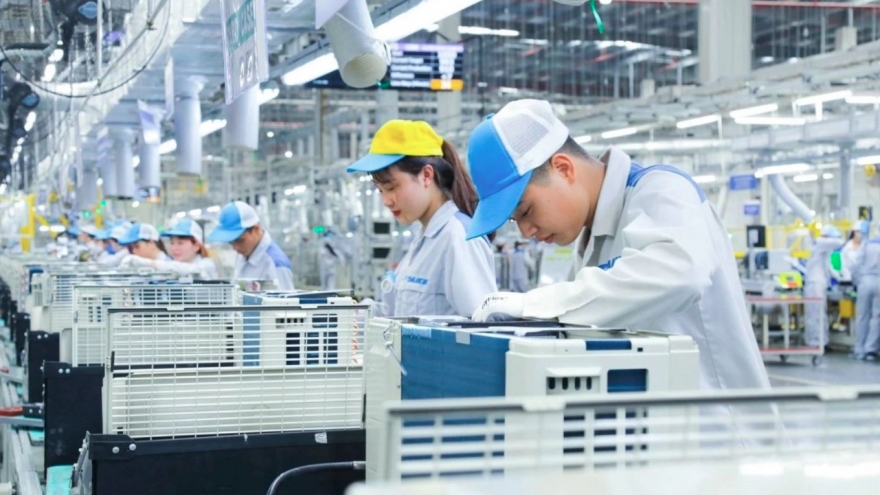
Beyond quantitative growth, FDI projects in Vietnam are increasingly characterised by higher quality. The country is gradually transitioning from a traditional processing and assembly base to a high-tech manufacturing and research hub within the global value chain.
Vietnam has become a production base for numerous major technology corporations. Minister of Finance Nguyen Van Thang has repeatedly highlighted the growing interest of high-tech investors in Vietnam.
“Attracting strategic investors and large-scale FDI projects in electronics, semiconductors, digital transformation, and artificial intelligence demonstrates Vietnam’s expanding role in the global semiconductor supply chain and high-tech manufacturing,” he emphasised.
With a GDP growth target of 10% for 2026, FDI inflows are expected to maintain strong momentum, with a sharper focus on high-tech and environmentally friendly sectors. Macroeconomic stability, experts note, acts as a critical safeguard, encouraging multinational corporations to pursue long-term investment strategies in Vietnam.
Forecasts suggest total registered foreign investment could reach or exceed US$38–40 billion in 2026, with capital flows increasingly directed toward green and digital sectors. As sustainable development standards become more stringent worldwide, eco-industrial parks and renewable energy projects are poised to gain a competitive edge.
The Foreign Investment Agency also notes that global FDI is shifting away from traditional industries toward high-tech and sustainability-driven ones. Competition to attract FDI will increasingly hinge on project quality including technological sophistication, green standards, and sustainability, rather than merely capital size.
Vietnam’s growing role in global supply chains
Assessing Vietnam’s investment landscape, Hong Sun, Chairman of the Korean Chamber of Commerce in Vietnam (KOCHAM), observed that the country’s 8.02% GDP growth in 2025 has elevated it from a “preferred option” to “an indispensable strategic hub” within Korean corporations’ supply chains.
Many Korean firms operating in Vietnam are planning factory expansions and production upgrades with higher levels of automation. Between 2026 and 2030, Vietnam is set to witness a strong transition from export processing to intensive manufacturing closely linked to technological development.
The Korean Chamber of Commerce in Vietnam has also welcomed key amendments to the Investment Law adopted by the National Assembly in December 2025. Notable improvements include streamlined post-audit procedures and tailored incentives for mega-projects and R&D initiatives.
Legalising new investment support mechanisms, replacing traditional tax incentives under global minimum tax regulations, is expected to help Vietnam retain major investors. These reforms are seen as instrumental in removing regulatory bottlenecks and accelerating project implementation timelines.
FDI growth in Vietnam is increasingly reflected in project quality, reinforcing the country’s transformation into a high-tech production and research hub. A recent survey by the Japan External Trade Organisation (JETRO) highlights strong business confidence. Some 56.9% of Japanese firms operating in Vietnam plan to expand in the next one to two years — the highest rate in ASEAN for a second consecutive year — while only 4.2% intend to scale back investment.
Vietnam’s FDI trajectory is increasingly defined by project quality, technological advancement and sustainability, reinforcing its transformation into a high-tech production and research hub in Asia.
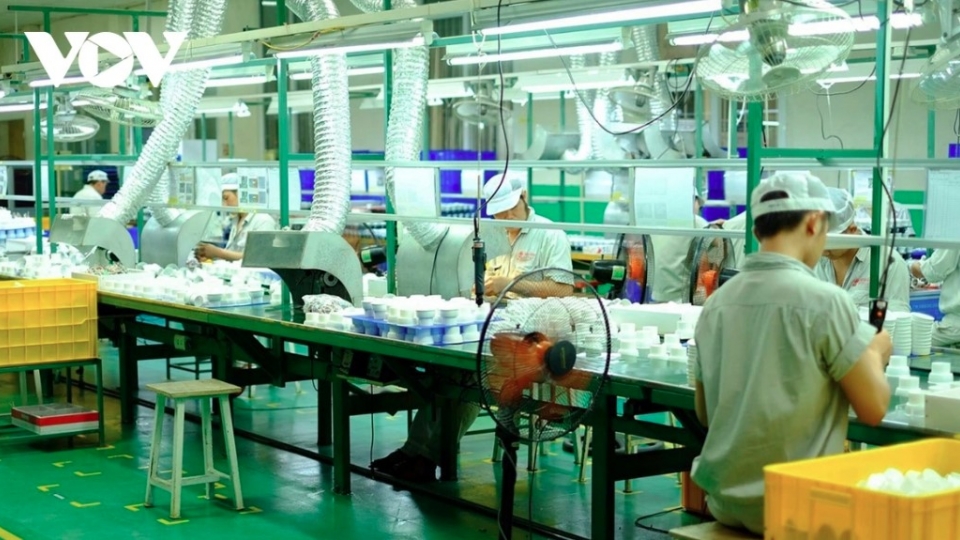
January FDI sees higher disbursement despite a steep fall in registered capital
VOV.VN - Foreign direct investment (FDI) inflows in January 2026 showed mixed developments, with disbursed capital continuing to rise while total registered capital fell sharply year on year.