Foreigners dive into Vietnam’s Tet traditions, embrace festive flavours, family rituals

VOV.VN - Foreign visitors are stepping beyond sightseeing to immerse themselves in the cultural traditions of Vietnam’s Mekong Delta, taking part in hands-on Lunar New Year (Tet) preparations ahead of the Year of the Horse 2026.
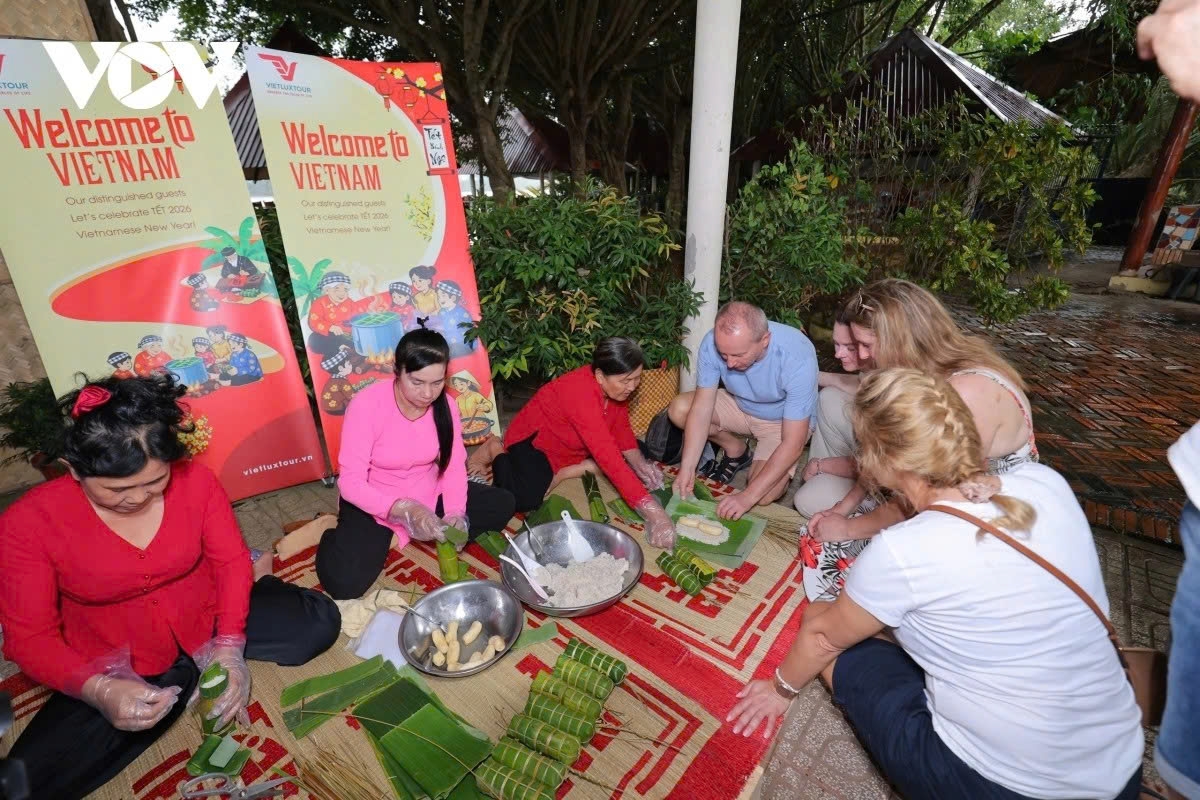
Through a cultural experience tour titled “Foreigners Celebrate Tet in the Mekong Delta,” organised by Vietluxtour, a group of Polish travelers traveled from Ho Chi Minh City to rural areas in Dong Thap province to experience the authentic atmosphere of southern Vietnam’s traditional Lunar New Year.
Instead of visiting high-rise buildings or famous landmarks, the group found themselves in modest riverside homes, where life flows at a slower pace along the waterways. In kitchens filled with the scent of fresh banana leaves, newly harvested sticky rice and wood smoke, they learned to wrap bánh tét (cylindrical sticky rice cakes), cook candied coconut, practice Vietnamese calligraphy, arrange the five-fruit tray and light incense on ancestral altars – the customs deeply familiar to Vietnamese families but entirely new and captivating to them.
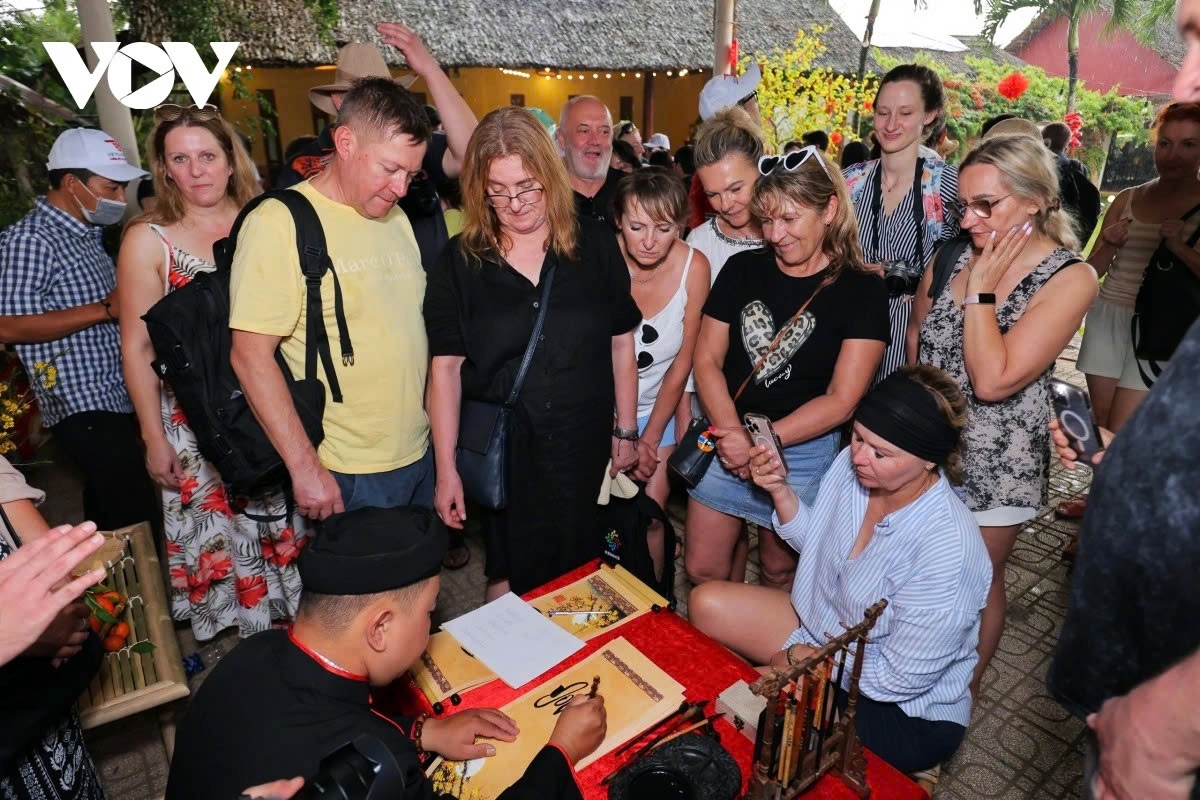
Adriana, a Polish traveler, said that although she had previously learned about Vietnamese culture through books and earlier trips, this was her first time directly engaging in ancestral worship rituals during Tet.
“I was impressed by the way Vietnamese families burn incense to connect with their ancestors,” she said. “In Poland, we also have traditional rituals, so I felt an interesting sense of connection. Vietnamese calligraphy left the deepest impression on me — it is delicate yet full of cultural depth. Bringing home a calligraphy artwork as a Tet gift is something I truly value.”
Another traveler, Wojtek Pawelec, said joining local families in preparing bánh tét helped him better understand the importance of reunion during the holiday.
“Watching family members gather and prepare for Tet together helped me appreciate the value of family reunion in Vietnamese culture,” he said. “Through this experience, I could genuinely feel the Tet atmosphere and emotions. I hope to learn even more about Vietnam’s culture and people.”
A highlight of the journey was a traditional Tet meal, where guests not only enjoyed festive dishes but also heard the stories behind them, from the symbolism of bánh tét and the sweetness of candied coconut to the custom of giving red envelopes for good luck. The exchange of red lucky envelopes and New Year wishes brought visible delight to the European visitors.
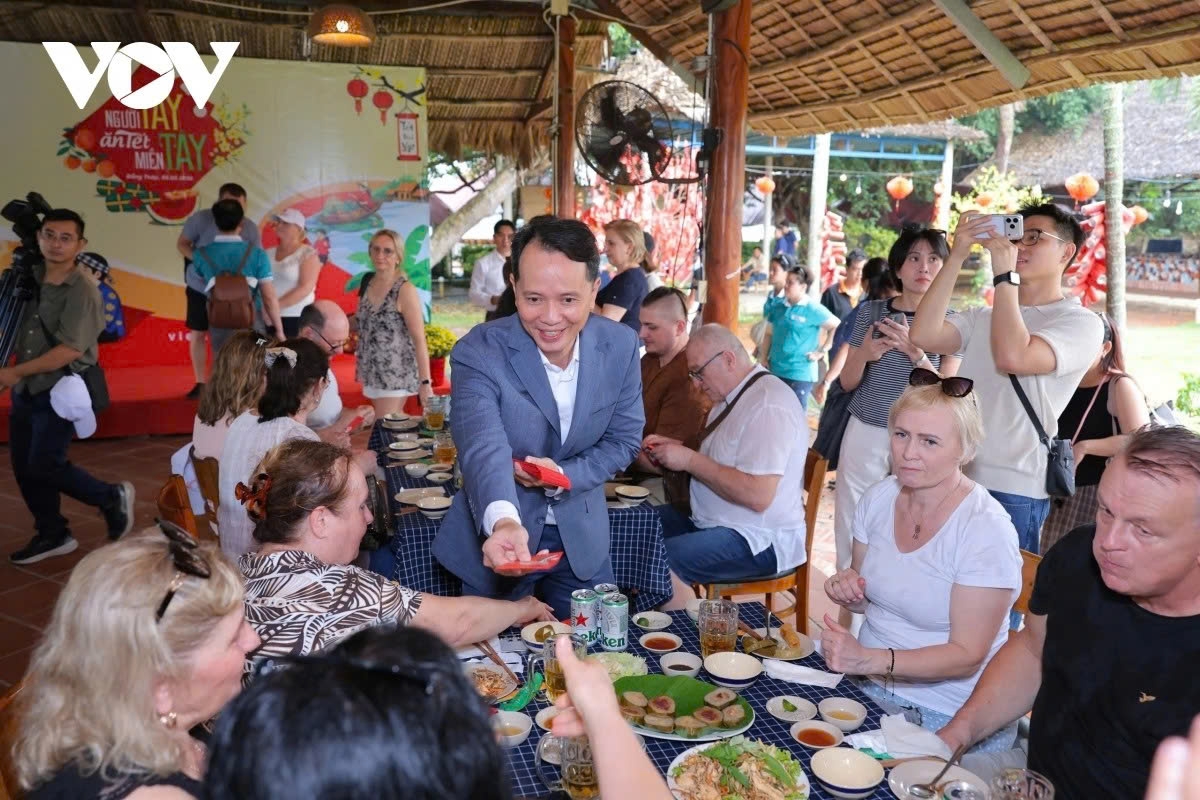
Tran The Dung, general director of Vietluxtour, said European travelers are increasingly seeking immersive, locally rooted experiences.
“When participating in Vietnam’s traditional Tet celebrations, visitors are not simply attending a festival,” he said. “They are introduced to family stories, community bonds and the rich cultural heritage of the Vietnamese people. That is why we invest in developing Tet-themed cultural products tailored for international visitors. When cultural experiences are thoughtfully designed and professionally organized, they hold strong appeal for global travelers.”
As tourism shifts beyond passive sightseeing toward meaningful cultural engagement, experiential programmes such as “Foreigners Celebrate Tet in the Mekong Delta” reflect a broader move toward sustainable tourism development – the one that preserves and promotes Vietnam’s cultural identity while creating authentic connections between visitors and local communities.
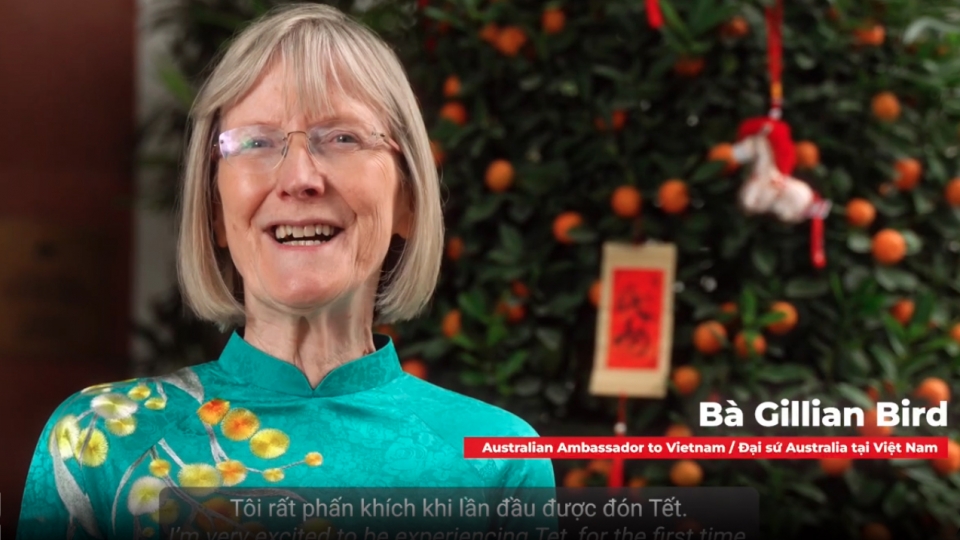
Australian Embassy extends Tet greetings, highlights expanding partnership
VOV.VN - The Australian Embassy in Vietnam has extended Lunar New Year greetings while reviewing progress across key areas of cooperation, with Ambassador Gillian Bird and embassy officials expressing confidence in the continued growth of the Vietnam–Australia Comprehensive Strategic Partnership.