Tourism industry bounces back, eyes steady growth in 2026

VOV.VN - In 2025, Vietnam’s tourism industry emerged as a bright spot in the national economy, achieving record numbers in international arrivals, revenue, and service quality.
Marking new milestones
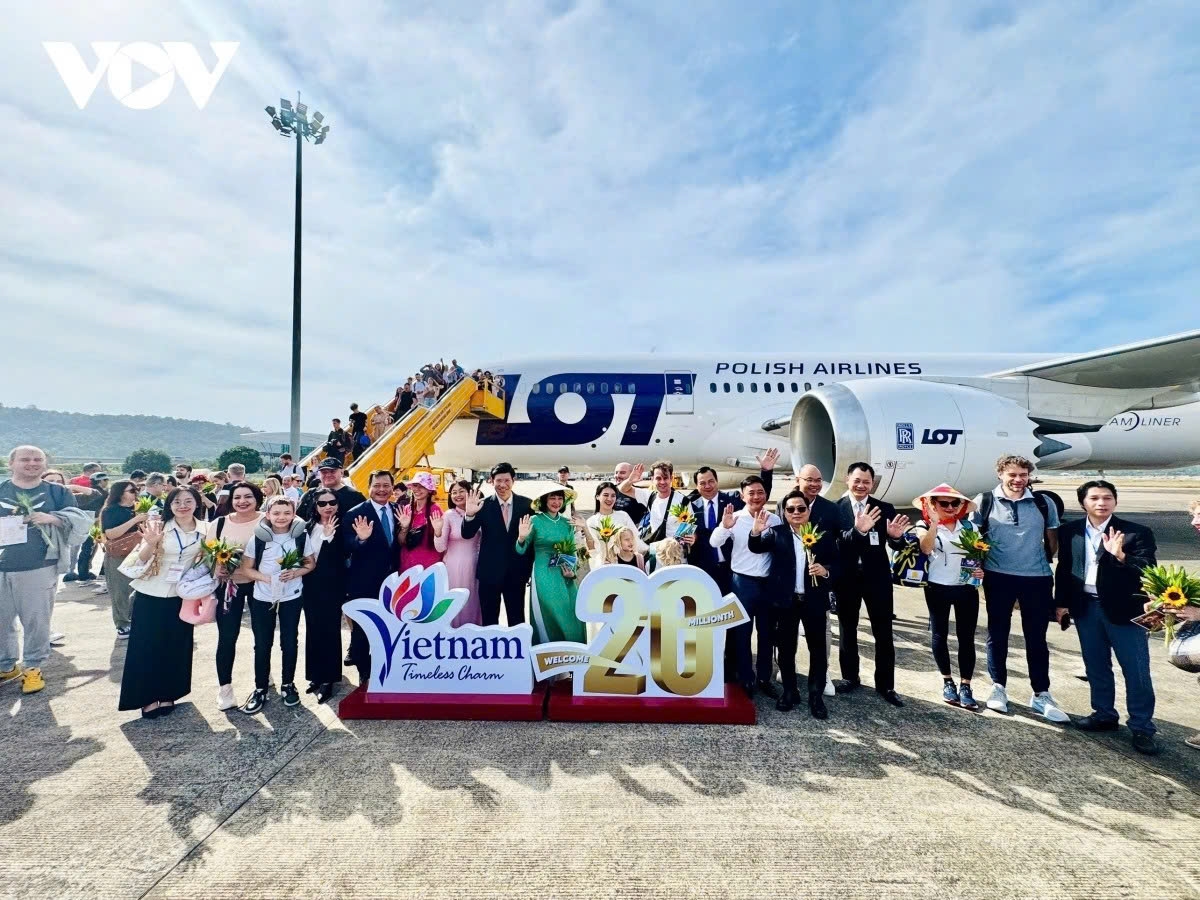
With an open visa policy, market restructuring, new product development, and effective promotion, Vietnam’s tourism has fully recovered and demonstrated strong momentum, contributing to trade, transport, hospitality, and cultural industries.
For the first time, Vietnam welcomed over 21.5 million international visitors, generating more than VND1 quadrillion in revenue, a 19% increase compared to 2024. Key destinations such as Ho Chi Minh City, Hanoi, An Giang, and Khanh Hoa recorded remarkable growth, while Quang Ninh, Lam Dong, Ninh Binh, Da Nang, Thanh Hoa, Nghe An, and Quang Tri also saw high tourism revenue.
The government’s open visa policy, including exemptions for 24 countries, extended stays, and e-visas for all nationalities, has enabled Vietnam to attract visitors from key markets such as Japan, the Republic of Korea, Russia, the United Kingdom, Germany, France, Spain, Italy, Poland, Denmark, the Czech Republic, Hungary, Netherlands, and Switzerland. The policy has positioned Vietnam as a friendly, open, and highly competitive travel destination compared to other countries in the region that have long implemented flexible visa policies.
In addition, numerous new direct flight routes have been launched or existing routes increased in frequency, enabling destinations across Vietnam, from urban tourist hubs to seaside resorts, to lure visitors from both traditional markets and emerging potential markets.

According to Nguyen Trung Khanh, Director of the Vietnam National Authority of Tourism, these policies help to boost international competitiveness, and encourage longer and deeper visitor experiences in Vietnam.
“The open visa policy represents a breakthrough in attracting international visitors to Vietnam. In addition to visa exemptions for key markets, Vietnam has implemented e-visas for all countries, extended tourists’ length of stay, and broadened the range of visa-exempt visitors. This policy serves as a key lever to boost international arrivals to Vietnam,” said director Khanh.
Enhancing Vietnam’s tourism products and brand
In 2025, Vietnam introduced numerous new tourism products. Ho Chi Minh City launched tours commemorating the 50th Anniversary of Southern Liberation and National Reunification, while Hanoi presented “80 Must-Do Experiences in Hanoi” for the 80th anniversary of the August Revolution and National Day. High-quality railway tours were introduced, including the “Five Gates Train” (Hanoi – Bac Ninh), “Cultural Journey to Binh Dinh – Gia Lai”, and the “Red Flamboyant Train” in Hai Phong. New sightseeing routes were opened at Bai Tu Long Bay, Con Son – Kiep Bac, and tours in Na Hang, Tan Trao, and Central – Central Highlands regions attracted significant visitor numbers.

Promotion and marketing efforts were coordinated and innovative, involving ministries, local authorities, tourism development funds, travel agencies, and airlines. According to Nguyen Trung Khanh, carefully studying target markets and visitor segments allowed destinations and businesses to design appealing tourism products, enhance visitor experiences, and strengthen Vietnam’s tourism brand.
Looking ahead to 2026, Vietnam aims to welcome 25 million international visitors and 150 million domestic tourists, with total revenue projected at VND1.125 quadrillion. The Vietnam National Authority of Tourism will work with localities and businesses to evaluate potential in newly merged areas, develop planning, and design tourism products in the new context.
For the first time, Vietnam plans to establish overseas tourism promotion offices, enhancing market research, promotion, and international cooperation, which is expected to be a breakthrough for the industry.
The successes of 2025, together with the ambitious targets set for 2026, show that Vietnam’s tourism industry has fully rebounded from the pandemic, is growing robustly, and is on track for sustainable development, enhanced international competitiveness, and significant contributions to the national economy.
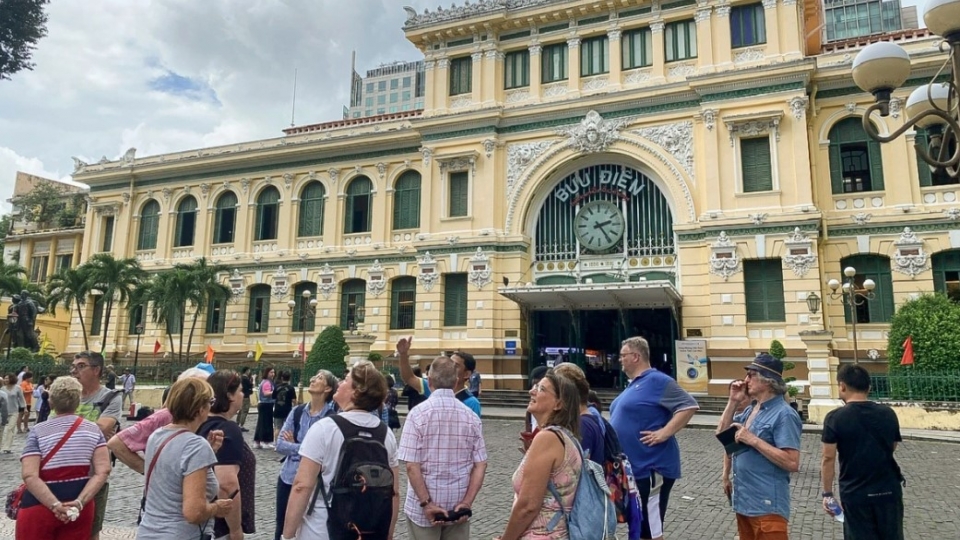
Tourism industry poised for record revenue in 2025
VOV.VN - Vietnam’s tourism industry is on track to achieve record-breaking revenue in 2025, with total earnings expected to exceed VND1 quadrillion, representing a 19% increase compared to 2024, according to the Vietnam National Authority of Tourism (VNAT).