
Tag: fertility rate

Health ministry targets annual fertility rate of 2% by 2030
Raising the total fertility rate (TFR) by an average of 2% annually and gradually restoring it to the replacement level is a key target under a Ministry of Health (MoH) plan implementing the programme on ensuring replacement-level fertility by 2030.

Major boost to population and family planning policies in Vietnam
VOV.VN - The Political Bureau’s recent decision not to discipline Party members who have a third child or more is expected to help increase the total fertility rate nationwide and align with both the country’s demographic realities and its sustainable development needs.
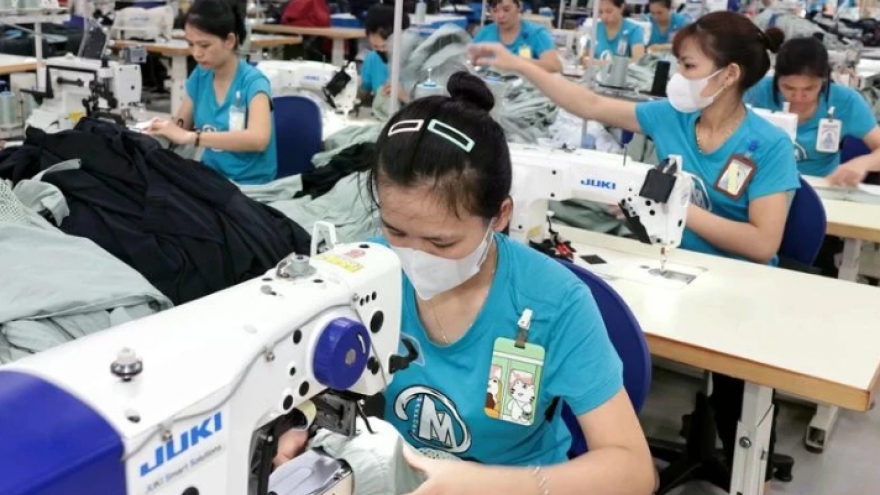
Declining fertility rate predicted to lead to workforce shortage
A prolonged low birth rate is forecast to directly impact the size and structure of the population, leading to consequences such as labour shortages, rapid population aging, and population decline.

Vietnam’s birth rate hits record low, raising alarm
The country's birth rate has reached an all-time low, estimated at 1.96 children per woman in 2023, with forecasts suggesting further declines.

Vietnam responds to aging population’s challenges
Vietnam is working to improve its fertility rate as the country is facing the risks of an aging population as well as losing its “golden population” phase that affect the socio-economic development.

Birth rate continues declining in HCM City
The average fertility rate per woman of childbearing age in Ho Chi Minh City has decreased to 1.32 from last year’s 1.42, the HCM City Department of Health said on July 8.

HCM City deals with low fertility rate
Nguyen Thanh Phuc, 28, living in District 3, Ho Chi Minh City, has been married for more than two years but still doesn't want to have a baby.

Vietnam records important achievements in population work over 60 years
Vietnam has successfully controlled the rapid population growth, maintained a reasonable population size, and kept the total replacement fertility rate for nearly 15 years, as results of population work over the past six decades.

Vietnam could face surplus of 1.5 million men by 2034
VOV.VN - It is anticipated that there will be a surplus of approximately 1.5 million men between the age of 15 and 49 by 2034, with the figure set to rise to 2.5 million by 2059, according to data released by the General Statistics Office (GSO).