When journalists step into a silent battle

VOV.VN - In times of pandemic or natural disaster, journalists step into danger zones quietly, documenting suffering, carrying stories of loss, and connecting pain with hope.
Amid the COVID-19 pandemic or in the aftermath of natural disasters such as floods and storms, when danger still lurks at every step, there are journalists who quietly enter the field. They are witnesses, bridges between pain and hope, between devastation and recovery. Their commitment is not driven by recognition, but by professional conscience.
A fragile line between life and death
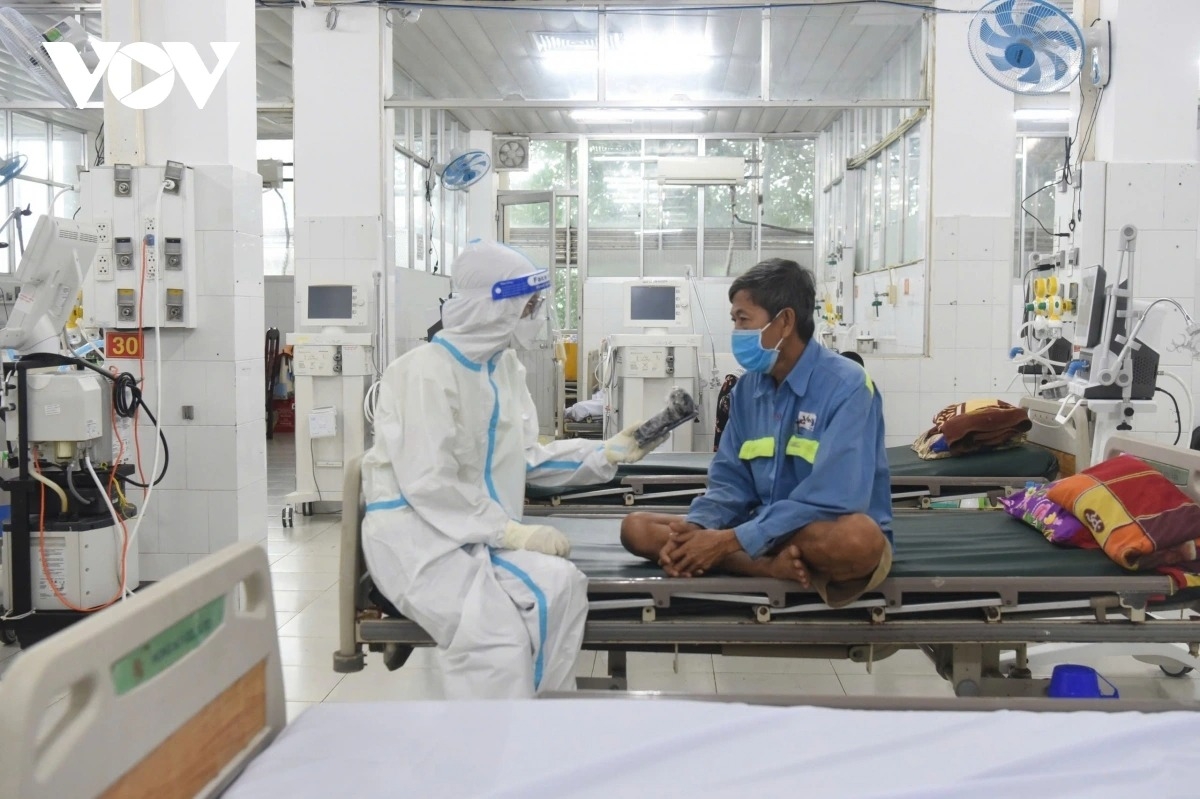
Vietnamese people will hardly forget the COVID-19 pandemic, particularly its peak in mid-2021, when the outbreak severely hit Ho Chi Minh City. At that time, the number of deaths was no longer counted individually but rose to dozens, hundreds, and then thousands. Each announcement of infections and fatalities felt like a tightening in the chest - a profound collective loss.
The entire country turned its attention toward Ho Chi Minh City. On the frontlines were not only medical workers, the military, and police forces, but also journalists who were ready to enter the epidemic zones to deliver timely information to the public.
Recalling that period, journalist Nguyen Tran Anh Thu from the Culture and Social Affairs Channel (VOV2) recalled, “In August 2021, our head of department at the time, journalist Kim Trung, posted in an internal group about forming a reporting team to the southern region. When I read that message, I felt this mission was meant for me. I simply thought: I am single, and if I do not go, then who will? I then registered with my editor, Hong Quyen, who approved it.”
For journalist Anh Thu, the decision to enter the pandemic zone did not feel like an act of great enthusiasm. She regarded it as a routine assignment and did not initially anticipate danger or hardship. In her mind, colleagues were already working inside the epicenter, so there was no reason for her to hesitate.
The journey to Ho Chi Minh City began. The team traveled by road from the North to the South. During a time of strict pandemic restrictions, roadside shops were closed. The team prepared portable stoves, pots, utensils, rice cakes, traditional pork rolls, canned food, as well as medicines and medical masks. Wherever the vehicle stopped, they would set up makeshift cooking stations. To avoid worrying their families, Anh Thu only called her mother when the team reached Hue. She felt reassured by her mother’s encouragement.
Unlike previous assignments, what struck her upon arriving in Ho Chi Minh City was the presence of death - rows of hospital beds covered in white sheets. It was then she fully realized how fragile the boundary between life and death had become. In such conditions, she and other journalists were mentally prepared that they could be the next patients.
“There were patients in intensive care who initially were not in critical condition, but within days their health deteriorated rapidly, with their lungs turning completely white. I was afraid of seeing those white-covered beds, the beeping monitors, and heart rate machines. Even now, those images still startle me. After returning to Hanoi, I would dream every night of that white room with never-ending lights. I was deeply moved by that invisible and painful battle,” she recalled.
Reporting from flood zones
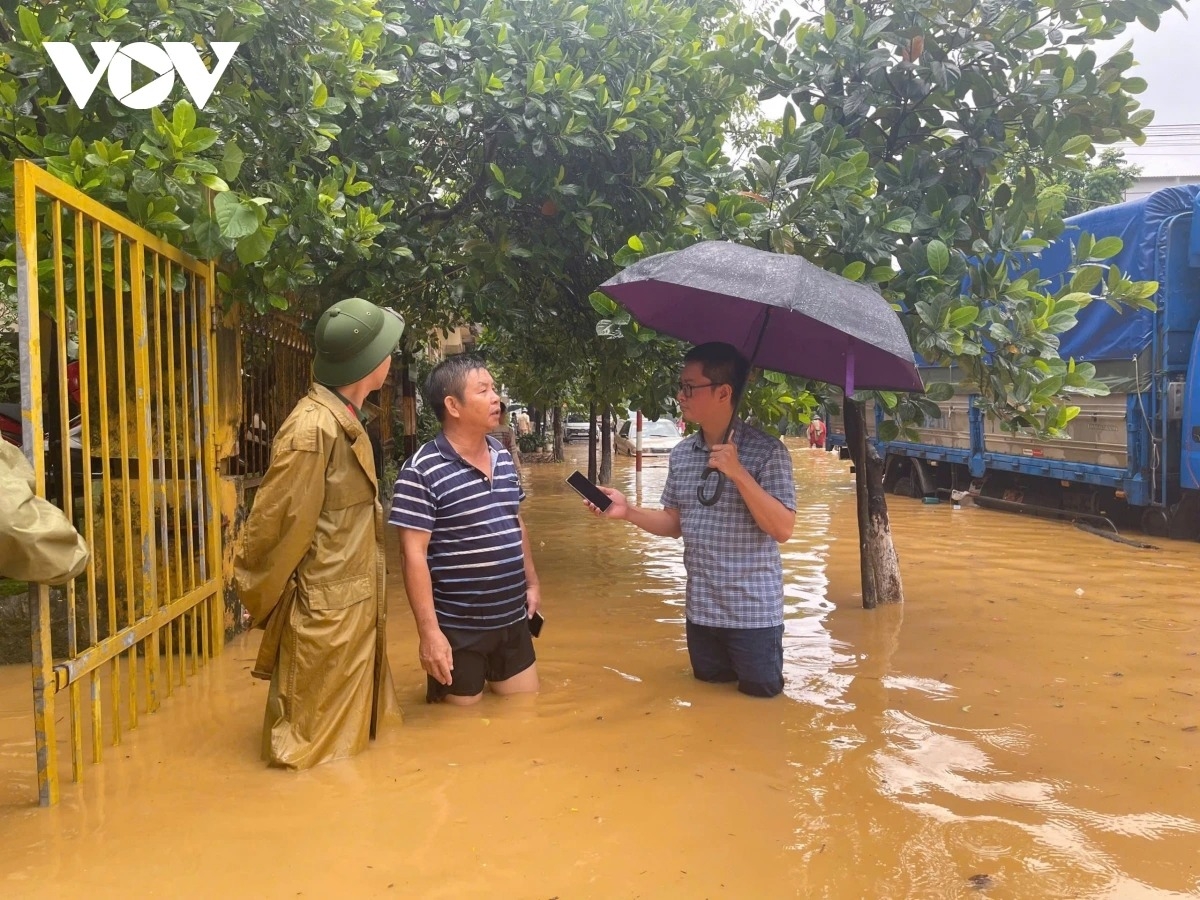
On September 10, 2024, a devastating flash flood occurred in Lang Nu village of Lao Cai province. In an instant, the entire village was wiped out, leaving 60 dead and 7 missing.
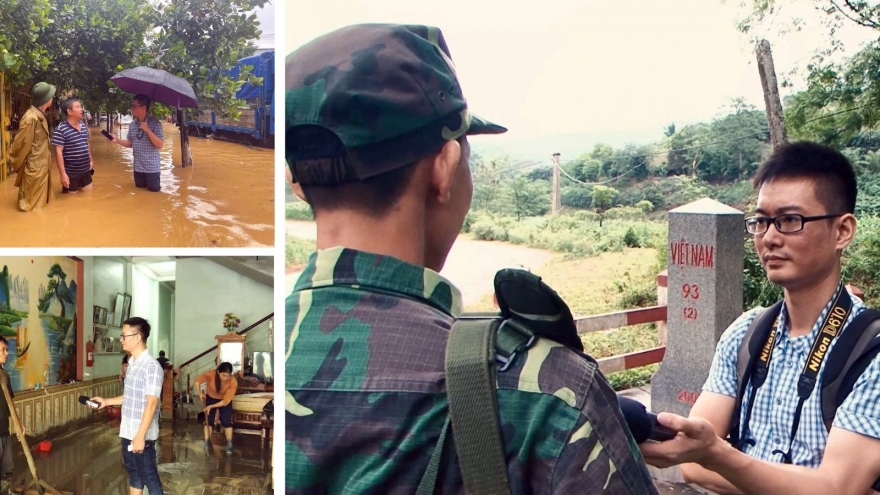
As a reporter in the disaster zone, journalist An Kien, a resident correspondent of Voice of Vietnam in the Northwestern region covering Lao Cai, was present at the scene to provide the fastest updates to audiences nationwide.
The greatest challenge for him was the difficult terrain. He had to take long detours and carefully navigate unstable slopes that could collapse at any moment. He also had to remain cautious when crossing fast-flowing streams swollen by floodwaters.
During field reporting in Lang Nu, he and his colleagues learned valuable experience in moving through muddy terrain. Rescue forces used long sticks not only for search operations but also to probe ground stability and identify solid footing. Without them, it would have been extremely difficult to move through mud that could reach depths of 50–60 cm, and in some areas even 7–10 meters.
Despite harsh conditions, journalists received strong support from local authorities and relief forces. Internet access was prioritized, while meals and drinking water were delivered by volunteers. Nearby unaffected households also offered shelter and assistance.
After more than a decade reporting in the Northwest, this was the most severe flash flood he had ever witnessed. From a landscape submerged in mud and devastation to a newly rebuilt resettlement area; from cries of grief to faces gradually healing from trauma, these are memories he will never forget.
“We worked so extensively in Lang Nu that locals often recognised us when we returned. I still occasionally call or message people whose stories I covered, such as Nguyen Thi Kim, who miraculously survived the flood and still struggles with the aftermath of multiple surgeries. Or Dang Thi Nich, who lost her husband, mother-in-law, and two children, her eyes still heavy with grief, as if unable to look up from her sorrow,” he said.
Although life in the village has stabilised and homes have been rebuilt more safely, the journalist still carries deep concerns for those who endured such tragedy. He intends to continue telling their stories, the story of true recovery in both landscape and human spirit.
Journalism in peacetime – a silent but relentless struggle
Some argue that reporters going to disaster zones do so to “create personal marks” rather than fulfill professional duty. However, journalists rarely have time to dwell on such perceptions. They also avoid using the term “mission” as it feels too grand. Yet faced with issues of public concern, their responsibility drives them to seek answers, and once they set out, nothing can stop them.
As journalist Ho Quang Loi, former permanent vice chairman of the Vietnam Journalists Association and currently vice president of the Vietnam Digital Media Association, noted: it is not only in wartime that journalists demonstrate courage, dedication, and sacrifice. Even in peacetime, this spirit must continue to be nurtured. Today, there are silent but equally fierce “battles” that journalism must confront. Journalism is not only dangerous in war but also full of risks and challenges in times of peace.
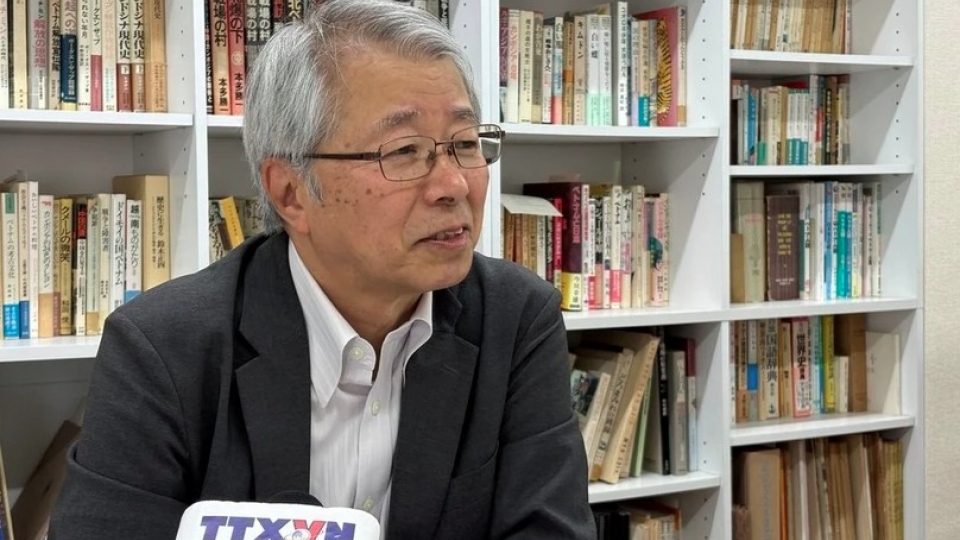
Japanese veteran journalist praises Vietnamese press’ progress
As Vietnam commemorates a century of revolutionary journalism, veteran Japanese journalist Toshifumi Kitagawa, long-time correspondent in Vietnam for Akahata, the official newspaper of the Japanese Communist Party, has shared his admiration for Vietnam's revolutionary press and its impressive strides in digital transformation.