Vietnamese students turn coffee waste into eco-friendly fashion material

VOV.VN - A group of students in Can Tho city is experimenting with turning discarded coffee grounds into bio-based materials for fashion products, offering a glimpse into how younger generations in Vietnam are increasingly engaging with sustainability and circular economy thinking through hands-on learning.
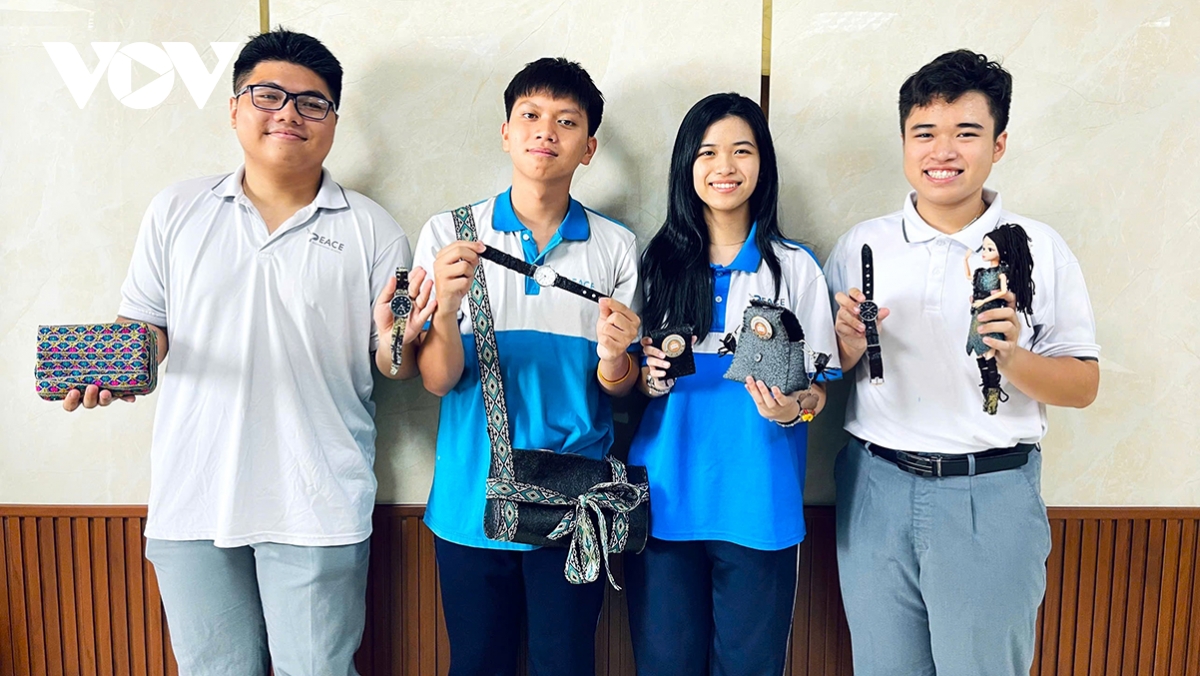
The project, called CycleCafe, was developed by Nguyen Gia Han, a 12th-grade student, Ho Hoang Minh from grade 11 and Nguyen Gia Khang from grade 10 who are all students from Hoa Binh International School.
Inspired by the large amount of coffee waste generated daily in urban areas, the students explored whether coffee grounds could become raw materials for a new production cycle instead of simply being discarded as waste.
Their idea focuses on recycling used coffee grounds into a leather-like biomaterial that could potentially be applied in simple fashion products such as handbags, sandal straps and accessories.
Circular economy thinking enters the classroom
Although still in the experimental stage, the project reflects an emerging educational trend in which students move beyond theoretical learning and directly engage in research, product testing and innovation.
Rather than treating waste as the end of a product’s lifecycle, the students approached coffee grounds as the starting point for a new material cycle - a core principle of the circular economy model increasingly promoted worldwide.
The group’s testing process involves collecting coffee grounds, drying and grinding the material before combining it with PVA bioplastic and heating the mixture to create sheet-like biomaterials. These sheets are then shaped into small handmade products to test practicality and design possibilities.
According to student representative Nguyen Gia Han, the project’s goal extends beyond simply creating usable products.
“Coffee grounds are a very common type of waste but are not effectively recycled. We wanted to reuse this material to create something more useful while also raising environmental awareness through creative products,” Han said.
Students explore sustainability and entrepreneurship

Pham Bao Truong, vice principal of Hoa Binh International School and mentor of the project, told VOV the most notable aspect of CycleCafe lies not only in recycling materials but also in the students’ involvement throughout the entire development process.
“The students participated in every stage, including material research, product testing, design development and communication strategy building,” the teacher said.
According to the teacher, the project began with a practical question: while the fashion industry continues consuming large amounts of leather and non-biodegradable plastics, could more environmentally friendly alternatives be created from agricultural and coffee waste?
“From there, the students experimented with combining coffee grounds and biodegradable PVA plastic to create materials potentially suitable for fashion applications,” he added.
Sustainability education expands in Vietnam

Beyond technical experimentation, the project also incorporates digital storytelling and marketing elements. The students developed ideas involving social media communication, production videos and QR-code integration to help consumers understand the lifecycle of the material and the environmental message behind the products.
Team member Ho Hoang Minh shared the experience helped students better understand concepts such as customer targeting, branding and basic business thinking.
“Transforming the production process itself into communication content could help sustainable products stand out in an increasingly competitive market,” he noted.
Projects like CycleCafe reflect a broader shift in education, where environmental issues and circular economy concepts are moving from abstract classroom discussions into practical experimentation at the school level. Although still small in scale, the initiative demonstrates how younger generations in Vietnam are beginning to view waste not only as an environmental challenge, but also as a potential resource for innovation and sustainable economic development.
Agriculture sector told to adopt green, modern production to stay competitive
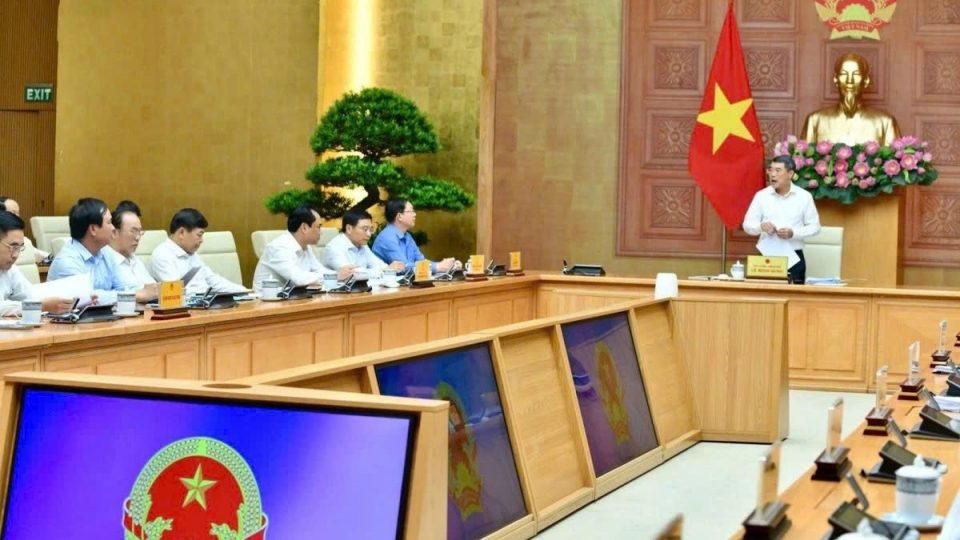
VOV.VN - Prime Minister Le Minh Hung has asked the agriculture sector to transform its production model toward modern, green and sustainable practices, describing it as a key condition to maintain competitiveness in a changing global environment.