Vietnam, China expand exchanges and cooperation in science, technology and innovation

VOV.VN - Nguyen Duy Ngoc, Politburo member, Secretary of the Party Central Committee, Head of the Party Central Committee’s Organisation Commission, and Deputy Head of the Central Steering Committee for science, technology, innovation and digital transformation, paid a working visit to the management board of Zhongguancun High-Tech Park in Beijing on April 15.
The meeting was held as part of the state visit to China by General Secretary of the Communist Party of Vietnam Central Committee and President To Lam and his spouse.
Nguyen Duy Ngoc and his delegation visited an exhibition area and were briefed on the formation and development of Zhongguancun, as well as several notable achievements of Beijing in science, technology and innovation.
At the meeting, Nguyen Duy Ngoc spoke highly of the results achieved by Beijing and Zhongguancun in developing science, technology, innovation and digital transformation, and said plenty of experience, models and ways of implementation of the Chinese side have practical reference value for improving mechanisms, policies and organisation of implementation in Vietnam.
He said Vietnam is accelerating the implementation of Resolution No. 57 of the Politburo, which identifies science, technology, innovation and digital transformation as important drivers for rapid and sustainable development.
Ngoc said he hopes Beijing, Zhongguancun and relevant Chinese agencies and organisations will increase exchanges, share experience and promote cooperation with Vietnamese agencies and localities, including Hanoi, especially in areas such as smart cities, artificial intelligence, robotics, semiconductors, elderly care, medical technology and high-quality human resources training.
At the meeting, Jin Wei, member of the Standing Committee of the Beijing Municipal Party Committee and Vice Mayor of Beijing, welcomed Nguyen Duy Ngoc and the delegation and introduced an overview of Beijing’s development and major orientations in promoting science, technology and innovation.
Jin Wei thanked Nguyen Duy Ngoc for his positive assessment and said Beijing, as a megacity, is resolving multiple requirements in urban governance, environment, transport, urban order, food safety and improving people’s quality of life. He said Beijing has consistently taken science, technology and innovation as the foundation for urban governance and development.
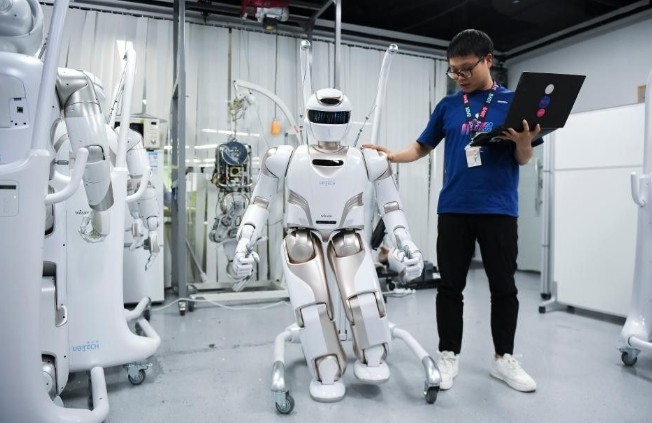
Jin Wei said Beijing currently has more than 30,000 nationally recognised high-tech enterprises; has formed three industrial clusters each worth trillions of yuan and seven clusters each worth hundreds of billions of yuan; and has more than 400 key enterprises in robotics. The city also has strong advantages in education, research and high-quality human resources, with many major universities and research institutes.
The Chinese side said that in its development process, Beijing focuses on creating a favourable environment for enterprises to raise practical issues, while authorities improve mechanisms and policies in a timely manner to support them, thereby enhancing a dynamic innovation ecosystem with close links among the State, universities and enterprises.
Jin Wei said he believes that, on the basis of the good friendship and cooperation between the two countries, ministries, sectors, localities and business communities of both sides will continue to expand exchanges and substantive cooperation in the coming time.
At the meeting, Nguyen Duy Ngoc and participants also heard Zhongguancun representatives present its organisational model, management mechanisms and coordination of the innovation ecosystem, including coordination between state management agencies, enterprises, research institutes and universities in implementing key science and technology tasks.
Zhongguancun is China’s first national innovation demonstration zone and is considered a typical model for developing a large-scale science, technology and innovation ecosystem, with close participation of the State, universities and enterprises.
Through exchanges at the meeting, experience shared by Zhongguancun can serve as a useful reference for Vietnam in researching and improving mechanisms for developing high-tech parks and innovation zones, and encouraging enterprises to participate in carrying out major national technology tasks.
The working visit to Zhongguancun contributes to expanding exchanges and cooperation in science, technology and innovation between Vietnamese agencies and localities and Beijing and relevant Chinese partners, thus serving research and advisory work in implementing Resolution No.57.
Vietnam’s top leader heads to Nanning after Beijing leg of China state visit
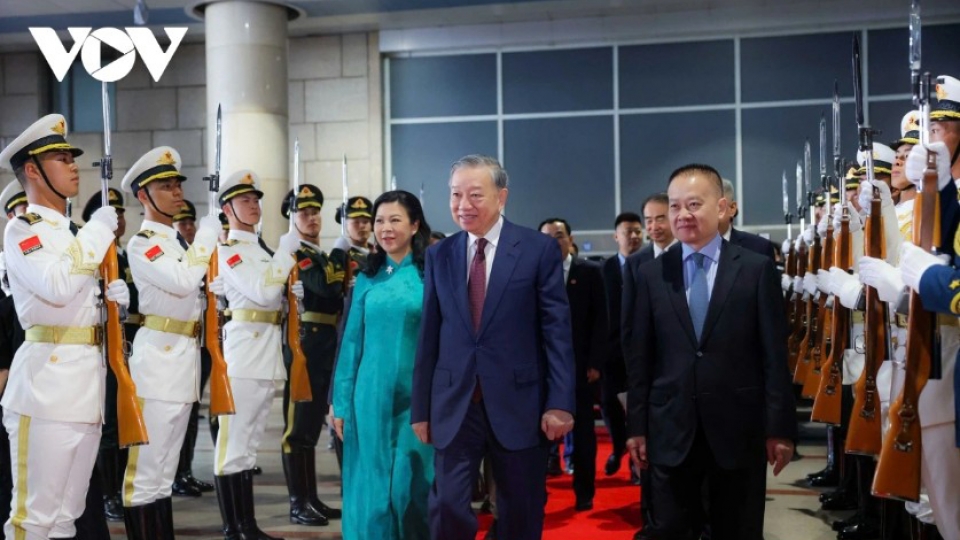
VOV.VN - Party General Secretary and President To Lam and his spouse left Beijing on April 16 for Nanning city (China) by high-speed train, continuing the state visit to China after completing activities in the capital.
Vietnam and China set sights on higher-level economic, trade relations
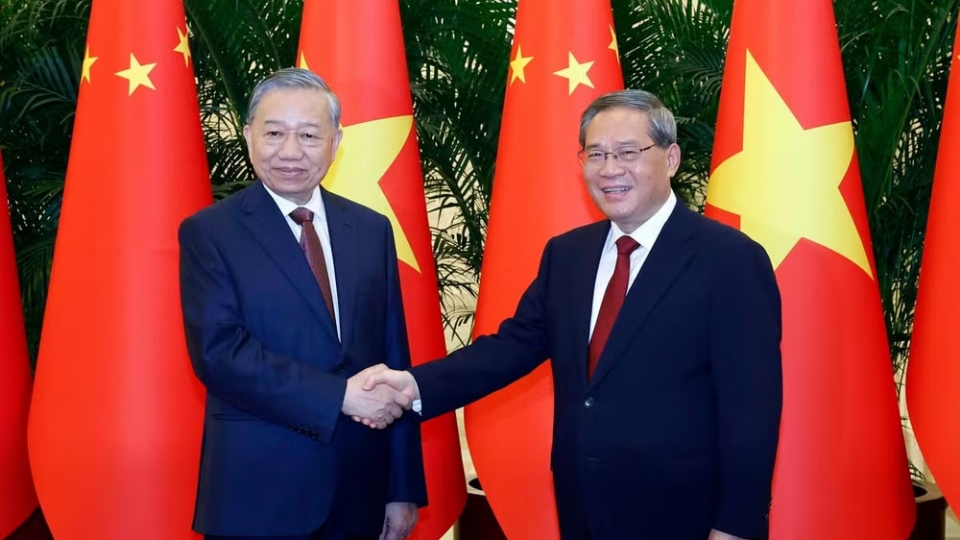
VOV.VN - Vietnam and China agreed to prioritise railway connectivity, promote more balanced trade and expand high-quality investment during a meeting in Beijing on April 15 between Party General Secretary and President To Lam and Chinese Premier Li Qiang.