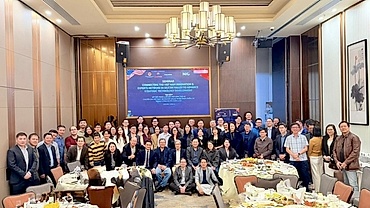
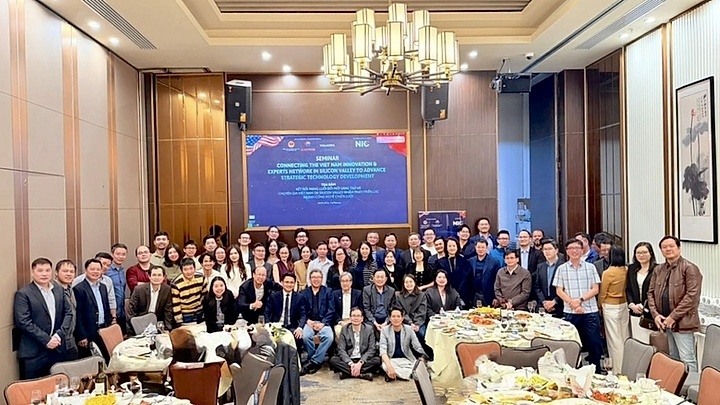
Solving technology challenge through the “three-party linkage”

Building mechanisms that enable the State, universities, research institutes and businesses to jointly participate in the science and technology development chain is becoming increasingly important as Vietnam identifies science and technology as a major driver of future economic growth.

Linking the “three parties” to commercialise research
According to Pham Duc Nghiem, deputy director of the Department of Startups and Technology Enterprises under the Ministry of Science and Technology, the current orientation is no longer limited to generating scientific results but aims to create technologies, products and Vietnamese technology enterprises.
He said the “three party” linkage model involving the State, research institutes/universities and enterprises is becoming essential for developing strategic technologies. Enterprises provide practical problems, universities and research institutes develop technological solutions, while the State creates support mechanisms and policies to accelerate commercialisation.
Nghiem stressed that the linkage should go beyond isolated technology transfers and become a foundation for a modern science and technology market in Vietnam. In a knowledge-based economy, research outcomes, inventions and intellectual property assets must become tradable commodities capable of commercialisation.
He also pointed to several bottlenecks, particularly rigid management thinking. Innovation, he noted, always involves risks, while existing mechanisms remain heavily focused on administrative control. He called for more flexible legal frameworks, policy sandboxes and output-based funding mechanisms to support startups, spin-offs and innovative research groups.
Weak connections between universities, businesses and investors have also prevented many research results from becoming commercial products, while scientists often lack market development experience.
Regarding spin-off enterprises originating from universities and research institutes, Nghiem described them as one of the most effective ways to bring technologies from laboratories to market. He noted that many global technology corporations began as university research projects.
Vietnam’s legal framework for spin-offs has gradually taken shape through laws on enterprises, higher education, technology transfer and intellectual property. In particular, the revised Capital Law 2026 and Decree 271/2025 have created clearer mechanisms for universities in Hanoi to establish and invest in enterprises commercialising research outcomes.
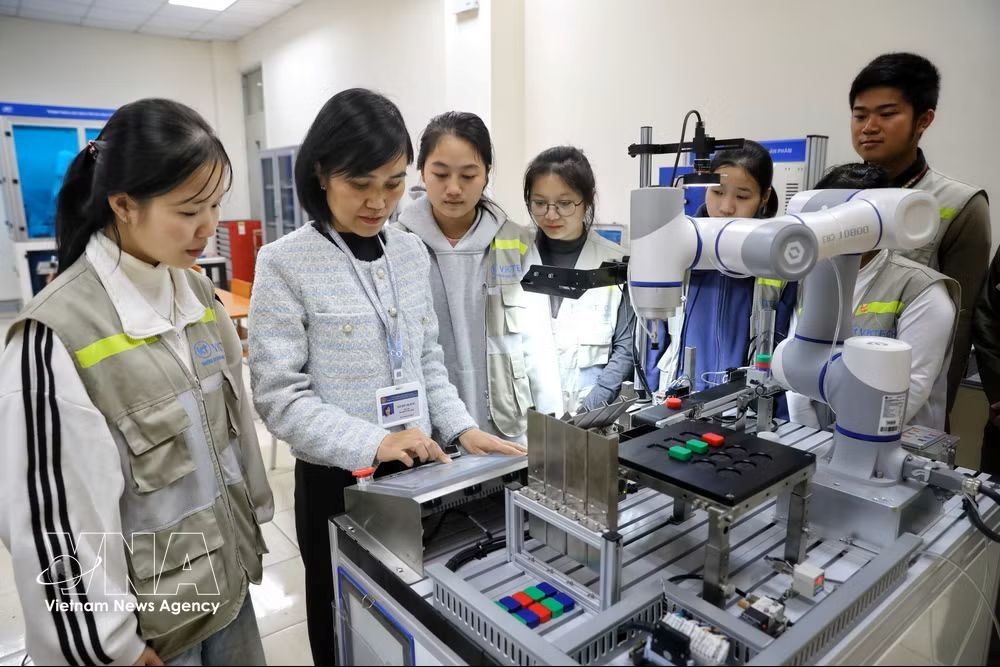
Businesses seek more flexible mechanisms
Dao Ngoc Chien, director of the National Foundation for Science and Technology Development (NAFOSTED), said the “three-party” model is the most suitable approach for developing strategic technology products because such technologies require high scientific content and competitive advantages.
According to Chien, most enterprises still need cooperation with universities and research institutes to solve core scientific challenges, while the State should play a facilitating role through policies and support resources.
He said research institutes and universities need more flexible funding mechanisms that allow for scientific risks, while businesses are more interested in tax incentives, technical standards and intellectual property protection than direct budget support.
Chien added NAFOSTED could serve as a bridge connecting scientists, businesses and management agencies. A draft decree currently under government consideration would formally assign the fund a matchmaking role in the science, technology and innovation ecosystem.
Experts shared that the requirements outlined by To Lam demonstrate the need to establish mechanisms enabling the State, research institutes, universities and businesses to participate in a complete technology development chain, from research and testing to commercialisation.
They stressed that Vietnam’s technology challenge is not only about capital, equipment or policies, but also about trust and national aspiration in the knowledge economy era. When young people dare to innovate, scientists pursue new technologies, businesses invest in Vietnamese knowledge and the State acts as a facilitator, science and technology can become the core driver of Vietnam’s development ambitions in the 21st century.

Vietnam places science, technology and innovation at the centre of growth
VOV.VN - Vietnam in 2025 is stepping up support for research and cooperation, removing bottlenecks and creating a more open environment for innovation under Resolution 57 issued by the Politburo on science, technology and national digital transformation.