HCM City adopts air quality plan, targets LEZ rollout from 2027

VOV.VN - Ho Chi Minh City has approved an air pollution control plan for 2026–2030, with a vision to 2045, with low-emission zones (LEZs) set to be rolled out in central areas from January 1, 2027 to rein in high-emission vehicles.
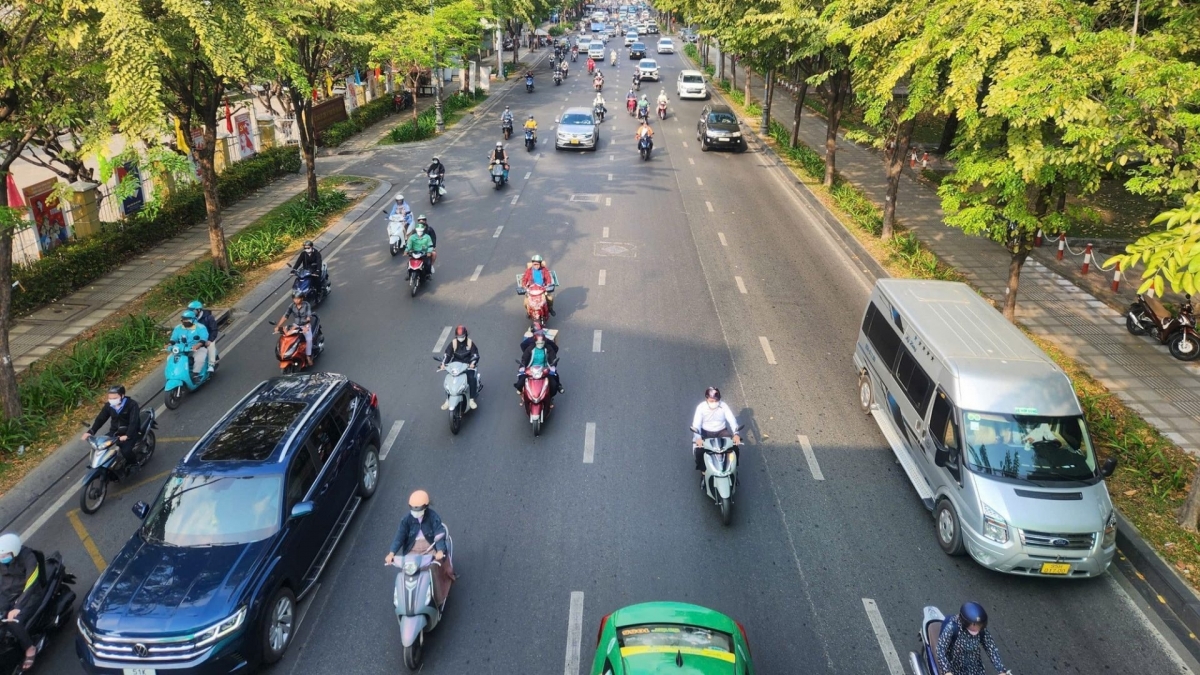
During 2026–2030, the city aims to reduce annual concentrations of fine particulate matter (PM2.5) and maintain the share of days with at least moderate air quality at between 75% and 80%. At the same time, 95% of residents are expected to have access to environmental information via digital platforms.
By 2030, the city targets 100% of buses and public transport vehicles running on clean energy. Authorities will also introduce support mechanisms to encourage ride-hailing and delivery fleets to shift to environmentally friendly vehicles.
Under the draft plan, from January 1, 2027, LEZs will be introduced in selected central areas, bounded by 15 bridges and 20 major roads to control high-emission vehicles. From that point, cars failing to meet Euro 4 emissions standards will be subject to charges when entering LEZs. From September 1, 2027, motorcycles below Euro 2 standards will be banned from LEZs during peak hours (6–9 a.m. and 4–7 p.m.).
From January 1, 2028, stricter measures will be enforced, including banning fossil fuel-powered motorcycles from LEZs and restricting cars below Euro 4 standards during peak hours. A roadmap to tighten emissions standards for cars will also be implemented.
In later phases, the city plans to expand LEZs from 2030, with a full ban on high-emission vehicles to be considered after 2031.
Zifei Yang, emerging markets director at the International Council on Clean Transportation (ICCT), said Hanoi and Ho Chi Minh City have taken important initial steps by defining timelines and scopes for LEZ implementation in line with Directive 20 issued in July 2025.
A clear, phased roadmap will give residents and businesses time to understand upcoming regulations, plan vehicle replacements, and gradually shift to cleaner transport options. Financial measures such as EV subsidies and vehicle scrappage programmes can also lower the cost of transition and accelerate the phase-out of internal combustion engine vehicles.
However, Yang noted that to ensure effective implementation without major disruption, authorities must combine restrictions with financial and non-financial incentives.
Globally, successful LEZ models are often paired with supportive policies. London has expanded scrappage schemes for taxis and low-income groups; Brussels offers mobility incentives for households that give up old vehicles; and Amsterdam prioritizes fast-charging access for taxis while expanding public charging networks.
According to Yang, Vietnam’s major cities can draw on these lessons by designing targeted support packages for low-income groups and small businesses, especially during the early phase of phasing out gasoline motorcycles. At the same time, investment in public charging infrastructure and battery-swapping systems will be crucial to ensure a smooth and equitable transition.
Above all, accelerating the development of public transport and non-motorised mobility will be key to ensuring both public acceptance and the effectiveness of LEZ policies.
The Prime Minister has issued a decision mandating emissions inspections in Hanoi and Ho Chi Minh City from July 1, 2027, with the policy to expand to other centrally governed cities from July 1, 2028 and nationwide from July 1, 2030.
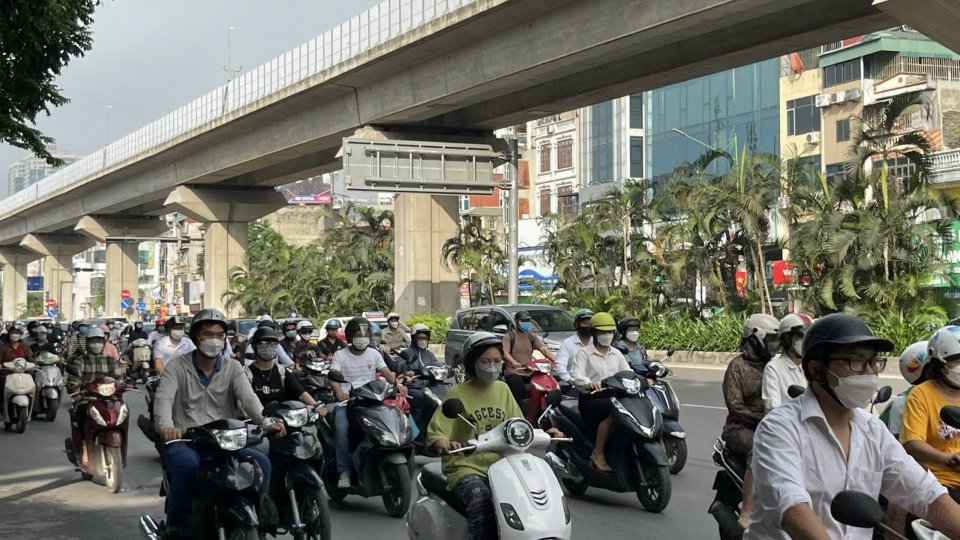
Vietnam to introduce motorcycle emissions testing from July 2027
VOV.VN - Vietnam will begin mandatory emissions testing for motorcycles and mopeds in its largest cities as part of a national effort to improve air quality.