Global frameworks open pathways for Vietnam’s high-skilled workforce development

VOV.VN - Vietnam is looking to leverage emerging international institutions to create a breakthrough in human resource development, particularly in building a high-quality workforce capable of competing in the digital and global economy.
At a recent policy workshop on strategic human resources reform, experts said new multilateral frameworks offer Vietnam opportunities to enhance workforce quality, access international standards and integrate more deeply into regional and global labour markets. However, they stressed that success will depend on comprehensive national strategies, bold education reforms and stronger multi-stakeholder coordination.
International institutions for workforce development
According to Dr. Nguyen Ngoc Lan from the Institute for Asia-Pacific Studies, several newly established global mechanisms are directly linked to skills development and labor mobility.
One of them is the global skill partnership (GSP), a cooperative model under which labour-sending countries provide initial skills training while receiving countries contribute financial resources, advanced training technology and employment guarantees. The model aims to promote safe and legal migration, address skilled labour shortages in developed economies and enhance the value of human capital in developing countries.
Another platform, the global forum on skills for the digital economy, focuses on improving access to digital skills data and emerging labour market trends. It compiles large datasets on global digital skill demands, recruitment patterns and regional skill gaps. Policymakers can use this data to design education programmes, reform training systems and measure digital transformation outcomes in both education and labour markets.
Meanwhile, the skills and innovation partnership emphasises three pillars: digital and innovation skills development, institutional capacity-building for innovation, and stronger linkages among governments, businesses, universities and research institutes.
At the regional level, the ASEAN Future Workforce Council (AFWC) promotes “future-ready employment” through skills forecasting, lifelong learning ecosystems, public-private partnerships in workforce training and inclusive access to employment opportunities.
Lan said these institutions provide not only financial resources but also knowledge-sharing platforms and international standards on skills recognition, qualifications frameworks and education governance. In a context of constrained public budgets, especially in vocational education and digital skills training, such mechanisms could help Vietnam mobilise long-term investment without increasing public debt pressure.
More importantly, the new frameworks promote flexible, digitalised and outcome-based approaches to human capital development, aligned with the requirements of the digital economy and green transition.
Structural challenges require comprehensive reform

Despite these opportunities, Dr. Nguyen Xuan Cuong from the Institute for Asia-Pacific Studies said Vietnam’s labour force faces structural constraints. He pointed out that workforce quality and composition remain misaligned with the needs of a knowledge-based economy. Vocational education and training have not fully kept pace with technological change, while the private sector still struggles to attract and retain highly skilled workers.
Rapid advances in automation and artificial intelligence are reshaping job structures. Many traditional occupations face displacement, while emerging industries require advanced and complex skills that the current education system has yet to fully provide. Inequality in access to quality education and skills development also persists, particularly across regions and income groups.
Institutional capacity and workforce governance remain fragmented, limiting policy coordination and responsiveness.
He suggested that Vietnam should develop a comprehensive and adaptive national strategy for high-quality human resources development through 2030, with a vision to 2045. Such a strategy should be integrated into sectoral planning, regional development frameworks and national socio-economic strategies to ensure coherence among government agencies, educational institutions, businesses and workers.
Education reform as major breakthrough
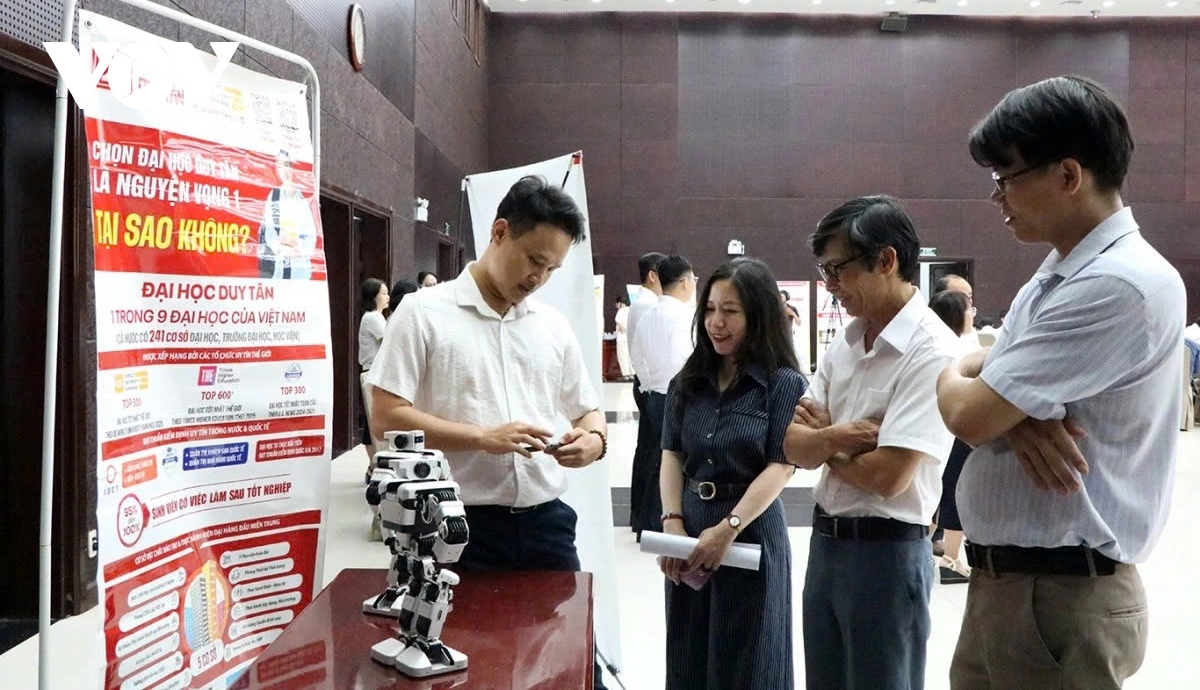
Education reform is widely seen as the key lever for upgrading workforce quality. This includes developing national competency frameworks aligned with ASEAN qualification reference systems and international standards, enabling Vietnamese workers to gain broader recognition in labour markets overseas.
In response to rapid technological shifts, Vietnam must also institutionalise mechanisms for reskilling and upskilling its existing workforce, particularly in sectors vulnerable to automation and AI-driven transformation. Strengthening collaboration among the government, training institutions, enterprises and international partners will be essential.
Policymakers are also encouraged to promote policies that prioritise the development of scientists, engineers, technical specialists and professional managers in strategic industries. At the same time, proactive and deeper engagement in international institutions will allow Vietnam to access global knowledge networks and influence emerging standards in education and workforce governance.
Vietnam is entering a strategic development phase with the ambition of becoming a high-income country by the mid-21st century. Along that path, experts argued, high-quality human resources represent both a structural bottleneck and a core growth engine.
By leveraging new international institutions, reforming education and strengthening institutional coordination, Vietnam aims to position its workforce for deeper integration into global value chains and the digital economy.
If effectively implemented, these reforms could transform the country’s demographic advantage into a sustainable competitive edge in the global labour market.
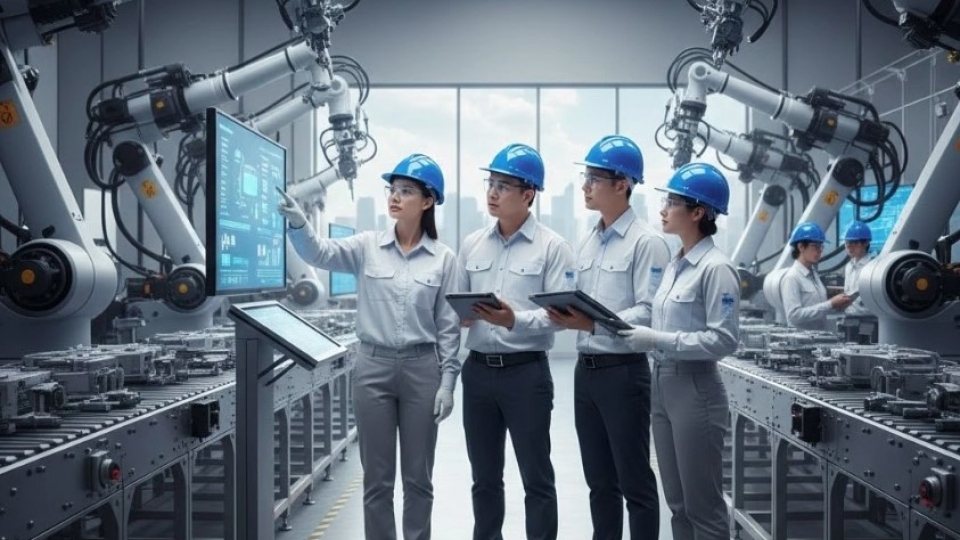
High-quality human resources seen as key to Vietnam’s high-income goal by 2045
VOV.VN - Improving the quality of human resources, particularly high-quality talent, has been identified as a core task and a key factor in Vietnam’s efforts to become a developed, high-income country by 2045.